
(function(d, s, id) { var js, fjs = d.getElementsByTagName(s)[0]; if (d.getElementById(id)) return; js = d.createElement(s); js.id = id; js.src = “https://connect.facebook.net/en_US/sdk.js#xfbml=1&version=v3.0”; fjs.parentNode.insertBefore(js, fjs); }(document, ‘script’, ‘facebook-jssdk’)); –>
–>
October 27, 2023
The 19th-century viral scourge of the U.S. South known as “yellow fever” seems to be on the brink of a resurgence. Tropical disease experts predict a return of the historically devastating disease to the U.S.
‘); googletag.cmd.push(function () { googletag.display(‘div-gpt-ad-1609268089992-0’); }); document.write(”); googletag.cmd.push(function() { googletag.pubads().addEventListener(‘slotRenderEnded’, function(event) { if (event.slot.getSlotElementId() == “div-hre-Americanthinker—New-3028”) { googletag.display(“div-hre-Americanthinker—New-3028”); } }); }); }
Yellow fever is still active in Latin America and Africa, causing 30,000 deaths annually, but local outbreaks have been absent here since 1905. Other tropical diseases, however, have landed on our shores. Earlier this year, several cases of malaria turned up in Florida. Mosquitoes have recently tested positive for West Nile virus in Texas. Locally-transmitted cases of Zika, dengue, and chikungunya have also been identified in the past few years.
WHAT IS YELLOW FEVER?
Yellow Fever is a member of the Flaviviridae family of viruses and is a known arbovirus (transmitted through the bite or sting of an insect). In this case, the culprit is a mosquito known as Aedes aegypti.
‘); googletag.cmd.push(function () { googletag.display(‘div-gpt-ad-1609270365559-0’); }); document.write(”); googletag.cmd.push(function() { googletag.pubads().addEventListener(‘slotRenderEnded’, function(event) { if (event.slot.getSlotElementId() == “div-hre-Americanthinker—New-3035”) { googletag.display(“div-hre-Americanthinker—New-3035”); } }); }); }
Symptoms may appear within three to six days of the virus entering the body. Some experience no symptoms, but those who do experience headache, muscle pain, and nausea/vomiting. Fortunately, in most cases, symptoms subside in three to four days. If you survive the disease, it usually means lifelong immunity.
Yellow fever has no cure, and an unlucky 15-20 percent of victims, progress to a more serious second phase shortly after an apparent recovery. These develop high fever and inflammation of the liver and kidneys. Liver malfunction leads to a condition called “jaundice,” a yellowing of the skin and eyes (hence the name “yellow fever”). Damage to the GI tract leads to vomiting black blood in late stages. At this point, a death rate of 20-60 percent due to organ failure can be expected.
HISTORY OF U.S. YELLOW FEVER OUTBREAKS
Throughout its history, the United States has experienced yellow fever epidemics reaching as far north as Philadelphia, where 5000 deaths were recorded from the disease in 1793. Most outbreaks, however, occurred in Southern seaports (New Orleans, Galveston, Charleston, Savannah) or along the Mississippi (Vicksburg, Memphis). The New Orleans epidemic of 1853 killed almost 10 percent of the city’s population.
Back then, the disease was sometimes referred to as “yellow jack” after the nautical flag ships arriving from the Caribbean flew to indicate a possible outbreak requiring quarantine.
Although previous epidemics of “yellow jack” are now forgotten, some outbreaks killed more U.S. citizens than more famous disasters of the era, including the Great Chicago Fire or the San Francisco earthquake. The last major outbreak was in New Orleans in 1905, when 1000 people perished.
‘); googletag.cmd.push(function () { googletag.display(‘div-gpt-ad-1609268078422-0’); }); document.write(”); googletag.cmd.push(function() { googletag.pubads().addEventListener(‘slotRenderEnded’, function(event) { if (event.slot.getSlotElementId() == “div-hre-Americanthinker—New-3027”) { googletag.display(“div-hre-Americanthinker—New-3027”); } }); }); } if (publir_show_ads) { document.write(“
WHY NOW?
Why are experts becoming more concerned about an illness that’s mostly seen in equatorial regions of Africa and South America? The health establishment blames climate change, population explosions, poverty, and increasing urbanization. They explain that El Nino events mean warmer temperatures and more rainfall, good conditions for mosquitoes. 20th-century growth spurts in places like Miami and Tampa mean many more potential victims than in previous eras, especially in poorer areas with questionable mosquito-control policies.
A factor you won’t hear much about is what authorities refer to as “shifting patterns of human migrations,” code words for the current crisis in illegal immigration. People crossing the border from at-risk areas are rarely vetted (medically or otherwise). As such, it stands to reason that some might bring infectious diseases up north into the U.S.
Health authorities worry, correctly, that we are unprepared for an outbreak of yellow fever, which kills a larger percentage of its victims than COVID-19 or influenza. Mosquito control programs aren’t based on a national standard: They are usually administered through counties. The quantity and quality of resources vary greatly from place to place.
The main concern: U.S. citizens aren’t vaccinated against yellow fever, nor is the vaccine part of the Strategic National Stockpile. This means the entire population is vulnerable to it. A vaccine is available for travelers but it uses live virus, is expensive, and isn’t made in large quantities. It can also have serious ill effects on those with weakened immune systems. A significant yellow fever epidemic could run rampant before the government could react effectively.
In response to the threat of emerging infectious diseases, the White House established the Office of Pandemic Preparedness and Response. So far, it has concentrated on coronavirus, influenza, and other known pandemic illnesses. But the department can tackle mosquito-borne infection if so directed by a motivated and vigilant administration. Whether this government has the foresight to prepare for a possible outbreak remains to be seen.
Yellow fever is not yet a problem in 21st-century America. That means we have an opportunity: Prioritize a plan of action for an outbreak now, and yellow fever may be just a bump in the road, not the end of the road, for many U.S. citizens in the future.
Joe Alton, MD is a physician, medical preparedness advocate, and NY Times bestselling author of The Survival Medicine Handbook: The Essential Guide For When Help Is NOT On The Way.
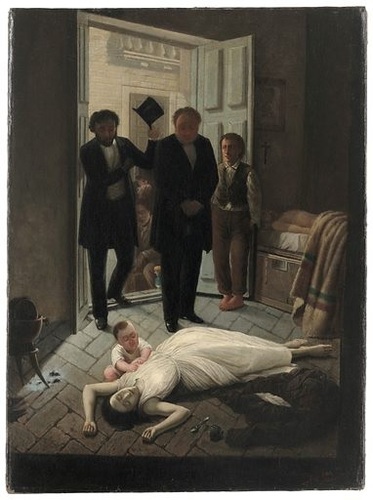
Image: Public Domain
<!–
–>
<!– if(page_width_onload <= 479) { document.write("
“); googletag.cmd.push(function() { googletag.display(‘div-gpt-ad-1345489840937-4’); }); } –> If you experience technical problems, please write to [email protected]
FOLLOW US ON
<!–
–>
<!– _qoptions={ qacct:”p-9bKF-NgTuSFM6″ };  –> <!—-> <!– var addthis_share = { email_template: “new_template” } –>