Authored by Darren Taylor via The Epoch Times,
Mcebisi Jonas doesn’t usually suffer from nerves. If he did, he wouldn’t have survived a brutal guerrilla campaign against South Africa’s apartheid foot-soldiers in the 1970s and 1980s.
“As a cadre for the ANC [then-banned African National Congress], I was fighting for freedom from racism, for black people’s right to vote, for human rights,” he told The Epoch Times.
“Now, I am about to fight another, very different battle. I am a bit nervous, but I am ready to talk with any and all representatives of the U.S. president, and I trust we will treat one another with respect,” said Pretoria’s eloquent former minister of finance and now successful businessman.
Jonas is part of a recently created exclusive club of special envoys appointed by most of Africa’s 54 countries to negotiate better export terms they hope will allow them to sell their goods for “reasonable profit” in the world’s most lucrative market.
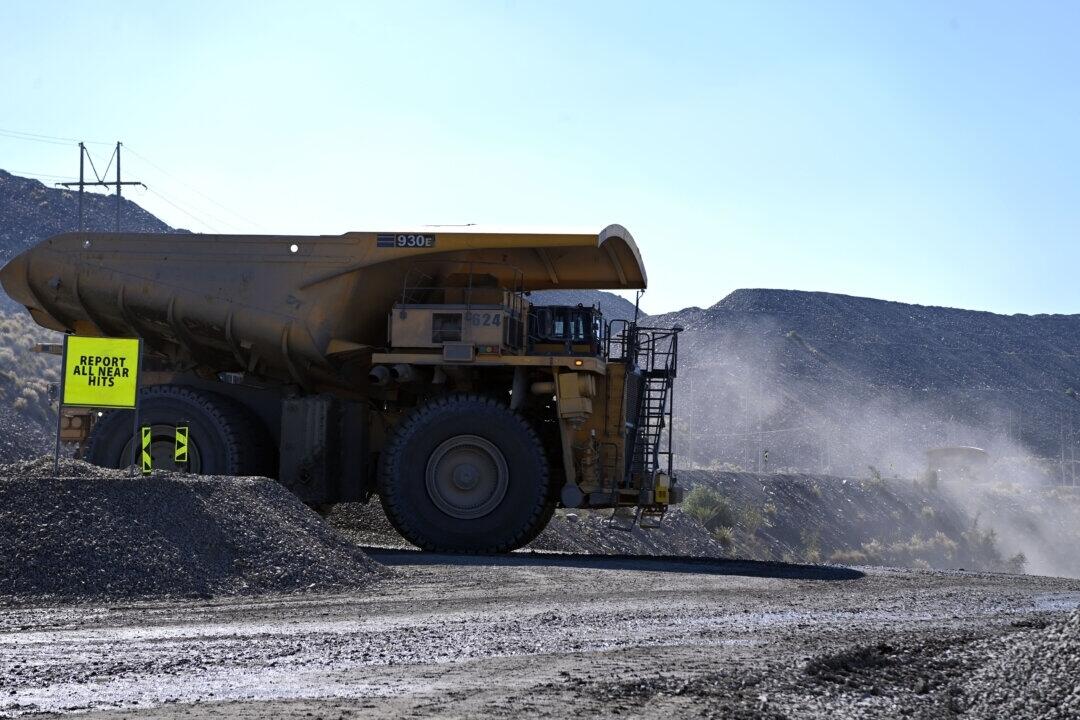
This followed U.S. President Donald Trump’s April 2 announcement of tariffs on goods exported to the United States by its economic partners. Trump has said the duties would correct trade imbalances he said are unfair to America.
A week later, Trump paused his reciprocal tariffs for 90 days—except for those on China—indicating that many countries had reached out and that the United States was open to negotiations.
If nothing were to change after the 90-day pause, some of the highest tariffs—between 30 and 50 percent—would be for products imported from Africa.
Africa’s envoys are now rushing to meet the deadline in July when the raised duties are scheduled to come into effect.
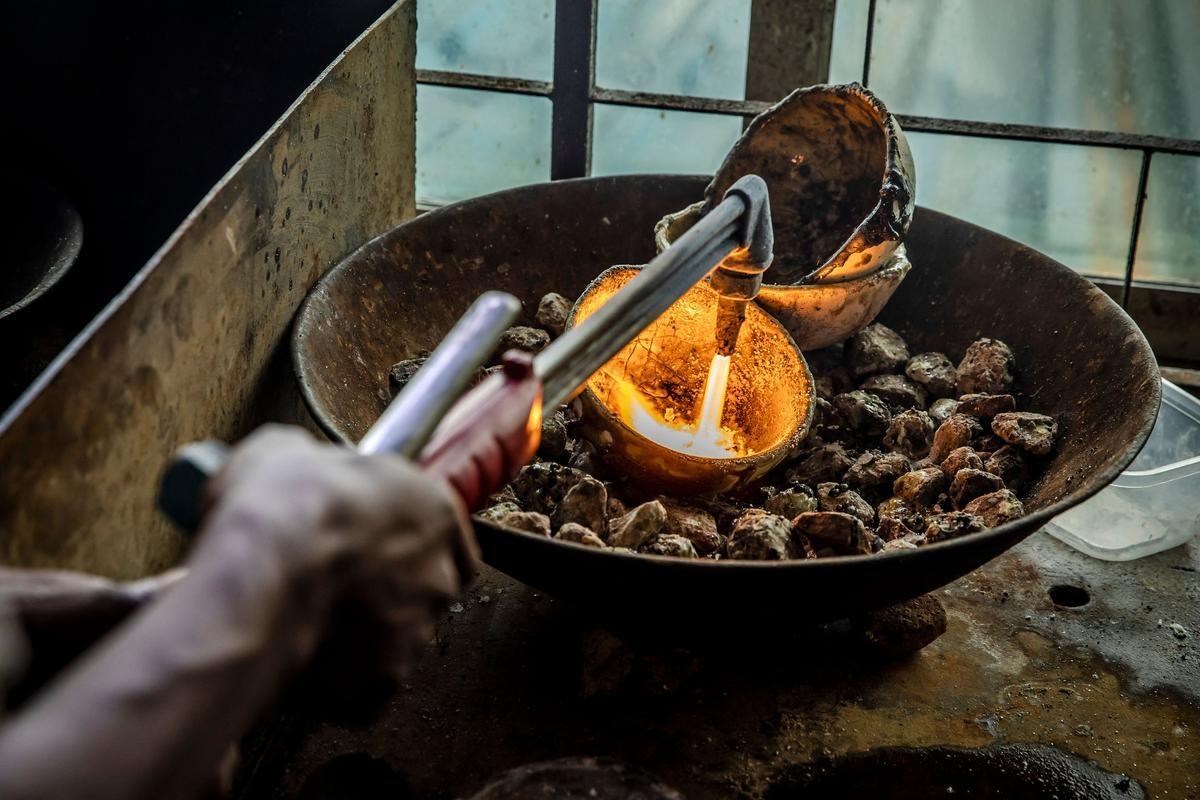
A man melts pure gold fragments coming from different mines in the region, at a gold market in Geita, Tanzania, on May 28, 2022. Luis Tato/AFP via Getty Images
“Most African countries export much more to the United States than they import from the United States, so the Trump administration calculated that trade between the regions is unfairly weighted towards Africa and that the United States is losing out,” explained Morné Malan, deputy head of policy at South Africa’s Free Market Foundation.
Besides trade deficits, Trump also looked for other signs of trade barriers as criteria for imposing tariffs.
Kenya, with which the United States enjoyed a trade surplus, is an example.
According to the United States Trade Representative, East Africa’s largest economy exported goods—mainly textiles, coffee, tea, and fruit—to the value of $737.3 million to the United States in 2024.
That year, Kenya imported goods worth $782.5 million from the United States, primarily petroleum products, aircraft and related parts, machinery, and pharmaceuticals, giving the United States a trade surplus of $45.2 million.
Despite this, President William Ruto’s government had anticipated that Trump would hit Kenya with a higher tariff, as Nairobi charges a 10 percent tax on American imports.
So, said Trade and Industry cabinet secretary, Lee Kinyanjui, the country went into “damage control mode,” dispatching a team of negotiators to the White House a day before Trump’s “Liberation Day” tariffs announcement.
Although the Kenyan government’s main objective of securing duty-free or “very favourable duty access” for its goods into the U.S. market is still the subject of talks, Trump levied a reciprocal tariff of only 10 percent on Nairobi.
“We believe it helped us a lot to speak to Trump’s people ahead of his announcement, and directly afterwards,” Kinyanjui told The Epoch Times.
“We are considering a free trade agreement with the United States, and that will mean the scrapping of the tariff on American goods entering Kenya, and we will hopefully still export duty-free to the United States. That is reciprocity.”
Steven Gruzd of the South African Institute of International Affairs described Kenya as a “bit of an anomaly.”
“I am no fan of the African governments that steal their countries’ resources and keep their people poor, but I must also agree that it’s a bit of a stretch to expect nations with low GDPs and tiny budgets and huge debts and low manufacturing bases to import at large scale expensive goods, products and services from the wealthiest economy in the world,” he told The Epoch Times.
It is in this context that the African envoys will visit the White House.
“He’s about to enter a lion’s den,” Malan said of Jonas, the South African diplomat.
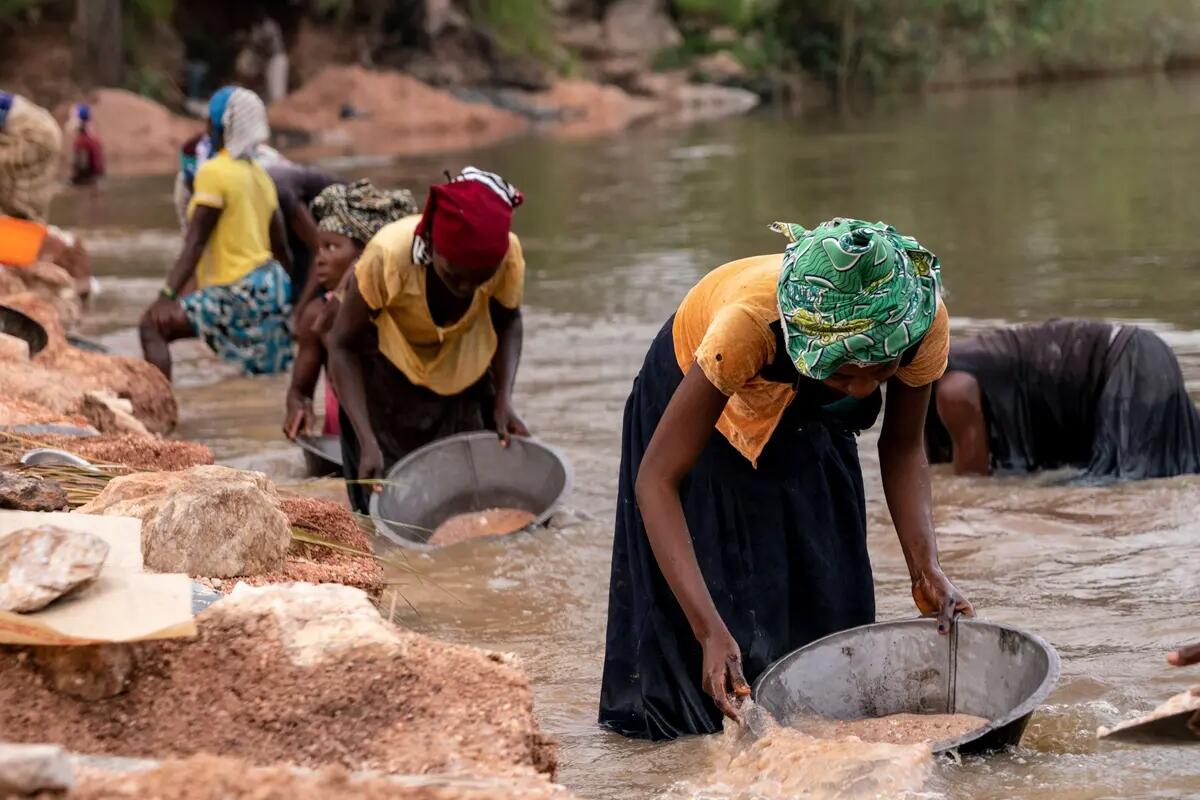
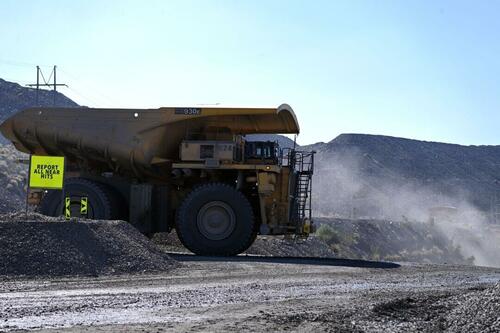
Artisanal miners collect gravel from the Lukushi river searching for cassiterite in Manono, Democratic Republic of Congo, on Feb. 17, 2022 Junior Kannah/AFP via Getty Images
The United States’ 31 percent tariffs on South Africa—which was included in a list of 60 nations Trump said had traded with his country unfairly during his announcement on April 2—is just the president’s latest salvo against the continent’s largest, most industrialized economy.
The country featured prominently in the series of executive orders Trump has signed since re-entering the White House on Jan. 20.
In one of his first executive orders, the U.S. leader accused Pretoria of implementing racist laws aimed at discriminating and encouraging violence against white Afrikaners.
Trump subsequently withdrew $440 million in annual funding to South Africa, resulting in a slowdown of the country’s HIV treatment and prevention program.
He said South Africa is a threat to U.S. national security as its ANC government has military and economic alliances with some of Washington’s primary geopolitical foes, including China, Iran, and Russia.
Trump also criticized Pretoria for launching a case of genocide in the Gaza war against Israel at the International Court of Justice. The war was triggered by terrorist group Hamas’s Oct. 7, 2023, attack on Israel.
Then, Secretary of State Marco Rubio expelled South Africa’s ambassador to Washington, the ANC’s Ebrahim Rasool, after the diplomat described Trump’s Make America Great Again (MAGA) movement and his administration as “supremacist.”
Jonas grimaced and said, “Yes, recent history between South Africa and the United States is not good.
“But I am convinced we can cooperate going forward and we can come to a mutually beneficial agreement that will foster the flow of American goods into our country, and vice versa.”
Steven Gruzd of the South African Institute of International Affairs said that, in communications within the Trump administration, “it has become clear that they consider Pretoria to be the enemy, giving the [President Cyril] Ramaphosa government the same status as Beijing and Moscow and Tehran.”
Like many in Africa, said Gruzd, Pretoria has “good cards to deal” to convince the U.S. president. Its cards are beaming the allure of the continent’s vast resources, which include precious metals like gold and platinum, and critical minerals essential to energy security and defense, as they’re major components of weapons and military equipment.
In a paper analyzing Africa’s potential responses to the U.S. tariffs, the Center for Strategic and International Studies (CSIS) in Washington said 24 of Africa’s 54 countries are dependent on mining and minerals for income.
Africa holds a third of the world’s critical minerals, according to a study by U.S. think-tank The Atlantic Council.
South Africa already supplies almost all of America’s chromium and provides a quarter of its manganese requirements.
Manganese is a diverse mineral, used to produce steel and rechargeable batteries.
Chromium features prominently in weapons manufacturing, including missile systems and fighter jets.
Other minerals produced at a large scale by African countries include lithium, used in electric car batteries, and coltan, used in communications equipment like cell phones and computers.
Although Trump has exempted critical minerals from tariffs, Gruzd said South Africa’s mineral wealth still has a role in possibly lowering the U.S. levies on South Africa, considering the Trump administration’s wish to reduce U.S. dependency on Chinese supplies.
“China dominates Africa’s minerals sector, and it has mines all over the place, from DRC [Democratic Republic of Congo] to Zambia to Guinea,” Gruzd said.
“Beijing’s harvesting of the continent’s minerals and metals and processing them has placed the United States at an immense disadvantage in terms of making sure it has a reliable supply of these critical items well into the future.
Gruzd said if the United States and South Africa can strike a deal on critical minerals, “that would be a big win, politically and economically, for the Trump administration.”
“If Trump is offered mining rights in certain African countries, this would go a long way in persuading him to lower tariffs and perhaps even drop them because it would give the United States a big foothold in global supply chains,” he said.
The CSIS said that Trump should revoke tariffs on African countries and that the African Union and African leaders “should seek to demonstrate that preferential trade with the continent, in fact, overall serves U.S. national interests.”
“Just like Canada and Mexico were exempt from the reciprocal tariffs due to the United States’ national interest, a similar case can be made for Africa in terms of market access and critical minerals supply chain security,” wrote economic development experts Hannah Ryder, Trevor Lwere, and Ovigwe Eguegu.
“As tariffs are set to hit U.S. firms in the automotive, aerospace, and chemical sectors, which are heavily dependent on critical minerals, the bulk of which Africa has, it is not in the U.S. interest to impose tariffs on African goods.”
Ryder, Lwere, and Eguegu highlighted that one of the Trump administration’s aims is to gain greater market access for American firms and products abroad.
“This requires the existence of purchasing power amongst foreign consumers. By imposing tariffs on African exports to the United States, however, the United States makes it difficult for Africa to obtain the purchasing power necessary to demand U.S. products,” they said.
The experts said the United States should support preferential access for African goods to the American market as a market-building strategy.
This is critical, they wrote, especially considering that Africa has the youngest population and will be home to over 25 percent of the global population in the next few decades.
Bamidele Ayemibo, lead trade policy consultant at Nigeria’s 3T Impex Consulting Limited, said African governments’ response to Trump’s tariffs should be to sign preferential trade agreements with the United States—and with other partners.
“The last thing they should do is retaliate with higher tariffs on U.S. products; they do not have the economic power to do so and they will only hurt themselves,” he told The Epoch Times.
“Now, more than ever, it is time for talk and for bargaining.”
Authored by Darren Taylor via The Epoch Times,
Mcebisi Jonas doesn’t usually suffer from nerves. If he did, he wouldn’t have survived a brutal guerrilla campaign against South Africa’s apartheid foot-soldiers in the 1970s and 1980s.
“As a cadre for the ANC [then-banned African National Congress], I was fighting for freedom from racism, for black people’s right to vote, for human rights,” he told The Epoch Times.
“Now, I am about to fight another, very different battle. I am a bit nervous, but I am ready to talk with any and all representatives of the U.S. president, and I trust we will treat one another with respect,” said Pretoria’s eloquent former minister of finance and now successful businessman.
Jonas is part of a recently created exclusive club of special envoys appointed by most of Africa’s 54 countries to negotiate better export terms they hope will allow them to sell their goods for “reasonable profit” in the world’s most lucrative market.

This followed U.S. President Donald Trump’s April 2 announcement of tariffs on goods exported to the United States by its economic partners. Trump has said the duties would correct trade imbalances he said are unfair to America.
A week later, Trump paused his reciprocal tariffs for 90 days—except for those on China—indicating that many countries had reached out and that the United States was open to negotiations.
If nothing were to change after the 90-day pause, some of the highest tariffs—between 30 and 50 percent—would be for products imported from Africa.
Africa’s envoys are now rushing to meet the deadline in July when the raised duties are scheduled to come into effect.

A man melts pure gold fragments coming from different mines in the region, at a gold market in Geita, Tanzania, on May 28, 2022. Luis Tato/AFP via Getty Images
“Most African countries export much more to the United States than they import from the United States, so the Trump administration calculated that trade between the regions is unfairly weighted towards Africa and that the United States is losing out,” explained Morné Malan, deputy head of policy at South Africa’s Free Market Foundation.
Besides trade deficits, Trump also looked for other signs of trade barriers as criteria for imposing tariffs.
Kenya, with which the United States enjoyed a trade surplus, is an example.
According to the United States Trade Representative, East Africa’s largest economy exported goods—mainly textiles, coffee, tea, and fruit—to the value of $737.3 million to the United States in 2024.
That year, Kenya imported goods worth $782.5 million from the United States, primarily petroleum products, aircraft and related parts, machinery, and pharmaceuticals, giving the United States a trade surplus of $45.2 million.
Despite this, President William Ruto’s government had anticipated that Trump would hit Kenya with a higher tariff, as Nairobi charges a 10 percent tax on American imports.
So, said Trade and Industry cabinet secretary, Lee Kinyanjui, the country went into “damage control mode,” dispatching a team of negotiators to the White House a day before Trump’s “Liberation Day” tariffs announcement.
Although the Kenyan government’s main objective of securing duty-free or “very favourable duty access” for its goods into the U.S. market is still the subject of talks, Trump levied a reciprocal tariff of only 10 percent on Nairobi.
“We believe it helped us a lot to speak to Trump’s people ahead of his announcement, and directly afterwards,” Kinyanjui told The Epoch Times.
“We are considering a free trade agreement with the United States, and that will mean the scrapping of the tariff on American goods entering Kenya, and we will hopefully still export duty-free to the United States. That is reciprocity.”
Steven Gruzd of the South African Institute of International Affairs described Kenya as a “bit of an anomaly.”
“I am no fan of the African governments that steal their countries’ resources and keep their people poor, but I must also agree that it’s a bit of a stretch to expect nations with low GDPs and tiny budgets and huge debts and low manufacturing bases to import at large scale expensive goods, products and services from the wealthiest economy in the world,” he told The Epoch Times.
It is in this context that the African envoys will visit the White House.
“He’s about to enter a lion’s den,” Malan said of Jonas, the South African diplomat.

Artisanal miners collect gravel from the Lukushi river searching for cassiterite in Manono, Democratic Republic of Congo, on Feb. 17, 2022 Junior Kannah/AFP via Getty Images
The United States’ 31 percent tariffs on South Africa—which was included in a list of 60 nations Trump said had traded with his country unfairly during his announcement on April 2—is just the president’s latest salvo against the continent’s largest, most industrialized economy.
The country featured prominently in the series of executive orders Trump has signed since re-entering the White House on Jan. 20.
In one of his first executive orders, the U.S. leader accused Pretoria of implementing racist laws aimed at discriminating and encouraging violence against white Afrikaners.
Trump subsequently withdrew $440 million in annual funding to South Africa, resulting in a slowdown of the country’s HIV treatment and prevention program.
He said South Africa is a threat to U.S. national security as its ANC government has military and economic alliances with some of Washington’s primary geopolitical foes, including China, Iran, and Russia.
Trump also criticized Pretoria for launching a case of genocide in the Gaza war against Israel at the International Court of Justice. The war was triggered by terrorist group Hamas’s Oct. 7, 2023, attack on Israel.
Then, Secretary of State Marco Rubio expelled South Africa’s ambassador to Washington, the ANC’s Ebrahim Rasool, after the diplomat described Trump’s Make America Great Again (MAGA) movement and his administration as “supremacist.”
Jonas grimaced and said, “Yes, recent history between South Africa and the United States is not good.
“But I am convinced we can cooperate going forward and we can come to a mutually beneficial agreement that will foster the flow of American goods into our country, and vice versa.”
Steven Gruzd of the South African Institute of International Affairs said that, in communications within the Trump administration, “it has become clear that they consider Pretoria to be the enemy, giving the [President Cyril] Ramaphosa government the same status as Beijing and Moscow and Tehran.”
Like many in Africa, said Gruzd, Pretoria has “good cards to deal” to convince the U.S. president. Its cards are beaming the allure of the continent’s vast resources, which include precious metals like gold and platinum, and critical minerals essential to energy security and defense, as they’re major components of weapons and military equipment.
In a paper analyzing Africa’s potential responses to the U.S. tariffs, the Center for Strategic and International Studies (CSIS) in Washington said 24 of Africa’s 54 countries are dependent on mining and minerals for income.
Africa holds a third of the world’s critical minerals, according to a study by U.S. think-tank The Atlantic Council.
South Africa already supplies almost all of America’s chromium and provides a quarter of its manganese requirements.
Manganese is a diverse mineral, used to produce steel and rechargeable batteries.
Chromium features prominently in weapons manufacturing, including missile systems and fighter jets.
Other minerals produced at a large scale by African countries include lithium, used in electric car batteries, and coltan, used in communications equipment like cell phones and computers.
Although Trump has exempted critical minerals from tariffs, Gruzd said South Africa’s mineral wealth still has a role in possibly lowering the U.S. levies on South Africa, considering the Trump administration’s wish to reduce U.S. dependency on Chinese supplies.
“China dominates Africa’s minerals sector, and it has mines all over the place, from DRC [Democratic Republic of Congo] to Zambia to Guinea,” Gruzd said.
“Beijing’s harvesting of the continent’s minerals and metals and processing them has placed the United States at an immense disadvantage in terms of making sure it has a reliable supply of these critical items well into the future.
Gruzd said if the United States and South Africa can strike a deal on critical minerals, “that would be a big win, politically and economically, for the Trump administration.”
“If Trump is offered mining rights in certain African countries, this would go a long way in persuading him to lower tariffs and perhaps even drop them because it would give the United States a big foothold in global supply chains,” he said.
The CSIS said that Trump should revoke tariffs on African countries and that the African Union and African leaders “should seek to demonstrate that preferential trade with the continent, in fact, overall serves U.S. national interests.”
“Just like Canada and Mexico were exempt from the reciprocal tariffs due to the United States’ national interest, a similar case can be made for Africa in terms of market access and critical minerals supply chain security,” wrote economic development experts Hannah Ryder, Trevor Lwere, and Ovigwe Eguegu.
“As tariffs are set to hit U.S. firms in the automotive, aerospace, and chemical sectors, which are heavily dependent on critical minerals, the bulk of which Africa has, it is not in the U.S. interest to impose tariffs on African goods.”
Ryder, Lwere, and Eguegu highlighted that one of the Trump administration’s aims is to gain greater market access for American firms and products abroad.
“This requires the existence of purchasing power amongst foreign consumers. By imposing tariffs on African exports to the United States, however, the United States makes it difficult for Africa to obtain the purchasing power necessary to demand U.S. products,” they said.
The experts said the United States should support preferential access for African goods to the American market as a market-building strategy.
This is critical, they wrote, especially considering that Africa has the youngest population and will be home to over 25 percent of the global population in the next few decades.
Bamidele Ayemibo, lead trade policy consultant at Nigeria’s 3T Impex Consulting Limited, said African governments’ response to Trump’s tariffs should be to sign preferential trade agreements with the United States—and with other partners.
“The last thing they should do is retaliate with higher tariffs on U.S. products; they do not have the economic power to do so and they will only hurt themselves,” he told The Epoch Times.
“Now, more than ever, it is time for talk and for bargaining.”
Loading…