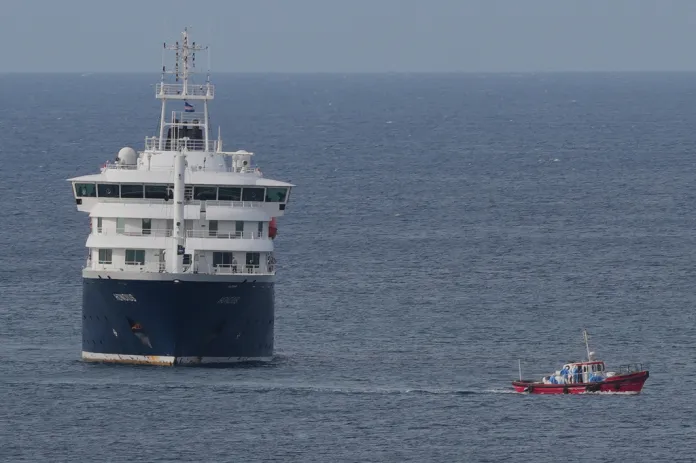
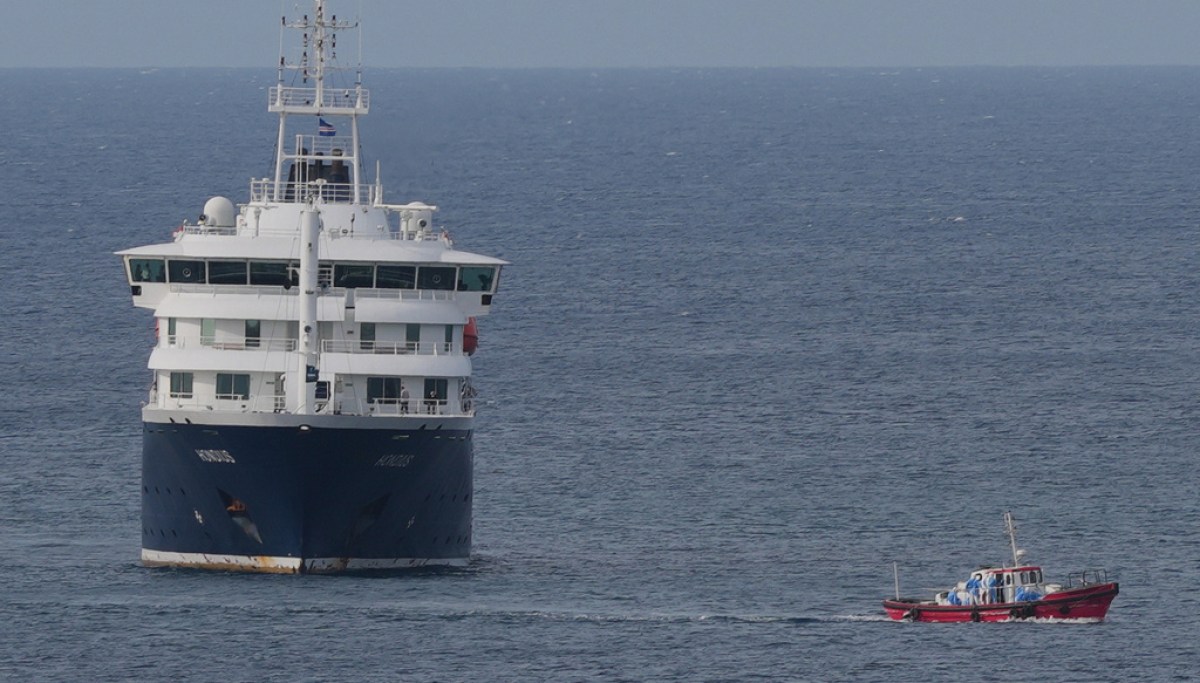
There are a few confirmed cases of hantavirus in the Netherlands and South America as the trans-Atlantic cruise ship on which the virus was detected heads toward an island south of Spain.
Three patients have been evacuated from the ship to receive medical care in the Netherlands, the World Health Organization confirmed. The intergovernmental organization has been keeping track of the public health situation since the virus broke out in recent weeks.
The Dutch Foreign Ministry says those three patients are from the Netherlands, the United Kingdom, and Germany.
At least three passengers have died on the MV Hondius following a suspected hantavirus outbreak, and another person is being treated in South Africa. The ship is carrying 147 people onboard.
The rare Andes strain of the virus originated in Argentina, from where the cruise ship departed for the 34-day voyage across the Atlantic Ocean.
The ship is set to dock at Tenerife, a Spanish island off the coast of northwestern Africa, upon clearance from Spain’s government. However, the regional government of the Canary Islands objected to the decision. Tenerife is part of the larger Canary Islands archipelago.
“We still don’t know what the agreement is between the WHO and the Government of Spain (…) The only thing we know is that the shipowner has requested docking for the 9th in a port in Tenerife,” President of the Canary Islands Fernando Clavijo said Wednesday morning.
At least two hantavirus cases had been confirmed, while the other five cases were suspected to be linked to the zoonotic disease.
While human-to-human transmission is rare, WHO suspects the hantavirus is spreading in that particular way. It usually spreads through contact with infected rodents.
WHO SUSPECTS HUMAN-TO-HUMAN SPREAD OF HANTAVIRUS ON ATLANTIC CRUISE SHIP
If left untreated, the virus can result in low blood pressure, low oxygen levels, and eventually death by organ failure.
Continuing to monitor the situation, WHO says the health risks to the broader public are low for now.