Authored by John Haughey via The Epoch Times (emphasis ours),
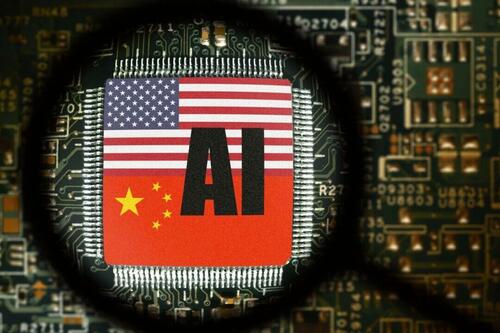
The United States has nearly twice as many nuclear reactors and at least five times the number of artificial intelligence-generating data centers that China now has.
But while only two new nuclear power plants have been built in the United States this century, China has built nearly 40 and, as China Atomic Energy Authority Vice Chair Wang Yiren told the China Nuclear Energy Association in May, the Chinese Communist Party (CCP) “aims to overtake the United States in installed nuclear capacity by 2030.”
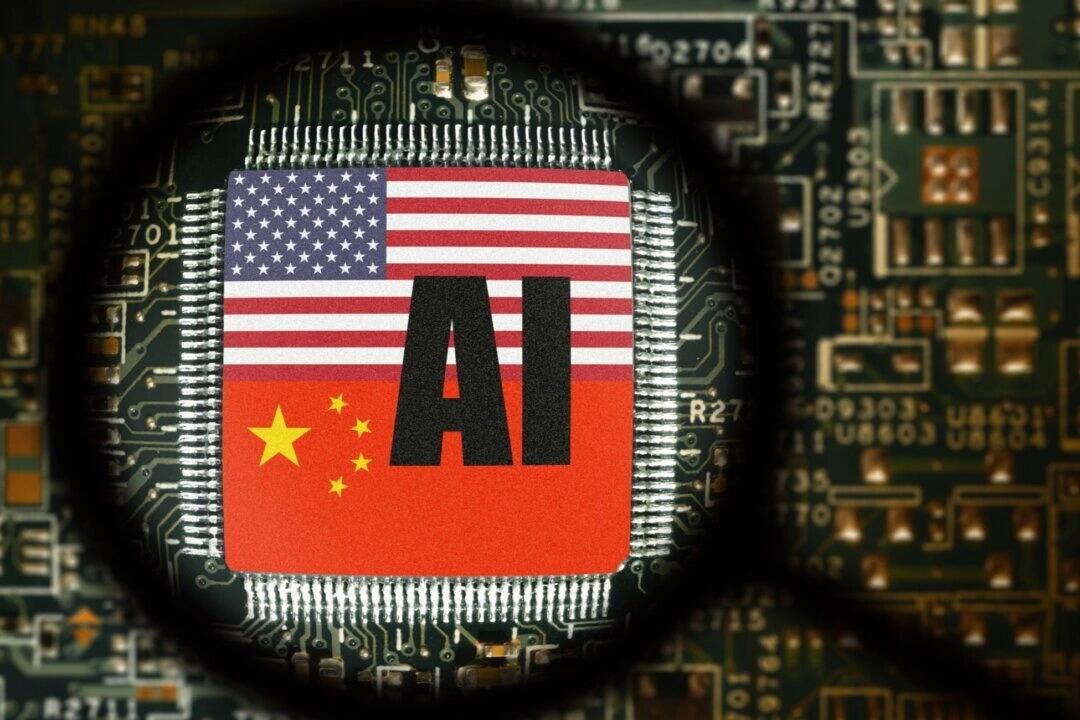
China’s rapid development of nuclear energy to power artificial intelligence (AI) “has triggered a Sputnik moment” among the United States’ reactor designers and operators, Oklo Chief Technology Officer Pat Schweiger said.
“AI leadership is a civilization-level challenge, and we face a geopolitical imperative to achieve AI supremacy,” Schweiger said in his testimony during a June 12 hearing before the House Science, Space, and Technology Committee’s Energy Subcommittee.
The United States is the world’s largest generator and consumer of nuclear energy, with 94 nuclear reactors in 55 power plants.
The U.S. Energy Information Administration calculates that the plants generated 18.6 percent of their electricity in 2023.
However, most were built between 1970 and 1990 and average more than 40 years in service.
The only new reactor to come online in the United States since 2016 is Vogtle’s fourth reactor in Georgia, $16 billion over budget and six years behind schedule.
According to the World Nuclear Association, China has 58 operating reactors with 32 under construction, including 10 projected to come online in 2025.
During a March 11 roundtable discussion at CERAWeek by S&P Global in Houston, six Chinese energy leaders and academics said CCP leader Xi Jinping made nuclear energy development a key in achieving a 2020 pledge to “peak carbon dioxide emissions” from fossil fuels “before 2030” and “achieve carbon neutrality before 2060.”
Including solar, wind, hydropower, biomass, and nuclear—since 2020, China built at least five new nuclear plants a year, bringing its fleet to 58, contributing nearly 6 percent to its energy mix—35 percent of China’s power comes from renewable sources, according to the United States Energy Information Administration (EIA) and Ember, a global energy analysis firm.
“China is definitely moving fast,” Schweiger said. “They have the infrastructure in place, manufacturing capabilities that have accelerated their ability to perform. Currently, they’re on pace to build reactors in about 52 months, so just over four years.”
Under current regulations posted by the United States Nuclear Regulatory Commission, it takes 10 to 12 years just to license and permit a new nuclear reactor in the United States.
President Donald Trump’s May executive orders seeking to “reinvigorate” the United States’ nuclear energy industry call on Congress to trim back those timelines, especially for the 60-plus emerging reactor technologies, such as “plug-in” small nuclear reactors, natrium-cooled reactors, “fast fission” reactors, and fusion reactors.
The Nuclear Regulatory Commission’s 70-year-old matrix of federal rules poses an “unreasonable burden for micro-reactor developers,” hindering domestic implementation of technologies being pioneered in the United States but exported elsewhere, Washington-based Last Energy argued in a December 2024 lawsuit filed against the commission.
The primary beneficiary of this “innovation export” is China, which is incorporating and advancing these emerging technologies in its rapidly expanding fleet of reactors, capitalizing on stillborn technologies developed in the United States.
US-Pioneered, China-Perfected
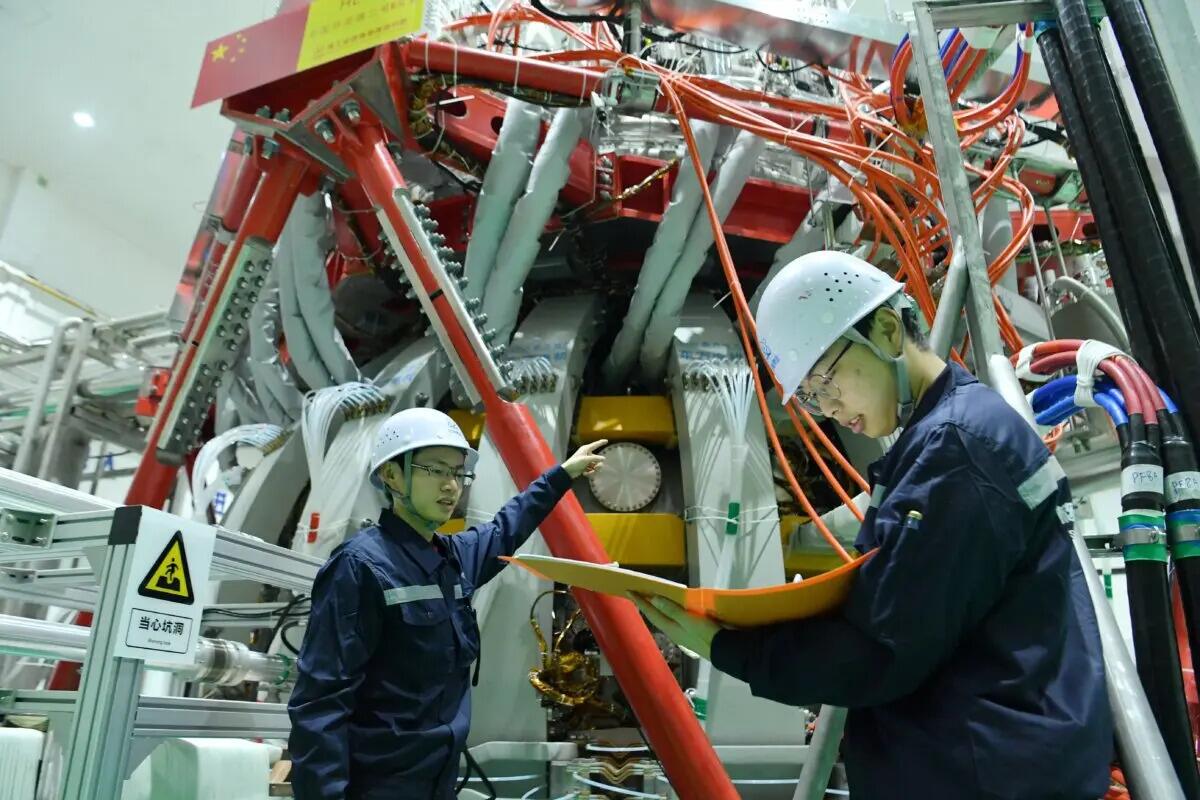
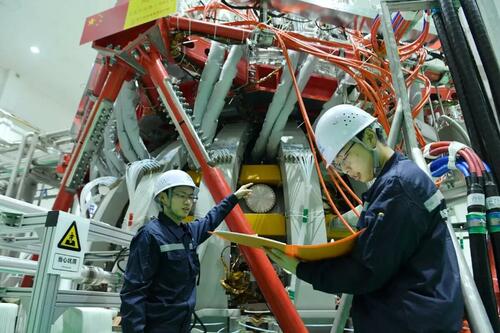
China now leads the world in fusion technology development—often called the “holy grail of 21st century energy”—as economist and China analyst Antonio Graceffo writes in a March 31 Epoch Times column.
“China has taken the lead in fusion-related patents, produces 10 times as many PhD graduates in fusion science as the United States, and is aggressively securing critical materials such as superconducting magnets, specialized metals, and semiconductors,” he writes.
“China’s aggressive approach includes rapid reactor construction and experimental designs that may not be viable under U.S. regulations.”
In April, Interesting Engineering—a news site based in New York and Istanbul that covers “the latest scientific breakthroughs”—reported China was building the world’s first working thorium reactor.
If the reactor proves commercially viable, it would be the first not to be uranium-fueled. Thorium is less radioactive, and its waste is easier to dispose of.
Project chief scientist Xu Hongjie told Interesting Engineering the entire endeavor was built on American research gleaned from open-source studies and experiments that never advanced because of regulatory constraints.
This legacy of frustrating stagnation continues today, Schweiger told the House panel.
The fast reactor technology that Oklo has mastered “was innovated and pioneered in America almost 80 years ago,” he said. “Right now, there is no fast reactor operating in the United States.”
Nuclear-generated baseload energy will fuel the data centers that will power the artificial intelligence projected to quickly, dramatically reshape commerce, industry, and national security.
Powering up those data centers to “win the AI race against China” is a national urgency that United States Energy Secretary Chris Wright describes as the nation’s “next Manhattan Project.”
According to Statista, in March 2025, there were a “reported” 5,426 data centers in the United States.
Meanwhile, Denmark-based Data Center Map ApS counts 3,757 “listed” data centers, and Data Centers.com, a global “technology marketplace” headquartered in Colorado, maintains there are 2,484 now operating nationwide.
One consensus these and other estimates confirm is that there are five to 10 times as many functioning data centers in the United States as in any other country, including China, which has fewer than 500.
In fact, approximately half the planet’s data centers are in the United States, according to Visual Capitalist, among others.
But as China rapidly boots up its nuclear energy capacity, data centers are certain to mushroom quickly.
“They’re doing that on time and on budget,” Schweiger said.
“When you have a centralized authority that is in charge, and you have construction crews A, B, C, D, E, and you can sort of dispatch them around the country, you can move faster,” Constellation Energy Executive Vice President Kathleen L. Barrón testified before the committee.
During the March CERAWeek by S&P Global roundtable, Jian Pan, co-chair of CATL, a leading global electric vehicle and battery technology company, said “centralized authority” orchestrated by the CCP led to the rapid increase in electric vehicle manufacturing, quickly making China the world’s largest EV-maker, disrupting the global auto manufacturing industry and oil markets.
“Government sets the policy directions” in the “quick adoption for electric vehicles, the restructure of industrial activities, the environmental mandates for all industrial activities,” Pan said.
Sinopec Economics & Development Research Institute Vice President Fairy Wang said China’s EV industry “developed so fast … first, definitely, [because] the government is supporting it. We have policy support. We have some incentives. The government provides some subsidies for EVs.”
“We have a different model here,” Barrón said. “We have bifurcated authority between the federal government and the states over energy policy … it’s a bit more complicated.”
But it’s solvable with coordinated “involvement and appropriate input across different levels of government,” she said.
“I think our challenge is to meet this moment now and put all of our effort into trying to move forward as fast as we possibly can.”
Authored by John Haughey via The Epoch Times (emphasis ours),
The United States has nearly twice as many nuclear reactors and at least five times the number of artificial intelligence-generating data centers that China now has.
But while only two new nuclear power plants have been built in the United States this century, China has built nearly 40 and, as China Atomic Energy Authority Vice Chair Wang Yiren told the China Nuclear Energy Association in May, the Chinese Communist Party (CCP) “aims to overtake the United States in installed nuclear capacity by 2030.”
China’s rapid development of nuclear energy to power artificial intelligence (AI) “has triggered a Sputnik moment” among the United States’ reactor designers and operators, Oklo Chief Technology Officer Pat Schweiger said.
“AI leadership is a civilization-level challenge, and we face a geopolitical imperative to achieve AI supremacy,” Schweiger said in his testimony during a June 12 hearing before the House Science, Space, and Technology Committee’s Energy Subcommittee.
The United States is the world’s largest generator and consumer of nuclear energy, with 94 nuclear reactors in 55 power plants.
The U.S. Energy Information Administration calculates that the plants generated 18.6 percent of their electricity in 2023.
However, most were built between 1970 and 1990 and average more than 40 years in service.
The only new reactor to come online in the United States since 2016 is Vogtle’s fourth reactor in Georgia, $16 billion over budget and six years behind schedule.
According to the World Nuclear Association, China has 58 operating reactors with 32 under construction, including 10 projected to come online in 2025.
During a March 11 roundtable discussion at CERAWeek by S&P Global in Houston, six Chinese energy leaders and academics said CCP leader Xi Jinping made nuclear energy development a key in achieving a 2020 pledge to “peak carbon dioxide emissions” from fossil fuels “before 2030” and “achieve carbon neutrality before 2060.”
Including solar, wind, hydropower, biomass, and nuclear—since 2020, China built at least five new nuclear plants a year, bringing its fleet to 58, contributing nearly 6 percent to its energy mix—35 percent of China’s power comes from renewable sources, according to the United States Energy Information Administration (EIA) and Ember, a global energy analysis firm.
“China is definitely moving fast,” Schweiger said. “They have the infrastructure in place, manufacturing capabilities that have accelerated their ability to perform. Currently, they’re on pace to build reactors in about 52 months, so just over four years.”
Under current regulations posted by the United States Nuclear Regulatory Commission, it takes 10 to 12 years just to license and permit a new nuclear reactor in the United States.
President Donald Trump’s May executive orders seeking to “reinvigorate” the United States’ nuclear energy industry call on Congress to trim back those timelines, especially for the 60-plus emerging reactor technologies, such as “plug-in” small nuclear reactors, natrium-cooled reactors, “fast fission” reactors, and fusion reactors.
The Nuclear Regulatory Commission’s 70-year-old matrix of federal rules poses an “unreasonable burden for micro-reactor developers,” hindering domestic implementation of technologies being pioneered in the United States but exported elsewhere, Washington-based Last Energy argued in a December 2024 lawsuit filed against the commission.
The primary beneficiary of this “innovation export” is China, which is incorporating and advancing these emerging technologies in its rapidly expanding fleet of reactors, capitalizing on stillborn technologies developed in the United States.
US-Pioneered, China-Perfected
China now leads the world in fusion technology development—often called the “holy grail of 21st century energy”—as economist and China analyst Antonio Graceffo writes in a March 31 Epoch Times column.
“China has taken the lead in fusion-related patents, produces 10 times as many PhD graduates in fusion science as the United States, and is aggressively securing critical materials such as superconducting magnets, specialized metals, and semiconductors,” he writes.
“China’s aggressive approach includes rapid reactor construction and experimental designs that may not be viable under U.S. regulations.”
In April, Interesting Engineering—a news site based in New York and Istanbul that covers “the latest scientific breakthroughs”—reported China was building the world’s first working thorium reactor.
If the reactor proves commercially viable, it would be the first not to be uranium-fueled. Thorium is less radioactive, and its waste is easier to dispose of.
Project chief scientist Xu Hongjie told Interesting Engineering the entire endeavor was built on American research gleaned from open-source studies and experiments that never advanced because of regulatory constraints.
This legacy of frustrating stagnation continues today, Schweiger told the House panel.
The fast reactor technology that Oklo has mastered “was innovated and pioneered in America almost 80 years ago,” he said. “Right now, there is no fast reactor operating in the United States.”
Nuclear-generated baseload energy will fuel the data centers that will power the artificial intelligence projected to quickly, dramatically reshape commerce, industry, and national security.
Powering up those data centers to “win the AI race against China” is a national urgency that United States Energy Secretary Chris Wright describes as the nation’s “next Manhattan Project.”
According to Statista, in March 2025, there were a “reported” 5,426 data centers in the United States.
Meanwhile, Denmark-based Data Center Map ApS counts 3,757 “listed” data centers, and Data Centers.com, a global “technology marketplace” headquartered in Colorado, maintains there are 2,484 now operating nationwide.
One consensus these and other estimates confirm is that there are five to 10 times as many functioning data centers in the United States as in any other country, including China, which has fewer than 500.
In fact, approximately half the planet’s data centers are in the United States, according to Visual Capitalist, among others.
But as China rapidly boots up its nuclear energy capacity, data centers are certain to mushroom quickly.
“They’re doing that on time and on budget,” Schweiger said.
“When you have a centralized authority that is in charge, and you have construction crews A, B, C, D, E, and you can sort of dispatch them around the country, you can move faster,” Constellation Energy Executive Vice President Kathleen L. Barrón testified before the committee.
During the March CERAWeek by S&P Global roundtable, Jian Pan, co-chair of CATL, a leading global electric vehicle and battery technology company, said “centralized authority” orchestrated by the CCP led to the rapid increase in electric vehicle manufacturing, quickly making China the world’s largest EV-maker, disrupting the global auto manufacturing industry and oil markets.
“Government sets the policy directions” in the “quick adoption for electric vehicles, the restructure of industrial activities, the environmental mandates for all industrial activities,” Pan said.
Sinopec Economics & Development Research Institute Vice President Fairy Wang said China’s EV industry “developed so fast … first, definitely, [because] the government is supporting it. We have policy support. We have some incentives. The government provides some subsidies for EVs.”
“We have a different model here,” Barrón said. “We have bifurcated authority between the federal government and the states over energy policy … it’s a bit more complicated.”
But it’s solvable with coordinated “involvement and appropriate input across different levels of government,” she said.
“I think our challenge is to meet this moment now and put all of our effort into trying to move forward as fast as we possibly can.”
Loading…