To put the death of Brigitte Bardot in the proper perspective, let us consider this fact: Bardot, the ravishing siren of French cinema who caught the attention of the world with the 1956 movie . . . And God Created Woman, was a mere eight years younger than Marilyn Monroe, her closest analogue in American popular culture.
Yet, Bardot, who died on Dec. 28, 2025, at age 91, outlived her American counterpart by multiple generations — and then some: famously, or notoriously, Monroe died in 1962 at age 36. Of course, moviemaking being essentially the same no matter where the making takes place, Bardot’s days as a sexpot reached their end sometime in the early 1970s, as Monroe’s surely would have had she lived. Even so, she never lost her ability to whip up public interest, including public condemnation for her baldly stated, often offensive political and social views. Above all, though, her death represents the severing of one of the last links to the pre-woke sexual revolution that circled the globe in the middle part of the last century.
One of two daughters born in Paris to Louis and Anne-Marie Bardot, Brigitte, like Monroe, charted her course from successful model (the cover of Elle) to a credible, if not sensational, actress. And just as Monroe was cast in early roles that somehow missed her magnetism (All About Eve, Don’t Bother to Knock), Bardot toiled for a time in parts that did not quite befit her future status as a sex goddess, including the French film Concert of Intrigue (1954) and Helen of Troy (1956), the latter a Hollywood epic directed by Robert Wise, later the helmer of The Sound of Music. Let it be said that Bardot was never going to be in the running to play Maria von Trapp.
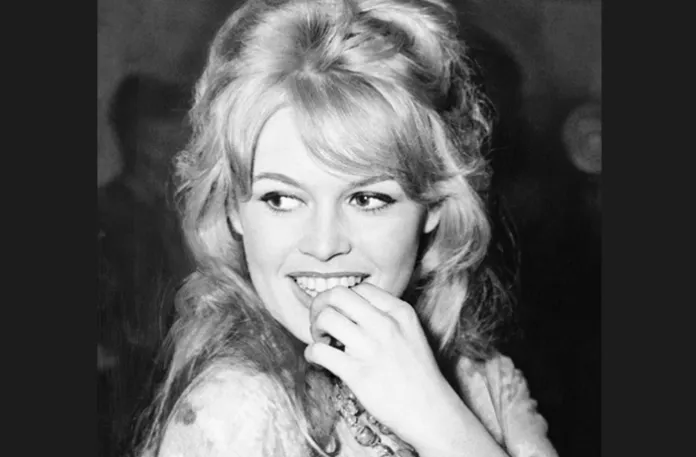
It was left to her first husband, the marginally talented but commercially attuned director Roger Vadim, to perceive her nascent appeal most clearly: In 1956, Vadim fashioned a film that announced the arrival of his wife as a screen star in imposingly biblical terms: . . . And God Created Woman. The plot turns on the Bardot character’s alleged immorality coming into conflict with the manners and mores of conventional society, but in real life, conventional society was more than willing to meet her just where she was.
“Not since the Statue of Liberty has a French girl lit such fires in America and Brigitte Bardot does not just stand there like a statue,” Life magazine wrote, citing the widespread appeal in American art-houses of . . . And God Created Woman. “She moves, she wriggles, and her clothes are as often off as on.” Without question, Bardot expanded the appeal of international films from cinephiles and college students. “Owners of art theaters,” Life noted, “have discovered that they can pull truck drivers and mourners after the vanished burlesque houses in off the sidewalks to see foreign language films if Bardot’s name is on the marquee.”
Despite such assertions, . . . And God Created Woman is certainly no great shakes as a work of cinema. At the time, however, it hastened the ascent of its leading lady into the ranks of transcontinental superstardom: Bardot was at the center of (and possibly the only interesting feature in) movies with titles on the order of The Night Heaven Fell (1958), Babette Goes to War (1959), and Please, Not Now! (1961). Vadim, from whom she was divorced in 1957, directed the first and the last, but soon, she found herself in the company of more distinguished directors, including Louis Malle, who drew out of her a BAFTA Award-nominated performance in the entertaining Viva Maria! (1965). Again, like Monroe, Bardot was not routinely used in productions of such quality. She did appear in one masterpiece: Jean-Luc Godard’s 1963 drama Contempt.
Yet, Contempt, with its artistic seriousness, must be seen as an aberration. There was something of Sydney Sweeney in Bardot continually finding herself in movies whose raison d’etre was to exploit her sex appeal, including her last wave of films: The Vixen (1969), The Bear and the Doll (1970), and the incredibly titled Don Juan, or If Don Juan Were a Woman (1973), a final reunion with Vadim.
Thereafter, Bardot attended to battling for the rights and proper treatment of animals, including through the efforts of Fondation Brigitte Bardot, which brought her admiration to go along with the adoration she already had as a star; and to making anti-Muslim and other inflammatory pronunciamentos in the press, which invited scorn and legal hassles. Here, Bardot became a kind of reverse image of Monroe: While Monroe challenged her sex goddess status by marrying writer Arthur Miller, Bardot complicated hers by making odious statements. Her personal life, which included three marriages subsequent to her union with her mentor, Vadim, seems to have been unsatisfactory, too; she is said not to have been close to her one child, a son named Nicolas. When God created this woman, He created a very complicated one.
Peter Tonguette is a contributing writer to the Washington Examiner magazine.