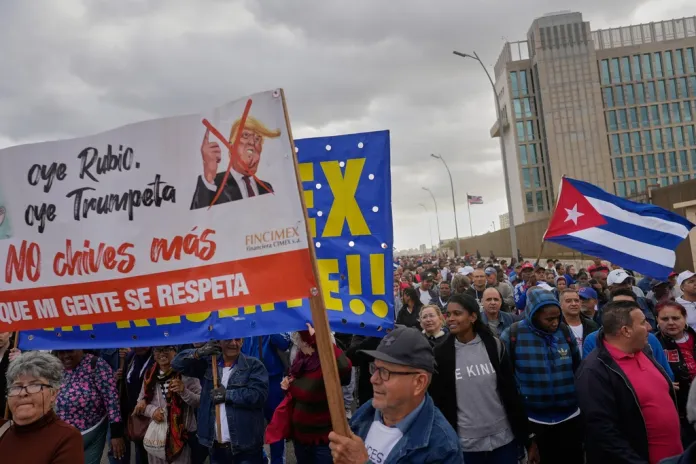
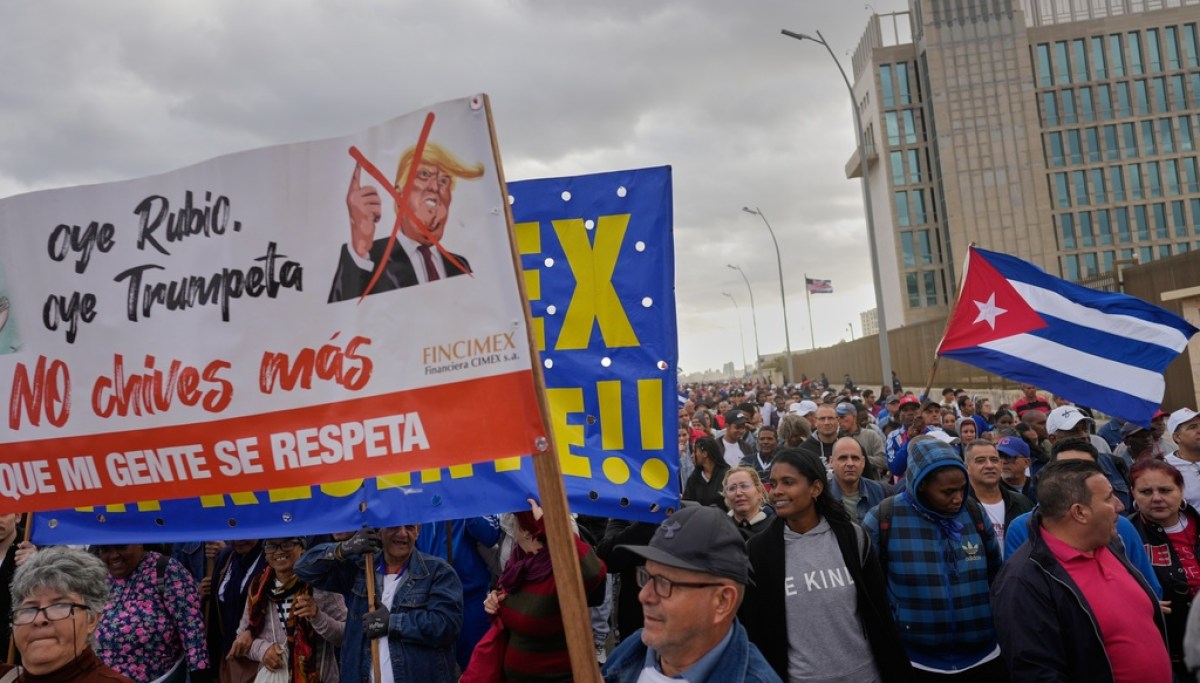
Several Latin American countries have taken steps to curb their international support for Cuba, yielding to the policy priorities of President Donald Trump as his administration increases its pressure on the island’s communist regime.
Following the Trump administration’s January ouster of former Venezuelan dictator Nicolas Maduro, Venezuela, Cuba’s largest oil supplier, cut off shipments to the Caribbean island. The halt of Venezuelan oil set in motion an oil blockade to Cuba, with Mexico ultimately following suit, as the Trump administration seeks to isolate the regime.
In addition to the oil blockade, several nations made additional moves this week that hit Cuba hard. Nicaragua and Guatemala, each Cuban allies, took non-oil-related measures that have amped up pressure on the Cuban regime.
On Tuesday, Nicaragua cut off a popular route for Cuban migrants to reach the United States by barring them from entering the country without a visa. The move stands out as Nicaragua’s leftist, authoritarian government has long been an ally of the Cuban regime, and has maintained a bad relationship with the U.S. The State Department under Secretary Marco Rubio has also issued several visa restrictions against Nicaraguan officials and Nicaraguans who they said were “knowingly facilitating illegal immigration to the United States.”
Also on Tuesday, Guatemala announced it would be gradually terminating its employment of Cuban doctors through Cuba’s overseas medical brigades. The country said it made the decision as part of a “technical analysis” and to bolster its own health system, according to the New York Times. Rubio has been critical of Cuba’s overseas medical missions and has also put visa restrictions in place related to the system.
“Cuba continues to profit from the forced labor of its workers and the regime’s abusive and coercive labor practices are well documented. Cuba’s labor export programs, which include the medical missions, enrich the Cuban regime, and in the case of Cuba’s overseas medical missions, deprive ordinary Cubans of the medical care they desperately need in their home country,” Rubio said in early 2025.
The actions of Nicaragua and Guatemala come as the oil blockade is mounting pressure against the Cuban regime. The energy crisis in the country has made other Latin American leaders concerned about the humanitarian implications for the island.
Mexico fell in line with the U.S. oil blockade soon after Venezuela, as Mexican President Claudia Sheinbaum announced her country was immediately, temporarily halting its oil shipments to Cuba in late January. Sheinbaum said it was a “sovereign decision” spearheaded by Mexican state oil company Pemex and was not intentionally aligned with the Trump administration’s policies. She said that Pemex “makes decisions in the contractual relationship it has with Cuba.”
Mexico, a long-standing Cuban ally, was one of the island’s largest oil suppliers next to Venezuela, prior to Sheinbaum’s announcement.
One day after Mexico’s announcement, Trump issued an executive order announcing a tariff system that threatens to target any country that sends oil to Cuba. He said he was not trying to “choke off” Cuba, as a reporter asked, but reiterated that Cuba is a “failing nation.”
“Cuba is a failing nation, and you have to feel badly for Cuba. They’ve treated people very badly. We have a lot of Cuban Americans who really were treated very badly, and they probably like to go back. No, I’m not trying to, but it looks like it’s something that’s just not going to be able to survive. I think Cuba will not be able to survive,” Trump said.
With increasing pressure on its energy systems, Cuba is crumbling as energy blackouts throughout the nation have significantly affected its vital tourism industry, food supply and prices, and public and personal transportation. Cuban leadership, under President Miguel Diaz-Canel, has called the oil blockade “criminal” and “genocidal.”
Sheinbaum and Mexico’s Pemex are weighing whether to resume a “temporary” oil blockade to Cuba, balancing maintaining Sheinbaum’s working relationship with Trump and aiding its Latin neighbor amid Cuba’s energy blackouts and worsening conditions.
Sheinbaum, who sent humanitarian aid to Cuba that arrived on Thursday, said she is diplomatically attempting to restore Cuba’s oil access through talks with the U.S., but last week said, “Obviously, we don’t want sanctions against Mexico.”
The State Department has announced $9 million in humanitarian aid to the Cuban people over the past two months, with $6 million of that sum being announced on Feb. 5 after Trump’s tariff announcement. The first $3 million was sent in mid-January for relief from Hurricane Melissa.
“Building on the success of the recently announced partnership with the Catholic Church and Caritas, the Trump Administration is announcing an additional $6 million in direct assistance for the Cuban people,” the department said in an announcement.
Bypassing regime involvement, local parish representatives will deliver pre-packaged goods from Miami to the Cuban public. The goods include rice, beans, pasta, canned tuna, and solar lamps for power, according to the Associated Press.
MEXICO FACES WEIGHTY DECISION OVER TRUMP ULTIMATUM ON SHIPPING OIL TO CUBA
The U.S. has eyed the notion of regime change in Cuba following Maduro’s ouster. Rubio, who is the son of Cuban immigrants who fled before the communist revolution, told the Senate Foreign Relations Committee that the administration would “love” to see regime change on the island.
“I think we would love to see the regime there change,” Rubio said. “That doesn’t mean we are going to make a change, but we would love to see a change. There’s no doubt about the fact that it would be of great benefit to the United States if Cuba was no longer governed by an autocratic regime.”