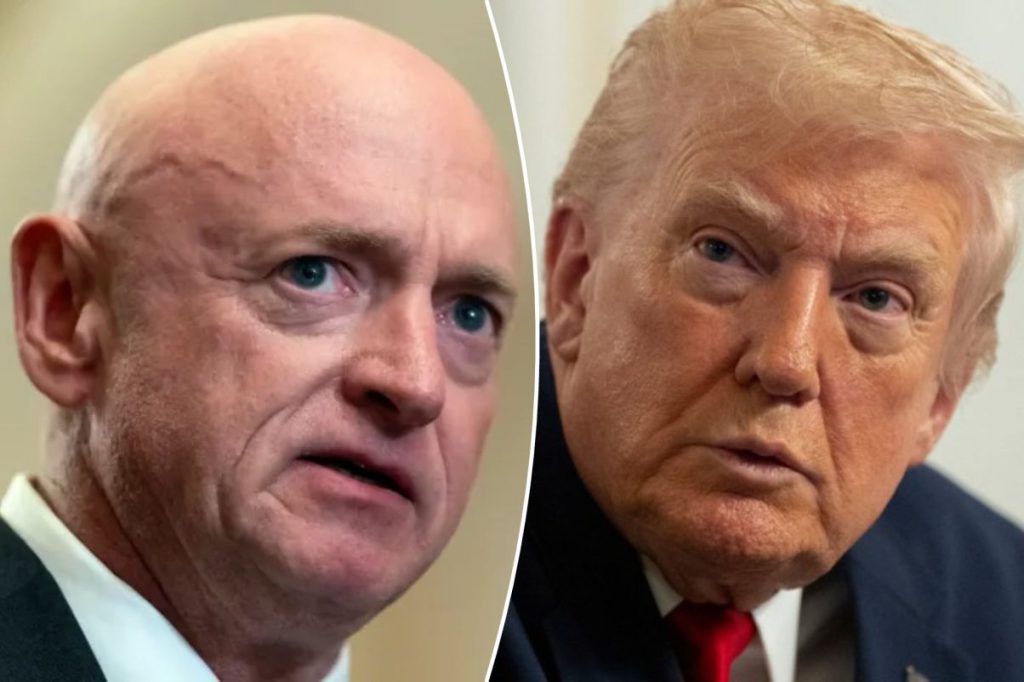
A handful of Justice Department attempts to build highly politicized criminal cases on weak or untested legal foundations is threatening to undermine public faith in the accountability agenda President Donald Trump promised on the campaign trail.
The unsuccessful attempt by prosecutors this week to secure an indictment against six Democratic lawmakers who appeared in a social media video encouraging military members to defy “illegal” orders was the latest side quest to spawn negative headlines for the Trump DOJ. It followed a backlash to the Justice Department’s subpoena of Federal Reserve Chairman Jerome Powell, as well as criticism of the inclusion of former CNN anchor Don Lemon in the indictment of anti-Immigration and Customs Enforcement activists who shut down worship services in a Minnesota church.
Trump’s DOJ has not shied away from pursuing political cases. His FBI raided the election offices in Fulton County, Georgia, last month as part of a criminal investigation into the 2020 vote count. His Justice Department has signaled it is looking into whether Obama-era intelligence officials fabricated the intelligence that led to the Russian collusion investigation during Trump’s first term in office.
But those moves target alleged wrongdoing that was central to Trump’s identity for years, and which voters might have expected his DOJ to pursue when they reelected him in 2024.
Critics say some of the other, less clear-cut political cases could threaten to undermine the controversial work Trump’s supporters want to see the DOJ accomplish.
“If you can’t even get a grand jury indictment, that’s pretty embarrassing,” former federal prosecutor Neama Rahmani told the Washington Examiner. “Statistically, you can count on one or two hands the number of times per year nationwide the department is unable to secure an indictment, and it seems to be a regular occurrence right now.”
Washington, D.C., has one of the most dense concentrations of Democratic voters, meaning it is highly possible some grand juries, which consist of selected citizens, are rejecting these prosecutions on purely political grounds. Meanwhile, the Washington Examiner previously uncovered left-wing groups that have been meeting and coaching residents on how to “influence outcomes” in jury deliberations.
Grand jury proceedings require only probable cause, not proof beyond a reasonable doubt, and are conducted without defense counsel present.
“You need a bare majority, 12 out of 23 grand jurors,” Rahmani said. “If you can’t get over that first step, you’ve failed as a prosecutor.”
Former federal prosecutor Andrew McCarthy likewise argued in a piece for the National Review that the “Seditious Six” case never aligned with settled constitutional doctrine, describing the lawmakers’ statements as “legally unimpeachable” political speech.
McCarthy said the statute reportedly considered by prosecutors — criminalizing encouragement of military insubordination — could not survive modern First Amendment scrutiny under the Supreme Court’s Brandenburg v. Ohio standard, which allows punishment of speech only when it is directed to inciting imminent lawless action and likely to produce it.
“There was no plausible justification for the proposed indictment,” McCarthy wrote, adding that expressing the long-recognized principle that troops must obey lawful orders does not constitute sedition or incitement.
Polarization on DOJ management leaves little room for error
The DOJ’s efforts are unfolding amid sharply divided public attitudes toward the institution itself.
An August Pew Research Center survey found 39% of respondents viewed the DOJ favorably, while 46% viewed it unfavorably. Beneath those overall numbers, partisan views moved dramatically: 51% of Republicans held favorable views, up 18 points from the previous year, while favorable views among Democrats fell to 28%, down 27 points.
That polarization leaves little margin for prosecutorial missteps.
McCarthy warned that being too quick to bring untested criminal cases against political adversaries risks damaging institutional legitimacy regardless of which party is in power.
“Obviously, Democrats will not abide the lawfare, and their prior commission of it will not nullify their authority to exact retribution when they are next back in power,” McCarthy said, adding that “for a time, it seemed possible that Democrats would realize that their lawfare strategy had put Trump back in power.”
Rahmani expressed a degree of agreement with McCarthy’s view, arguing that he “understands” Trump feels he was treated unfairly by the past administration’s criminal cases but framed the problem in less political terms.
“I understand why Trump thinks that he was treated unfairly. But some of these cases are ridiculous,” Rahmani said.
GRAND JURY REJECTS DOJ ATTEMPT TO INDICT ‘SEDITIOUS SIX’ LAWMAKERS
In order to inspire more faith and confidence in Trump’s DOJ, at the very least, leadership needs to be fully confident that any indictment they bring will result in a conviction. The more failures, the more likely it is people will doubt the seriousness of the department.
“You’ve got to be able to finish it,” Rahmani said. “This can’t just be for headlines.”
Peripheral prosecutions and investigations leave some conservatives scratching their heads
The failed “Seditious Six” indictment comes after other head-scratching DOJ pursuits that have generated controversy without clear success in the courtroom, including the department’s subpoena of Federal Reserve Chair Jerome Powell and the prosecution of former CNN anchor Don Lemon stemming from a protest that targeted a Minnesota church service.
Many legal observers across the political spectrum support prosecuting the activists who stormed the church and say their conduct was likely a violation of the Freedom of Access to Clinic Entrances Act, which criminalizes obstructing or blocking any person from accessing an abortion clinic or church.
But controversy emerged when federal prosecutors also charged Lemon and one other self-styled reporter at the scene with the same charges are the other protesters, despite their insistence that they are protected from prosecution because they were present during the incident as journalists.
Conservative commentator Tom Elliott, who said he believes Lemon wrongfully disrupted the church service, warned in a post on X last month that extending federal charges to a reporter risked turning a local matter into an expansive federal precedent.
Everyone hates when I bang on about this, but the Don Lemon situation is explicitly a state issue. The FACE Act is itself unconstitutional as it gives feds powers the Constitution does not (like policing local churches/abortion clinics).
Minnesota’s constitution enshrines… https://t.co/qcMSwd2yfL
— Tom Elliott (@tomselliott) January 30, 2026
He argued the conduct could have been addressed under Minnesota law and cautioned that broad federal use of statutes such as the FACE Act could later be used against conservative activists in different contexts by future administrations. However, state action likely would not have occurred given the public stance of Attorney General Keith Ellison (D-MN), who has indicated he would not have brought charges.
The Lemon case took an unusual turn this week after he added an additional lawyer to his defense team, Joseph Thompson. Up until his recent resignation, Thompson was the No. 2 official in the same U.S. attorney’s office now prosecuting Lemon.
Lemon is also represented by high-profile defense attorney Abbe Lowell, who defended Democratic New York Attorney General Letitia James during the DOJ’s short-lived mortgage fraud case against her. That case also crashed and burned in court and has been seen by critics as another example of an unnecessary prosecution that hurts the DOJ’s accountability image.
Rahmani noted that attrition inside prosecutorial offices can directly affect case quality. The Minnesota office has been hit by departures tied to disagreements over the Trump administration’s investigative priorities.
“When people that believe in the mission leave and you replace them with rookies, it’s a problem,” he said. “Bad cases and bad lawyers lead to bad results.”
Trump’s signature Weaponization Working Group struggles to produce results
At the same time, the administration’s signature internal review — Attorney General Pam Bondi’s “Weaponization Working Group” — has yet to produce the report expected to serve as the backbone of Trump’s accountability narrative more than a year after it was announced.
DOJ leaders are now pressing the group to deliver findings, holding frequent meetings to accelerate progress. Ed Martin, Trump’s pardon attorney who was initially chosen to lead the effort, was recently removed from the working group without public explanation.
The working group was created last February following Trump’s executive order directing agencies to review past conduct under the Biden administration that may have beem politically motivated, including the targeting of nonviolent anti-abortion activists, the FBI’s history of anti-Catholic bias, the aggressive mass prosecution of protesters from the Jan. 6 riot, and any possible weaponization by former special counsel Jack Smith and his associates.
A source recently told the Washington Examiner the working group is resolute in delivering a progress report in the coming weeks on at least one of the February 2025 memo’s seven agenda items, but the source declined to specify who is currently leading the group or how many personnel are part of the effort.