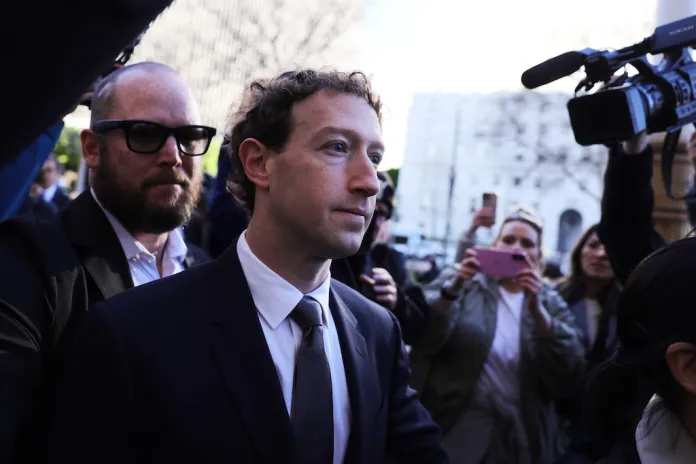
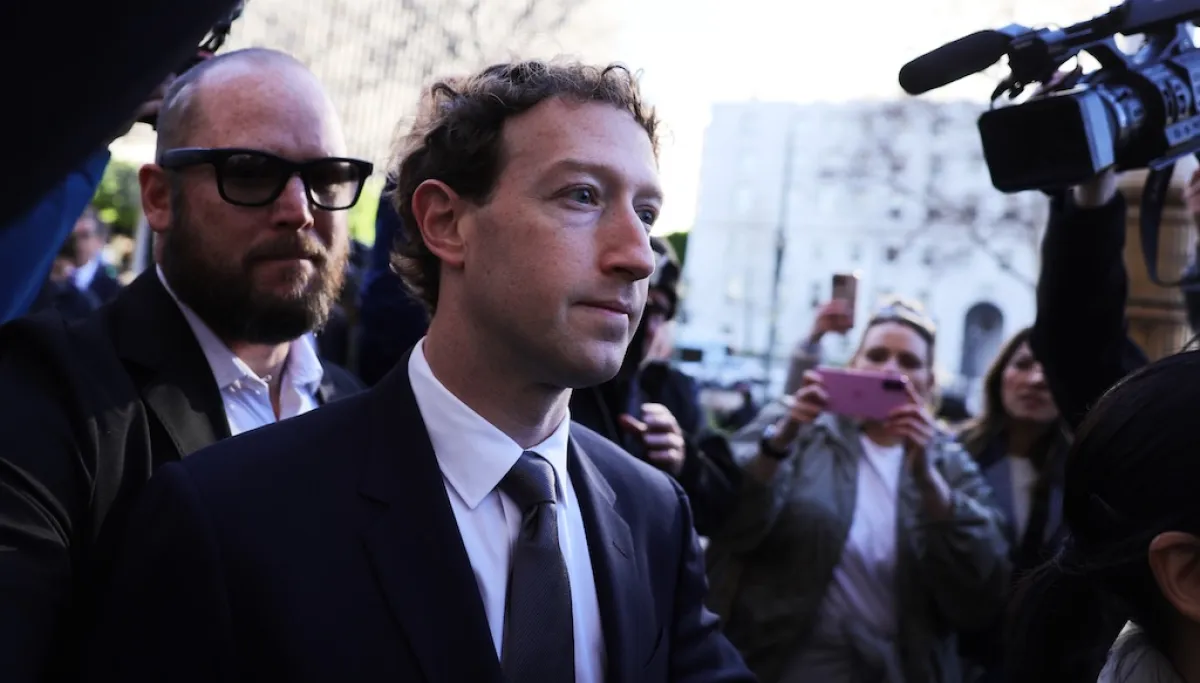
Meta CEO Mark Zuckerberg faced sharp questions about his social media company’s goals for attracting younger users during a Wednesday hearing in Los Angeles.
Zuckerberg was called to the witness stand in the ongoing trial in a first-of-its-kind case accusing social media companies Meta — which operates Instagram and Facebook — and YouTube of making their platforms harmfully addictive. The case centers on claims made by a 19-year-old, identified only as K.G.M. in the lawsuit, that she became addicted to the media, blaming that addiction for leading to her depression and suicidal thoughts.
During Zuckerberg’s time on the stand during the trial on Wednesday, he was grilled by lawyers on a variety of topics, including how Meta safeguards against underage users from accessing its platforms and its goal regarding teenagers’ use of the social media platforms.
K.G.M.’s lawyer, Mark Lanier, spent a significant part of his questioning asking about the platform’s age verification policies, according to the Associated Press. Zuckerberg explained that the company restricts users under 13 years old and tries to detect when a user has lied about their age to go around those rules. The Meta CEO said he did not “see why this is so complicated,” after continued questions about its age verification policy.
Lanier also pointed to an internal Instagram presentation from 2018 that claimed, “If we want to win big with teens, we must bring them in as tweens,” and questioned why the company set a goal of attracting younger users.
Zuckerberg said Lanier was “mischaracterizing what I am saying,” but did add that the company “had different conversations over time to try to build different versions of services that kids can safely use,” per Reuters.
During Wednesday’s proceedings, Lainer questioned Zuckerberg about the time-use goals Meta had discussed in internal documents. Zuckerberg defended the company’s internal goal to encourage users to spend more time on Instagram, saying “if something is valuable, people will do it more because it’s useful to them,” per Sky News.
Zuckerberg’s grilling on the stand came a week after the head of Instagram, Adam Mosseri, pushed back on claims that someone could be clinically addicted to social media. Mosseri also defended the platform’s decisions, saying it is “not good for the company, over the long run, to make decisions that profit for us but are poor for people’s well-being,” per the Associated Press.
Both Meta and YouTube have strongly denied allegations that their platforms are harmfully addictive, also claiming that Section 230, a federal statute that generally protects online platforms from liability for user-posted content, should protect them from liability in this case.
JURY CAN KEEP USING PLATFORMS AT CENTER OF SOCIAL MEDIA ADDICTION CASE: JUDGE
Snap, the owner of Snapchat, and TikTok were also named in the initial lawsuit, but the two companies settled with K.G.M. for an undisclosed amount ahead of the trial.
Social media and its addictive qualities have been increasingly under the microscope for the past decade, with the heads of social media companies testifying before Congress and platforms making adjustments for younger users, but the trial in Los Angeles marks a new step in the scrutiny toward the platforms. The trial, which began earlier this month, is expected to continue over the coming weeks.