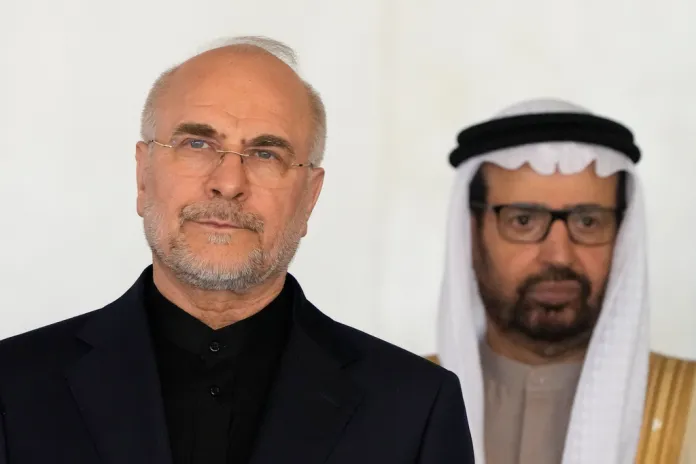
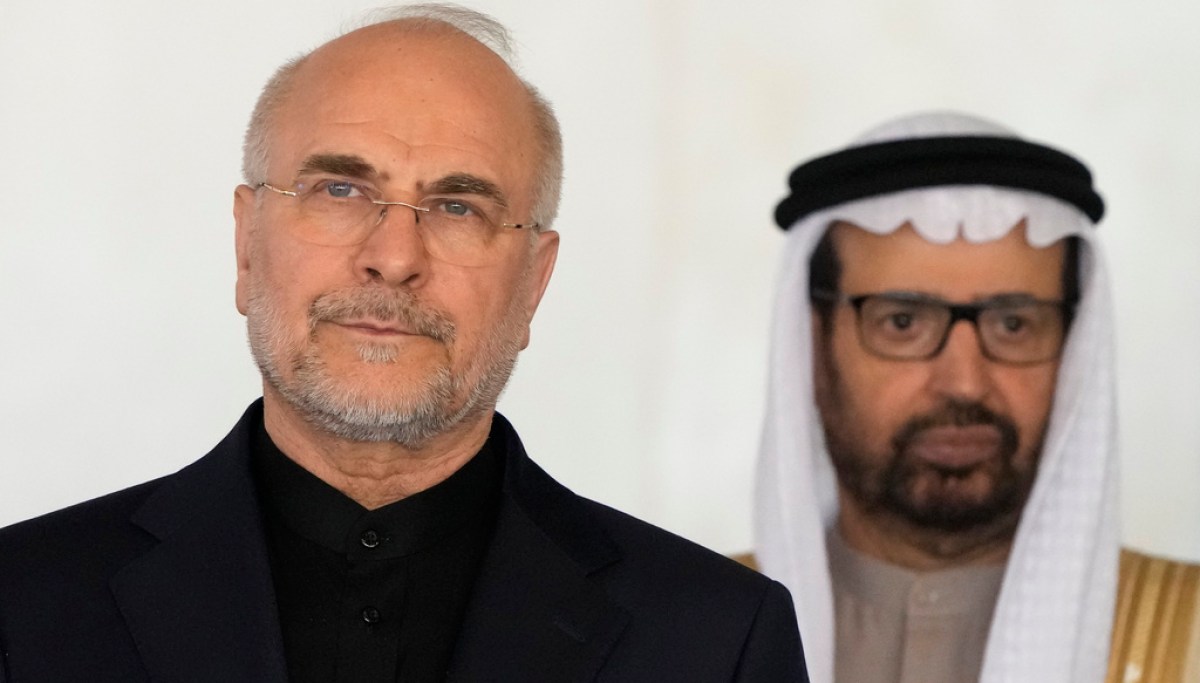
In Tehran’s latest signal that it will not blink, Iranian Parliament Speaker Mohammad Bagher Ghalibaf said the country is not looking to negotiate with the United States and Israel.
As the war enters its 11th day, Iran has struggled to mount an effective response to the blistering U.S.-Israeli air and missile strikes that have devastated its military. Despite this, Ghalibaf said the government was not seeking negotiations and hinted that Tehran would somehow hit its enemies with heavy military force.
“Absolutely, we are not seeking a ceasefire; we believe we must strike the aggressor in the mouth so that it learns a lesson and never again even thinks of aggressing against our dear Iran,” Ghalibaf said on X. “The Zionist regime sees its ignoble existence in perpetuating the cycle of ‘war-negotiation-ceasefire and then war again’ in order to consolidate its domination. We will break this cycle.”
Ghalibaf, a former Islamic Revolutionary Guard Corps commander, is a longtime leader of Iran’s conservative faction, known as the “principlists.” He has consistently advocated for hardline policies against the U.S. and Israel, and played a central role in ordering the massacre of tens of thousands of protesters in January.
Despite Iran’s heavily lopsided losses, the hardliners dominating the government appear to be betting that they can outlast the U.S. and Israel through global economic pressure. Oil prices have skyrocketed over the de facto closure of the Strait of Hormuz, though President Donald Trump announced yesterday that the strait was reopening.
Ghalibaf’s rhetoric aligns with other messages from the government and the military, many of which threaten global oil supplies. On Monday, Guard spokesman Ali Mohammad Naeini pledged that Iran “will not allow the export of a single liter of oil from the region to the hostile side and its partners until further notice.”
“Their efforts to reduce and control the price of oil and gas will be temporary and fruitless,” he added.
The threat was quickly picked up by Trump, who issued a stark warning in response.
“If Iran does anything that stops the flow of Oil within the Strait of Hormuz, they will be hit by the United States of America TWENTY TIMES HARDER than they have been hit thus far. Additionally, we will take out easily destroyable targets that will make it virtually impossible for Iran to ever be built back, as a Nation, again — Death, Fire, and Fury will reign upon them — But I hope, and pray, that it does not happen!” he warned in a post on Truth Social.
Trump then portrayed his threat as a “gift” from the U.S. to China and other nations that are heavily reliant on oil passing through the strait.
“Hopefully, it is a gesture that will be greatly appreciated,” he added.
Despite its degraded military capabilities, Iran could have some cards to play in wreaking economic havoc.
A Feb. 18 report by the Center for Strategic and International Studies, featuring energy analyst Clayton Seigle, outlined several hypothetical scenarios for how the global oil trade could be disrupted by Iran. One such scenario involved Iran targeting the oil industries of the Gulf countries, including producing fields, gathering and processing nodes, or oil export terminals. Seigle told the Washington Examiner on Friday that such a move would amount to “a very severe step.”
WAR WITH IRAN WILL IMPACT OIL PRICES MUCH MORE THAN THE 1980S CRISES
“They’ve done that only in a very minor way so far, with the LNG facility in Qatar and also one of the refineries in Saudi Arabia, but not really the oil export terminals so far. So I would say that the Iranians have not yet played that card,” Seigle said. “They have been hitting those countries in retaliation for having them host the United States offensive. I think that’s still to come, that the Iranians may choose to play the attack the export facilities card. I would not be at all surprised to see that happen.”
Meanwhile, the U.S.-Israeli decapitation campaign hasn’t prevented hardliners backed by the Guard from consolidating control over the government. The appointment of former Ayatollah Ali Khamenei’s son, Guard ally Mojtaba Khamenei, is seen as proof that Tehran will continue its hard-line stance toward negotiations.
The reformist president, Masoud Pezeshkian, appears to have been largely sidelined despite his leading position, with the Guard repeatedly disregarding his stated policies, such as pledging an end to attacks on Iran’s neighbors.