Chief Justice John Roberts questioned why someone should expect their location data to be private, if they are already voluntarily sharing it with companies, such as Google, in a case over whether law enforcement’s broad searches of the location data for a specific area during a specific time were constitutional.
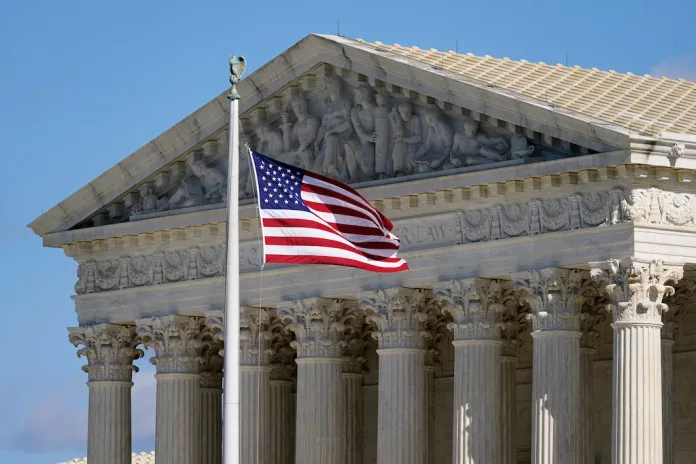
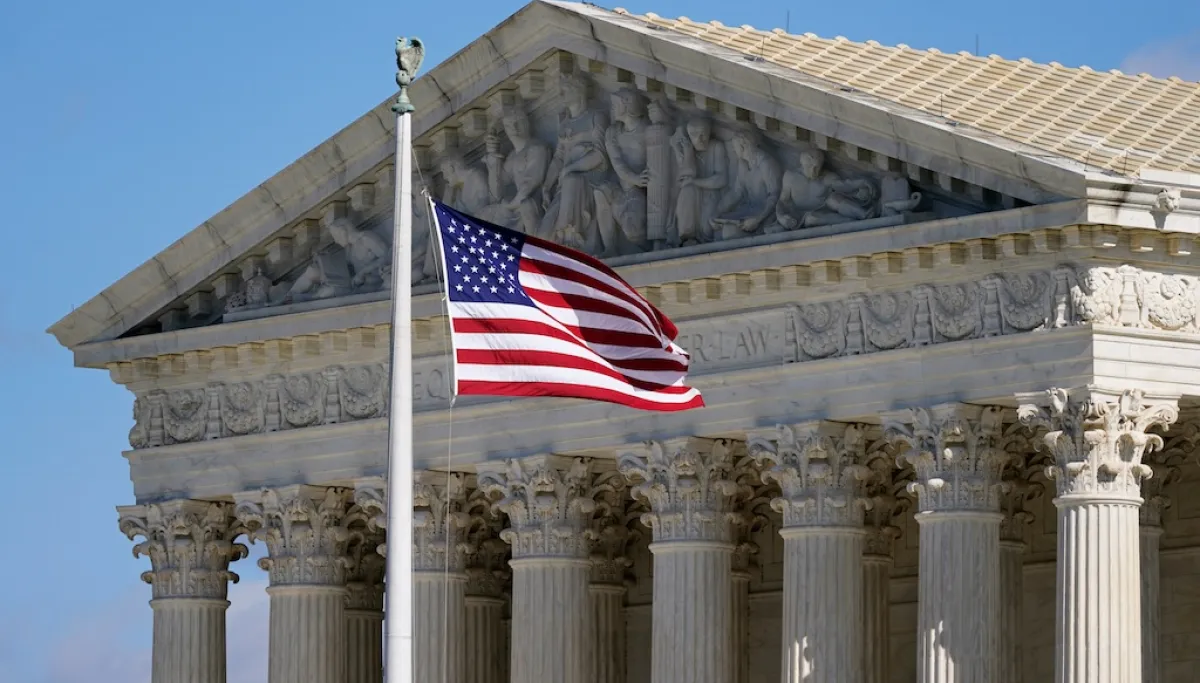
The Supreme Court heard arguments on Monday in Chatrie v. United States, where it examined whether a geofence warrant violated Okello Chatrie’s Fourth Amendment right against unreasonable searches and seizures. A geofence warrant is a request made by the government to a technology company, such as Google, in this case, for information about devices that were physically within a certain geographic parameter during a specific period of time. The data from the geofence warrant used in Chatrie’s case was able to connect him to a bank robbery, for which he was convicted.
Chatrie’s lawyer, Adam Unikowsky, argued to the justices that the use of a geofence warrant was unlawful and that Chatrie had a “reasonable expectation of privacy in his location history, given both its sensitive and revealing nature and the fact that it was stored in his password-protected account.” Several of the justices questioned that premise, with Roberts noting that if he did not want the government to see his location history he could just “flip that off.”
“You don’t have to have that feature on your phone,” Roberts said. “So what’s the issue?”
Unikowsky responded that he does not “agree that one should have to flip off one’s location history, as well as other cloud services, to avoid government surveillance,” and likened location sharing to sending an email, an action that is optional but that does not open the door to government surveillance. Roberts again questioned Unikowsky’s argument.
“But the only reason the government has access to this information is because you’ve decided to make it public, to the extent it can be accessed by people any number of ways,” Roberts said. “In other words, people can use that information, not simply law enforcement. If you don’t want them to peer into your window, you can close your window or the shades.”
Justice Samuel Alito also questioned Chatrie voluntarily sharing his location data with Google, which was then accessed by law enforcement via a warrant issued to Google.
“It’s not just a question of shutting it off, it’s a question of turning it on,” Alito said. “And according to the government, your client had to go through multiple steps in order to turn it on, so he voluntarily disclosed to Google the information about where he was going to be.”
Unikowsky faced other sharp questions over how much data could be exposed to the government via a warrant to Google, or a similar technology company, and whether the examination of anonymized location data for a specific time period and at a specific location could be viewed as an unlawful overbroad search.
“It seems like detective Hylton here really went through a lot of the steps that should be applauded, in terms of narrowing this down, going through multiple steps,” Justice Brett Kavanaugh said. “I guess I’m trying to figure out why this was bad police work to get a warrant.”
DOJ lawyer Eric Feigin argued to the justices that the standard Unikowsky is seeking would make the Fourth Amendment an “impregnable fortress” around any records of public movements, even if law enforcement obtained a warrant from a judge. The justices also offered sharp questions toward Feigin over concerns with how broad the information in a geofence warrant is, even if it is narrowed down by a magistrate judge.
The Supreme Court’s eventual decision in the case will have a wide impact on a law enforcement tool that has been at the center of criminal investigations across the country.
KEY LAW ENFORCEMENT SEARCH TOOL FACES SUPREME COURT SCRUTINY
The arguments in the Chatrie case kicked off the Supreme Court’s final scheduled week of oral arguments for the term. The high court will conclude oral arguments for the term on Wednesday, when it hears arguments in two separate cases, including one on whether the Trump administration may end temporary protected status for Haiti and Syria.
The Supreme Court is expected to issue a ruling in the Chatrie case and all other cases argued this term, by the end of June. On Wednesday, the high court is expected to release at least one opinion in a pending case, but it is not expected to be in the Chatrie case.