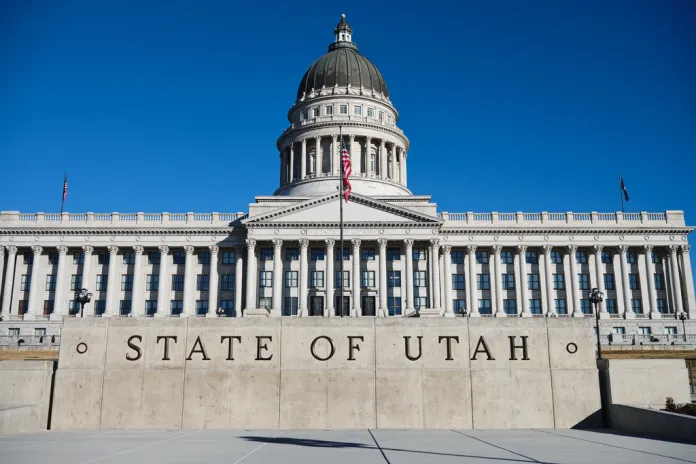
As Utah emerged as the epicenter of an internal GOP conflict over AI regulation, two groups with considerable links to progressive politics were quietly stoking the flames.
In January, State Rep. Doug Fiefia (R-UT) introduced legislation that would require AI companies to promulgate public safety and child protection plans and report any issues concerning those topics to state authorities, threatening hefty fines if they fail to do so. This legislation provoked a stern rebuke from the White House, with the Office of Intergovernmental Affairs calling the state’s HB 286 “an unfixable bill that goes against the Administration’s AI Agenda.”
While this internecine clash has received considerable coverage, the involvement of liberal outside groups in precipitating it has so far gone unreported.
Pushing state-level regulations
On Jan. 14, shortly before Fiefa introduced his legislation at the start of Utah’s legislative session, an organization called Encode AI cut a $10,000 check to his campaign. Fiefa, a freshman representative, is seeking to make the jump to Utah’s upper chamber in 2026.
After Fiefa introduced his legislation, Encode supported it vigorously.
“In Utah, we’ve worked with policymakers, organizations, and survivor parents on both sides of the aisle to help craft smart policy that protects against AI harms without standing in the way of innovation,” Encode co-executive director Adam Billen told the Washington Examiner.
Encode’s vice president of public policy issued a statement endorsing HB 286 after the group paid for polling that found broad support for the bill among Utah voters just days after it was introduced. Encode then used the polling data it paid for in a mass-texting campaign, which it also paid for, to argue that opposition to Fiefa’s AI safety bill constituted an attempt from “an unelected White House bureaucrat” to stifle the will of the people in Utah. Recipients of the text were urged to pressure their representatives to support the law.
The financial resources Encode uses to fund campaigns such as this have historically come from left-of-center grantmakers, and the organization itself is run by staffers with experience in progressive politics.
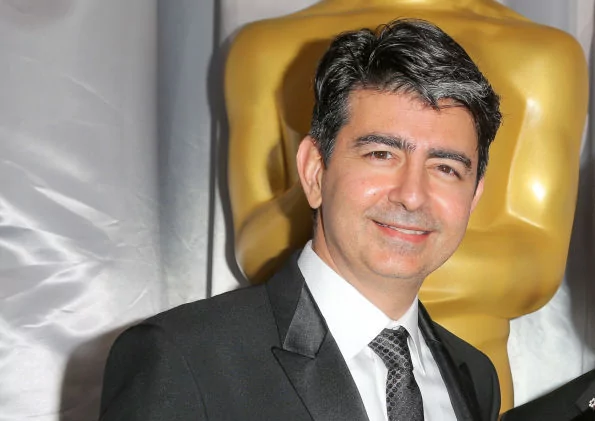
Encode is led by Stanford University student Sneha Revanur, who founded the organization in 2020. Revanur disclosed in 2023 that the group’s primary source of funding was the Omidyar Network, a philanthropic empire chaired by liberal billionaire Pierre Omidyar.
The flow of liberal funding has continued since then.
Tax documents from 2024, the most recent year for which such disclosures are available, indicate that Encode received $125,000 from Hopelab, which is part of the broader Omidyar Network, and $100,000 from Heising-Simons Foundation, a nonprofit organization run by Democratic megadonors Liz Simons and her husband Mark Heising.
Politico described Revanur as the “Greta Thunberg of AI,” a label that she agreed was accurate in an interview with the outlet. Much of the staff at Revanur’s organization has experience in liberal politics.
Encode’s vice president of state affairs worked in Sen. Alex Padilla’s (D-CA) office prior to joining the organization; its vice president of public policy previously worked with the left-of-center Friends Committee on National Legislation; and the group’s California policy lead worked as a staffer for State Sen. Scott Wiener (D-CA).
Multiple Encode staffers also list pronouns on their LinkedIn profiles — including one employee who uses they/them — something seen by many as an indication of progressive politics.
Despite their liberal bona fides, Encode and its staff work to appear relatively nonpartisan in their public communications. Encode, for instance, has highlighted the endorsement of its policy platform by former Democratic presidential candidate Pete Buttigieg as well as its presence at President Donald Trump’s signing of the anti-deepfake Take it Down Act.
“AI is poised to be one of the most transformational technologies in modern history. Ensuring it is developed and governed responsibly for the benefit of all is not a Republican or Democratic issue — it’s in everyone’s best interest,” Billen told the Washington Examiner. “Encode AI is a nonpartisan nonprofit dedicated to ensuring AI’s promise is realized. We work with anyone who shares that goal. Encode previously supported Sen. Ted Cruz and the Trump Administration in advancing and securing the passage of the Take it Down Act into law – landmark federal legislation to protect survivors of nonconsensual sexual deepfakes.”
Links to the Left
There is some evidence that Encode has worked to downplay its links to the Left in recent years. Revanur, according to the right-of-center watchdog Influence Watch, listed a campaign internship with former Rep. Cori Bush (D-MO) on her LinkedIn page as of 2023. Viewing Revanur’s page now reveals no mention of her internship with the former congresswoman.
Additionally, Influence Watch reports that, as of October 2023, Encode had published blog posts critical of Immigration and Customs Enforcement, as well as the influence of racism on algorithms. Again, the organization’s blog page no longer appears to host those pieces.
Encode was not the sole group with links to the Left working to advance Fiefa’s AI legislation.
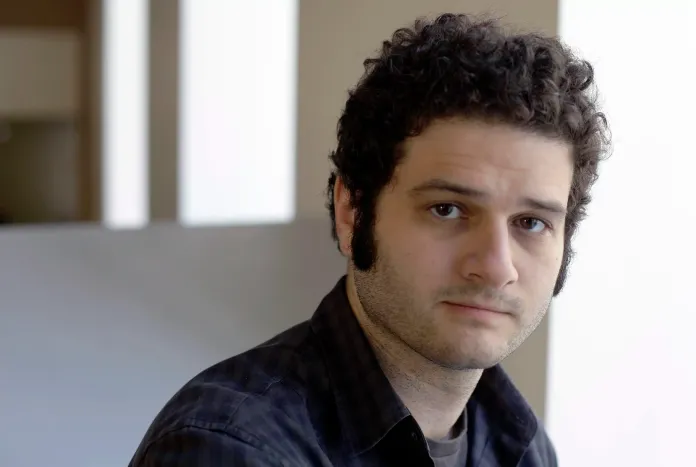
The Secure AI Project, which has considerable links to Democratic megadonor Dustin Moskovitz, helped Encode commission positive polling for Fiefa’s bill. Additionally, SAIP hired former Utah Republican House Speaker Greg Curtis and a local official to lobby on its behalf around the time of HB 286’s introduction. The organization’s cofounder and one of its policy analysts also registered as Utah lobbyists around that time.
SAIP CEO and cofounder Nick Beckstead spent seven years at the Open Philanthropy Project, now Coefficient Giving, which is the primary philanthropic vehicle used by Moskovitz. Howie Lempel, the organization’s policy director, spent about a year at Coefficient Giving as a senior adviser.
Moskovitz’s philanthropic arm is a major funder of AI safety initiatives.
Andrew Doris, a one-time Democratic Senate staffer who now works as a senior analyst at SAIP, praised Fiefa’s bill in a press release, saying that it “takes courage to take on big tech companies, but major risks from AI are already here and the time to act is now. We hope Utah’s legislature will show that transparency and accountability for AI harms are bipartisan concerns.” Doris registered as a lobbyist in Utah in October 2025.
“Secure AI Project is proud to support both Republican and Democratic legislators in protecting children and the public from risks of severe harm from advanced AI,” Scott Wisor, the organization’s policy director, told the Washington Examiner. “Like all the bills we’ve worked on, HB 286 was overwhelmingly supported by the public, regardless of party affiliation — 91% of Republicans support, and 91% of Democrats support.”
Some conservatives have raised concerns about left-wing foundations funding organizations intended to influence GOP policymaking.
“There is nothing inherently wrong with a conservative organization taking funds from liberal entities or with a conservative organization dissenting from some conservative orthodoxy,” Capital Research Center director of research Mike Watson wrote in 2021. “But when nominal conservatives start rushing to the left as left-wing dollars flow into their institutions, skepticism is warranted.”
TECH DONORS FUND MEDIA FELLOWSHIP SHAPING COVERAGE OF THEIR PET ISSUE
SAIP and Encode’s Utah operation may not be a one-off, as the two groups have sprawling operations across the country and in D.C.
Fiefia did not respond to a request for comment.