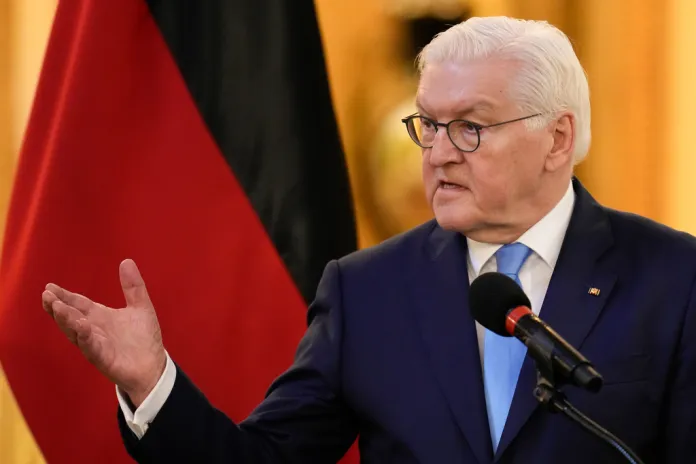
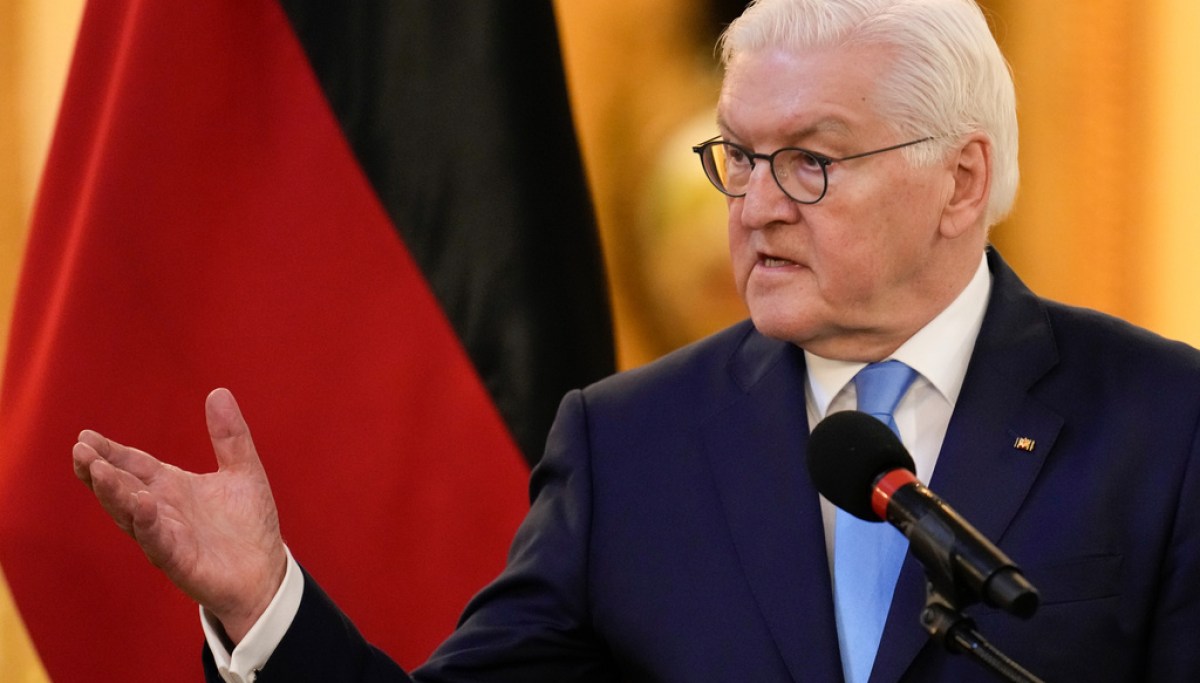
German President Frank-Walter Steinmeier said Tuesday that the U.S.’s justification for its war with Iran “does not hold water,” delivering a sharp rebuke of Washington’s rationale as questions mount about the conflict’s validity.
Speaking in Germany, Steinmeier said the United States argument that Iran posed an imminent threat because of its venture toward a nuclear weapon failed to meet the standard required under international law, calling the war avoidable and inconsistent with legal norms governing the use of force.
“There is little doubt that, in any case, the justification of an imminent attack on the U.S. does not hold water,” Steinmeier said, after affirming that “this war violates international law.”
The comments reflect growing European unease with the U.S.-backed campaign, which began joint strikes with Israel on Iranian leadership and defense infrastructure. Critics in Europe have increasingly questioned whether the conflict meets the legal threshold for self-defense, particularly in the absence of publicly presented evidence of an imminent Iranian attack.
Secretary of State Marco Rubio said the imminent threat was an Iranian counterattack that would follow an Israeli attack that the U.S. knew was coming, while House Speaker Mike Johnson (R-LA) reiterated that the administration believed Tehran presented an imminent threat to U.S. interests and allies with its alleged pursuit of a nuclear weapon. Those claims have been central to the administration’s legal and political defense of the war.
However, skepticism has also emerged within the Trump administration. Joe Kent, director of President Donald Trump‘s National Counterterrorism Center, became the first known official to resign over the war, citing concerns about its justification and direction.
The war has triggered a broader debate over the collapse of diplomatic efforts that once constrained Iran’s nuclear program. Steinmeier, who played a role in negotiating the 2015 Iran nuclear deal, suggested that abandoning the agreement in favor of military action contributed to the conflict.
“This war is also — and please bear with me when I say this, as someone directly involved — a politically disastrous mistake,” Steinmeier said. “And that’s what frustrates me the most. A truly avoidable, unnecessary war, if its goal was to stop Iran from developing a nuclear weapon.”
Trump’s continued threats to strike Iran’s energy infrastructure have also drawn criticism, with some opponents arguing such attacks would be war crimes and risk wider regional escalation.
EUROPEAN LEADERS UNITED IN OPPOSING US EASING SANCTIONS ON RUSSIAN OIL
Steinmeier’s office is largely symbolic, as Chancellor Friedrich Merz is primarily responsible for running the government, but his public opposition could fuel debate in Germany over the war in Iran.
Merz was initially in favor of the war, having shared the U.S. goal of regime change in Iran, but the spreading economic tolls due to the closure of the Strait of Hormuz have prompted the chancellor to be more critical.