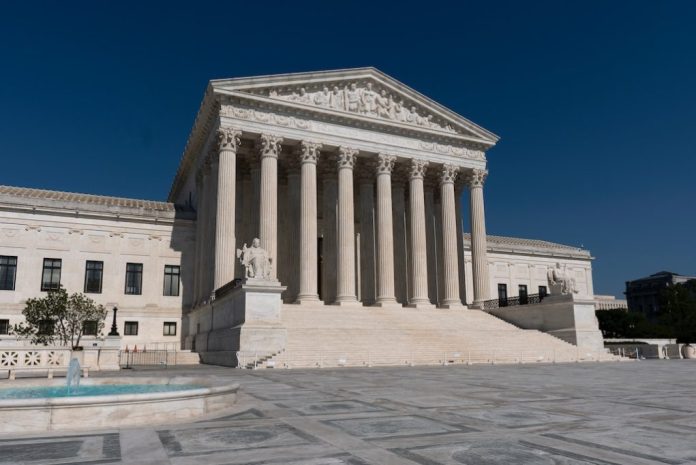
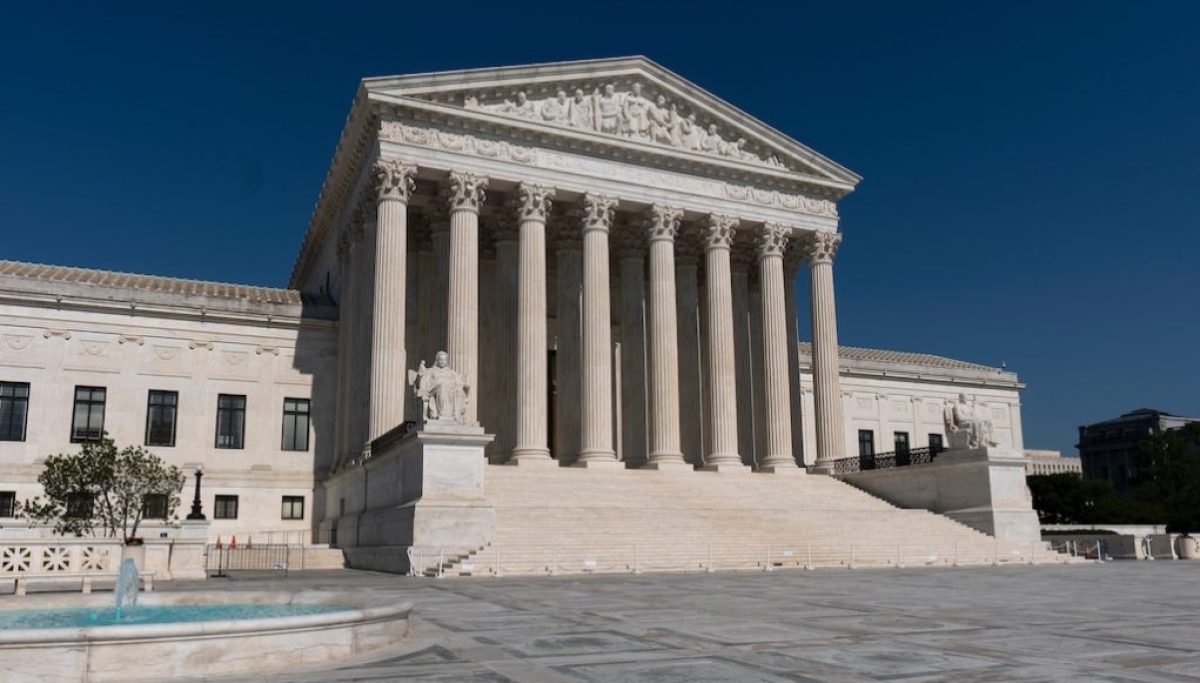
The Supreme Court declined on Tuesday to hear a case about the way one of the Catholic Church‘s annual collections is presented to its congregation, allowing the case to proceed in a lower court despite concerns about the government infringing on religious autonomy.
The U.S. Conference of Catholic Bishops had urged the Supreme Court to take up the case, where it was seeking to toss a lawsuit challenging the way the church’s “Peter’s Pence” offering is described to parishioners, claiming ruling against the church’s collection would infringe on its religious autonomy under the First Amendment.
“Such disputes are beyond the ken of civil courts. The Religion Clauses of the First Amendment ensure churches can decide for themselves, free from state interference, matters of church governance. That’s what the Church’s description and religious use of a millennium-old offering to the Pope is: a matter of church governance,” the USCCB argued in its petition to the Supreme Court.
“Thus, the state interference required to adjudicate this lawsuit — which involves demands for lists of papal donors, accounting for the Pope’s use of Peter’s Pence, and disclosure of the Bishops’ internal communications with the Holy See about Peter’s Pence — would violate the church autonomy doctrine,” the petition continued.
The high court did not elaborate on why it declined to take up the case, and its decision was included in its Tuesday orders list alongside other cases it declined to hear. Justice Ketanji Brown Jackson took no part in the decision to hear the case because it was originally assigned to her when she served on the U.S. District Court for the District of Columbia, before her confirmation to the Supreme Court in 2022.
Both a federal district court and a federal appeals court allowed the lawsuit to proceed, finding that the lawsuit — seeking refunds to a punitive class of people who claim they were misled into donating to the offering and changes in how the offering is discussed by the church — could continue under “neutral principles” that do not violate the Catholic Church’s autonomy.
The USCCB had received support from various other religious groups, including those of Protestants, Orthodox Christians, Jews, and Muslims, in its bid for the Supreme Court to hear its case. Four groups, one from each of those religions, filed a brief urging the high court to take up the USCCB’s case, warning that keeping the lower court rulings in place could lead to infringements on religious autonomy for other religions.
“Scrutinizing such practices in this way undercuts religious organizations’ ability to decide for themselves matters that the First Amendment commits to their authority. If civil courts are permitted to subject the USCCB to the burdens of litigation in this case to adjudicate the inherently religious message on which it is based, the religious liberty shared by all faith groups is threatened,” the religious groups said in their brief in support of the USCCB.
“If the Catholic Mass is not safe from government intrusion, courts next may make themselves superintendents of the Jewish Tefillah, the Adventist Sabbath, the Orthodox Divine Liturgy, the Muslim Jum’ah, and all other faiths’ worship services,” the brief continued.
THE MAJOR SUPREME COURT DECISIONS REMAINING FOR THIS TERM
The Supreme Court did not add any cases to its docket for the next term when it released its orders list this week, instead only releasing dozens of rejected petitions. Of the 10 cases the justices have said they will hear in the next term, only one involves First Amendment religious rights.
In the next term, which begins in October, the justices will hear a case about whether Colorado unlawfully violated Catholic preschools’ First Amendment rights by requiring them to accept all families, including those who do not share Catholic beliefs, to be part of the state’s universal preschool program.