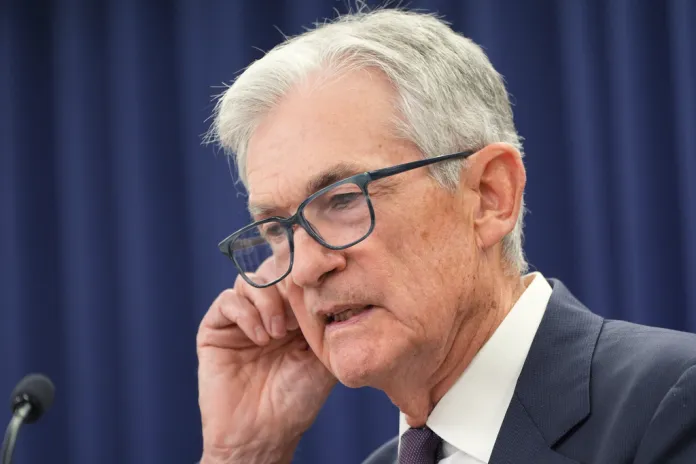
A federal judge on Friday refused to reconsider his decision blocking subpoenas tied to a criminal investigation into Federal Reserve Chairman Jerome Powell, dealing another setback to the Justice Department and setting up a likely appeal that could prolong the standoff.
Chief U.S. District Judge for the District of Columbia James Boasberg, an appointee of former President Barack Obama, rejected the DOJ’s motion to revisit his earlier ruling, finding that prosecutors failed to present new evidence or identify any clear legal error that would justify reversing course.
“The Government’s arguments do not come close to convincing the Court that a different outcome is warranted,” Boasberg wrote in his six-page order denying reconsideration.
The decision keeps in place Boasberg’s March ruling quashing subpoenas issued by the U.S. Attorney’s Office in Washington, led by Jeanine Pirro, which sought records from the Fed’s Board of Governors as part of an investigation into Powell.
Prosecutors have said they are examining whether Powell committed fraud or made false statements to Congress related to cost overruns at the Fed’s headquarters renovation project and his prior testimony about them. Boasberg claimed that the government has yet to produce any evidence supporting those suspicions.
“The Government’s fundamental problem is that it has presented no evidence whatsoever of fraud,” he wrote. 
Instead, the judge reaffirmed his earlier conclusion that the subpoenas were likely issued for an improper purpose — namely, to pressure Powell amid President Donald Trump’s long-running criticism of the Fed chairman and demands for lower interest rates.
While acknowledging that prosecutors have broad authority to issue grand jury subpoenas, Boasberg emphasized that power “is not unlimited” and cannot be used for coercive or political ends. 
DOJ lawyers argued that the court applied too strict a standard at the investigative stage and misinterpreted the timeline of the investigation. But Boasberg said those arguments failed to address the core issue: whether the subpoenas’ “dominant purpose” was legitimate or improper.
The ruling marks another legal victory for Powell, who has characterized the investigation as a pretext designed to give Trump greater leverage over the Fed and its monetary policy decisions.
Under the relevant legal options for the DOJ’s fight to obtain the subpoenas, the department had to ask Boasberg to reconsider his March 13 block first. The DOJ is expected to appeal to the U.S. Court of Appeals for the D.C. Circuit, Pirro previously signaled in a fiery rant against the judge’s initial block of the subpoenas last month. Pirro has said her office intends to continue pursuing the investigation.
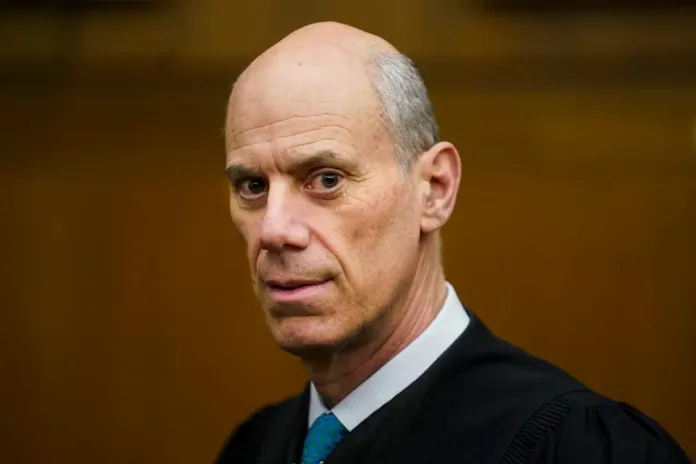
Boasberg has increasingly become a lightning rod for criticism from Republicans and Trump allies, who have accused him of overstepping his authority in a series of high-profile rulings against the administration. Trump himself has blasted the judge as “crooked” and called for his impeachment after Boasberg blocked deportations under the Alien Enemies Act, prompting a rare public acknowledgment from Chief Justice John Roberts last March, who said impeachment is not an appropriate response to judicial disagreements.
Congressional Republicans have gone further, with some introducing articles of impeachment and others urging the D.C. Circuit to sideline Boasberg, while the DOJ previously filed, and ultimately lost, a misconduct complaint accusing him of bias.
JUDGE JAMES BOASBERG BLOCKS DOJ SUBPOENAS AGAINST FED CHAIRMAN JEROME POWELL
An appeal could carry significant political consequences for Trump’s future Fed chair selection, given the time it could take to adjudicate the matter. It could even delay Senate consideration of Kevin Warsh, Trump’s nominee to replace Powell. Sen. Thom Tillis (R-NC), who has criticized the inquiry, has said he would seek to block Warsh’s confirmation while litigation over the subpoenas remains unresolved.
Powell, for his part, has indicated he does not plan to step down while the legal fight continues, setting up a prolonged clash.