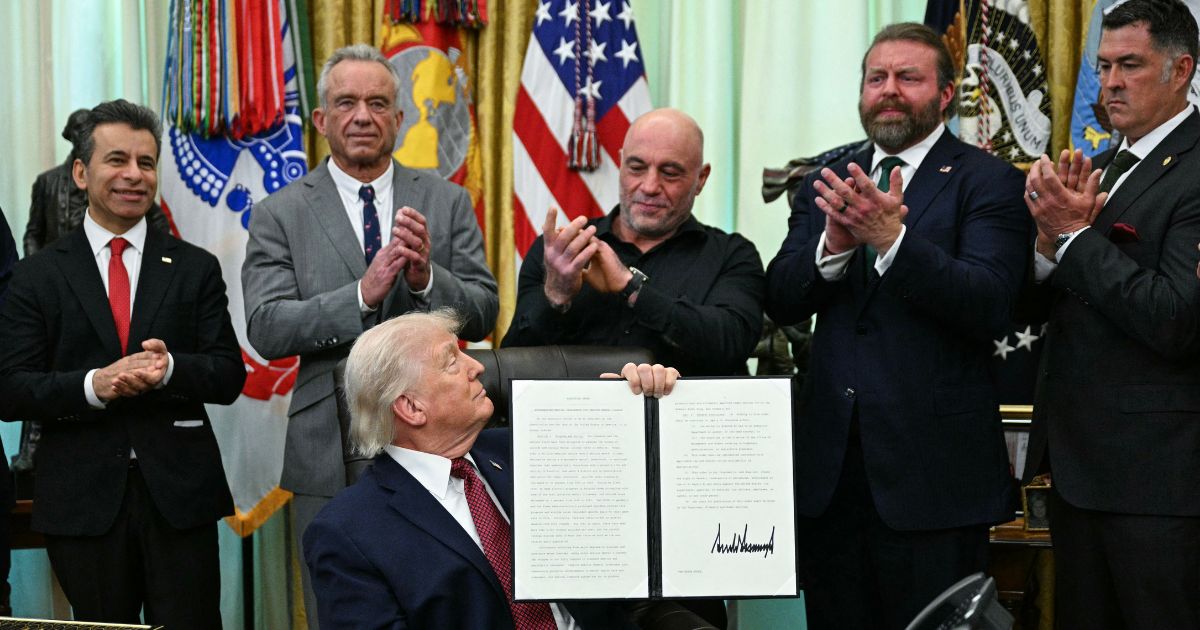
President Donald Trump’s new executive order on psychedelics is being sold as a compassionate breakthrough for Americans suffering from serious mental illness.
But for families living with schizophrenia, psychosis, and severe bipolar disorder, it looks like a dangerous gamble built on the same failed foundation that has already abandoned our sickest loved ones.
On April 18, 2026, Trump signed an order directing federal agencies to accelerate medical treatments for serious mental illness, including psychedelic-based therapies, and to reduce regulatory barriers that slow research and access.
The White House said this will fast-track “innovative methods” for treating depression, PTSD, addiction, and suicide risk.
Media coverage from Time Magazine, NPR, and others has largely echoed that enthusiasm.
There is even special interest in powerful drugs like ibogaine.
On the surface, it sounds bold and compassionate. But the order talks broadly about “serious mental illness” while skipping a crucial reality: people with psychosis-related disorders are not the same as patients with depression or PTSD, and the science around psychedelics in this group is thin at best and alarming at worst.
Modern psychedelic trials have largely excluded people with schizophrenia, schizoaffective disorder, and bipolar I with psychosis. Researchers have done that for a reason: fear that psychedelics could worsen psychosis or trigger mania in vulnerable people.
A 2024 study in JAMA Psychiatry found that psychedelic use was linked to more psychotic and manic symptoms in adolescents with higher genetic risk for schizophrenia or bipolar I, even when they did not yet have a diagnosis.
A summary in Neurology Advisor described a “complex” and concerning relationship between psychedelic use, psychosis, and mania.
A recent review in Molecular Psychiatry reported that among people who developed psychedelic-induced psychosis, about 13 percent later developed schizophrenia — suggesting these substances can unmask or accelerate underlying vulnerability in some users.
In plain terms, Washington is moving fast on a treatment category that still carries serious, unanswered safety questions for the very people most likely to be devastated by a bad reaction.
If a veteran with treatment-resistant PTSD is helped by a carefully supervised psychedelic therapy, that may be a genuine advance. But if a young man with emerging schizophrenia is thrown into a full-blown psychotic break, the cost will not be paid by policymakers or drug companies.
It will be paid by his mother in the ER waiting room, the police officers called to respond, and the community that has to absorb the fallout.
That would be reckless under any circumstances. It is doubly reckless given that the federal government still clings to one of the most destructive mental health financing rules in modern policy: the Medicaid Institutions for Mental Diseases Exclusion.
The IMD Exclusion, created in 1965, generally blocks federal Medicaid funding for adult patients in psychiatric facilities with more than 16 beds. It was part of the Kennedy-era push to shut down large state hospitals and replace them with community mental health centers.
The hospitals were closed, but the promised community care never fully appeared. Families have lived in that gap for decades: too few beds, too few long-term residential programs, too many people with severe mental illness cycling between the street, the ER, and the jails.
A recent study of IMD waivers found that when states were allowed to use Medicaid funds for larger psychiatric and residential facilities, people with serious mental illness had lower healthcare utilization and fewer incarcerations.
In other words, when states can actually fund robust inpatient and residential care, people are less likely to end up homeless or behind bars.
So here is the contradiction: Washington is eager to move mountains for psychedelics, but refuses to modernize or end the IMD Exclusion that has starved inpatient psychiatric care for generations. There is great urgency for “breakthrough” drugs, but very little urgency for the hospital beds and residential programs that families have been begging for.
If the federal government truly wants to help Americans with serious mental illness, it should fix the safety net before expanding the experiment.
There is a better path.
First, federal officials should make it crystal clear that psychedelic treatments are not ready for broad use in people with psychosis-related disorders. Any use in that group should be limited to rigorous clinical trials with strict safeguards and long-term follow-up.
Second, Congress and the administration should end or fundamentally modernize the IMD Exclusion so Medicaid can support a real continuum of psychiatric care, including adequate inpatient and residential treatment for adults with severe mental illness.
Third, policymakers should stop pretending that a nation that cannot provide enough psychiatric beds is ready to responsibly manage a new generation of mind-altering drugs for the mentally ill.
The Kennedy era promised that we could close institutions and replace them with something better. For far too many families, that promise turned into abandonment wrapped in idealistic language. Trump’s psychedelic order risks becoming the same kind of mistake: a grand new promise built on a broken old foundation.
Compassion is not about headlines or trendy therapies. Compassion means refusing to gamble with the most fragile lives while we still refuse to fund the care they already desperately need.
The views expressed in this opinion article are those of their author and are not necessarily either shared or endorsed by the owners of this website. If you are interested in contributing an Op-Ed to The Western Journal, you can learn about our submission guidelines and process here.
Advertise with The Western Journal and reach millions of highly engaged readers, while supporting our work. Advertise Today.
Submit a Correction →