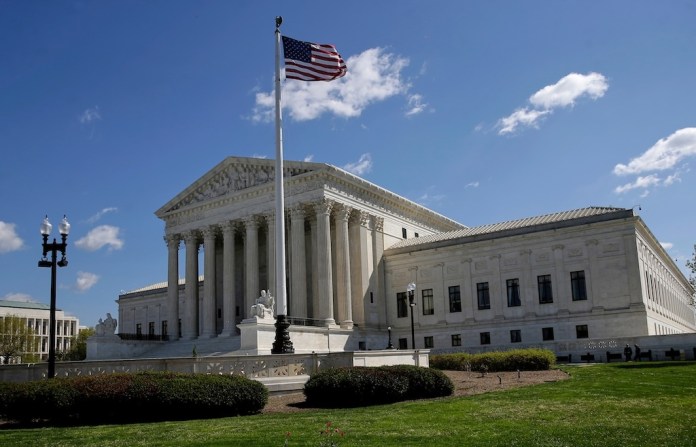
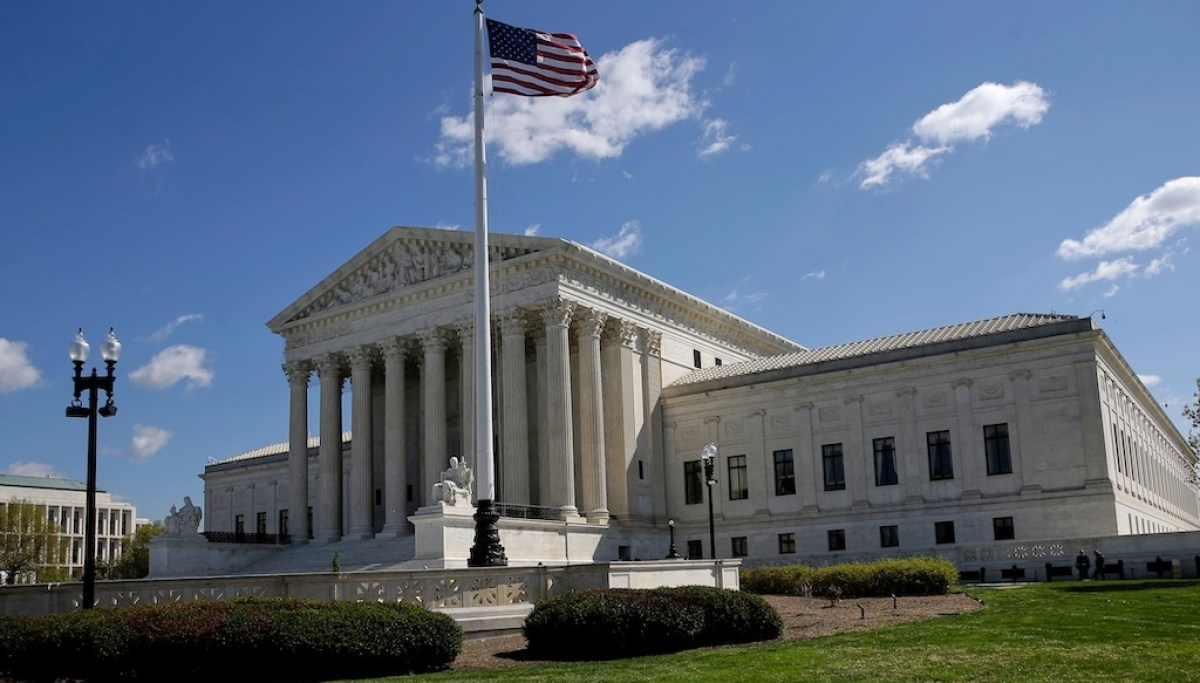
The Supreme Court’s landmark ruling Wednesday in Louisiana v. Callais is set to spark a shake-up of congressional maps across the South in the coming years, which will likely see multiple Democratic-held districts drawn out of existence.
The high court ruled 6-3 on Wednesday that Louisiana’s creation of a second minority-majority district in compliance with Section 2 of the Voting Rights Act was an unconstitutional racial gerrymander. The majority also rewrote the legal test for determining unlawful redistricting under Section 2 of the VRA, as established by a 1986 ruling in Thornburg v. Gingles. Under the previous Gingles test, lawsuits over a state’s congressional maps simply had to show that the voting power of minorities was diluted, regardless of the reason. But the new framework says lawsuits have to prove states intentionally disenfranchised minority voters if they draw districts that effectively water down the minority vote, creating a much higher bar that will almost certainly allow states to redraw their maps without regard to racial considerations.
While Justice Samuel Alito wrote in his majority opinion that Callais does not overrule the holding in Gingles, Jason Torchinsky, an election law expert and partner at Holtzman Vogel, told the Washington Examiner that the Gingles standard now effectively stands “in name only.”
“It’s going to be very, very challenging to bring a successful Section 2 claim under the new Gingles,” he said.
The old Gingles standard found that if a minority group makes up a significant portion of a state’s population and lives in a sufficiently compact area, that group should be entitled to elect its preferred candidate via a congressional district in which it makes up the majority.
The former Gingles holding aimed to curb the dilution of minority groups’ voting power in elections by ensuring their representation through these VRA opportunity districts. The new Gingles standard, rewritten this week in Callais, focuses on the intent of lawmakers, opening the door to allowing race-neutral partisan gerrymandering that could incidentally wipe out minority-majority districts.
Southern states will now have more freedom to draw congressional districts without fear of a VRA lawsuit over any map that dilutes minority voting power in pursuit of partisan advantage.
“It gave the states more freedom to draw districts and to be free from the possible challenges brought by people who want to use the Voting Rights Act to strike down districts,” Michael Dimino, a law professor at Widener University Commonwealth Law School, told the Washington Examiner. “It gave states more freedom rather than less.”
“Now, it certainly is possible for people to challenge districts as racial gerrymanders, and in this case itself, the Supreme Court says that this district that Louisiana drew was unconstitutional, but there’s nothing new about that conclusion,” he added.
Although the Supreme Court’s ruling likely reduces the number of lawsuits that can succeed in striking down congressional maps as violations of Section 2, Torchinsky is not optimistic it will reduce the “volume of litigation” in the short term.
“We’ll see what happens over time, but this does make plaintiff-side challenges that are seeking to force additional majority-minority districts a lot harder,” Torchinsky said.
States can redraw maps now, but full effects will be seen post-2030 census
While the full impact of the Supreme Court’s ruling will likely not be felt until after the redistricting cycle spurred by the 2030 census, states can begin to redraw their maps immediately if their laws and state constitutions allow.
As many as 12 Democratic congressional districts could be redrawn into Republican ones, with Gingles now effectively muted as a legal standard, according to an analysis by the New York Times. Another report by left-wing group Fair Fight Action found that as many as 19 Democratic congressional seats could be in jeopardy.
Louisiana Attorney General Liz Murrill said in the aftermath of Wednesday’s ruling that the Supreme Court ended the state’s “long-running nightmare of federal courts coercing the state to draw a racially discriminatory map.” Because the state’s second minority-majority district was directly ruled as unconstitutional by the high court, Louisiana appears poised for a quick redraw of its map to wipe out at least one of the two Democratic-held seats in the state.
Florida has already begun the process of redistricting in a bid to add as many as four Republican seats to its congressional delegation, and Gov. Ron DeSantis (R-FL) said Wednesday’s ruling affected one district in the state’s current congressional map that has “been corrected in the newly-drawn (and soon to be enacted) map.”
The Supreme Court’s ruling triggered a special legislative session in Mississippi, meaning lawmakers in the state will get to work in the coming weeks to redraw their district, potentially wiping away a Democratic-held seat. In neighboring Alabama, Gov. Kay Ivey (R-AL) said lawmakers are not in a position to call a special session to redraw their districts but expressed hope that they will be able to do so soon.
Torchinsky predicts that while several states are looking at potentially redrawing ahead of the 2026 midterm elections, the effects of Wednesday’s decision will not be felt until later elections.
“In advance of 2028, I think we’re going to have a combination of lawsuits and voluntary action by legislatures to address Callais and try to get rid of districts that aren’t consistent with Callais. And then after the 2030 census, how districts are redrawn following that will all have to be drawn consistent with Callais, and so you may see some more dramatic effects,” Torchinsky said.
SUPREME COURT STRIKES DOWN RACE-BASED REDISTRICTING MAP IN LOUISIANA
In the South, congressional redistricting — usually an exercise done by state legislature just once at the beginning of a decade — had turned into slogs of lawsuits and different maps from election to election. With Wednesday’s ruling, Dimino believes that whenever states decide to redraw their maps, they will be less constrained and less in fear of a VRA lawsuit.
“The likely result is going to be that a state is going to think if we decide to redraw our districts now or when we have to redraw our districts after the 2030 census, we’re going to have a little more freedom in drawing district lines without having to worry quite so much about looping in enough minority voters to create X number of majority-minority districts,” Dimino said.