Socialist Spain lavished taxpayers' cash on the needs of illegals while spending only a fraction to stop them arriving in the first place.
The post Spain Gave $2bn to Illegal Migrants in 2025, But Spent Just $70m on Border Protection appeared first on Breitbart.
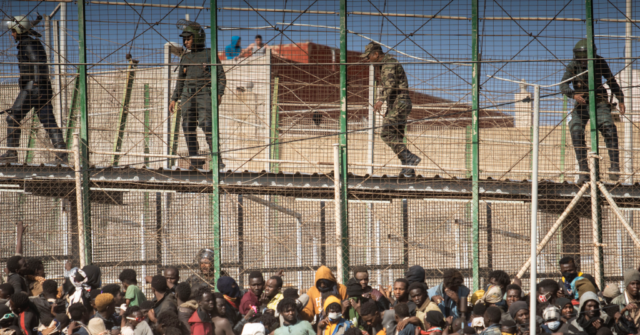
The Spanish government spent over €1.8 billion of taxpayers’ money last year attending to the needs of illegal migrants in the country, while spending only a tiny fraction of that, €60 million, funding efforts to stop them from arriving in the first place.
The Spanish government initially allocated around €659 million to fund assistance programs for illegal migrants and cover related expenses and initiatives for 2025. However, the government also agreed to expand said budget to up to €979 million towards the end of 2024 to cover the “real needs” of migrants for what the Spanish government defines as the “Coordinated Action” for migration, a process that sees much of those funds distributed between the Spanish Commission for Refugee Aid (CEAR), the Red Cross, Caritas, and other accredited non-government organizations in the country.
El Español, citing official statistic data from Spain’s 2025 national budget, reports subsequent extensions to the budget were approved throughout 2025 and, ultimately over €1.8 billion ($2.1bn, £1.5bn) in 2025 was spent between the Spanish central government and its autonomous communities in paying for migrants that arrived on smuggler boats, as unaccompanied minors, or individuals seeking asylum protection under political persecution, religion, or other grounds. The report notes that the amount spent could still be higher, as the statistics do not include all the costs incurred by migrants who entered Spain through airports as “tourists”, students, or as temporary visa holders who then overstay, a common deception long known in several European states.
In contrast, the Spanish government spent just €60 million ($70m) to stop illegal migration, €20 million ($23.4m) of which was funded by a grant from the European Union’s Border and Coast Guard Agency (Frontex), making Madrid’s overall spending on protecting its borders even smaller.
Out of that €60 million, the Spanish Interior Ministry barely spent €20 million last year to reinforce border security. Of the € 1.8 billion spent to support migrants once they have arrived in Spain, the costs are widely spread across the state.
For example, the Spanish Inclusion and Migration Ministry spent some €1.1 billion to finance its humanitarian and assistance network for illegal migrants, including the provision of immediate care for illegal migrants arriving on small boats and detention centre costs, which reportedly have a combined capacity of 53,000 beds.
Even apparently unrelated arms of the Spanish state have been dragged into Madrid’s open borders policies. State-owned enterprise Tragsa, founded for rural development and nature conservation, ended up building migrant camps for the government and managed to spend €96 million on migrant food, security, maintenance, and clean-up last year.
Collectively, the regional governments of Spain’s autonomous communities spend over €600 million on illegal migrants, of which €185 million were expenses incurred by the Canary Islands to support unaccompanied minors and asylum seekers until the Spanish government moves them to mainland Spain. Catalonia’s autonomous government spent €115 million on minor migrants, while Madrid’s government spent €62 million.
Spain, led by the socialist administration of Prime Minister Pedro Sánchez, is believed to have about 840,000 illegal migrants living in its territory, with a fifth of its entire population now composed of foreigners of various classifications.
Other recent studies indicate that Spain alone accounted for roughly a third of the European Union’s entire foreign-born population growth during 2025.
Presently, the Spanish government is in the first weeks of a mass amnesty plan that will grant upwards of half a million illegal migrants legal residence status, work permits, and several other benefits as long as the prospective beneficiaries comply with a notably lax list of requirements. The Sánchez administration’s amnesty plan, widely rejected by a majority of the Spanish society, has already caused the collapse of social services across Madrid’s regional government offices.