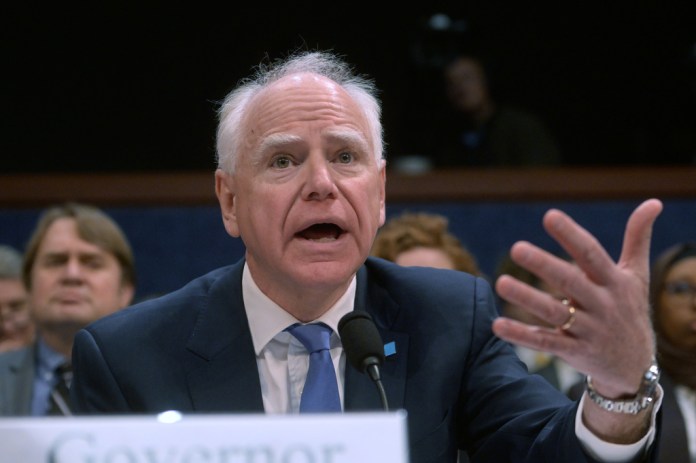
Minnesota officials under Democratic Gov. Tim Walz retaliated against state employees who raised concerns about fraud and the state’s management of taxpayer-funded social service programs, including by hiring investigators outside of the agency to scrutinize whistleblowers and monitor workers who reported suspected abuse, a new House oversight committee majority staff report alleged.
The 205-page report released on Monday alleged Minnesota Department of Human Services (DHS) officials retaliated against whistleblowers using the help of outside private investigators and law firms, intimidation tactics, and surveillance efforts, including one instance where a DHS manager allegedly proposed using military connections to determine the locations of employees raising concerns about fraud. The investigation marks the most comprehensive overview of leadership deterioration contributing to fears of speaking out against Minnesota’s federal funding mismanagement for more than half a decade
“Minnesota Governor Tim Walz and Attorney General Keith Ellison are responsible for one of the most stunning oversight failures this Committee has ever examined,” House oversight committee Chairman James Comer (R-KY) said in a statement on the investigation, which the Republican-majority on the committee formally initiated on Dec. 3.
Investigators interviewed nine current and former government officials and concluded DHS intimidated and harassed staff who raised fraud concerns under the Walz administration. The conclusions rely in part on testimony from Shireen Gandhi, a temporary DHS commissioner whom Walz fired last month, just days before she was due to face a confirmation hearing before the Minnesota Senate Health and Human Services Committee.
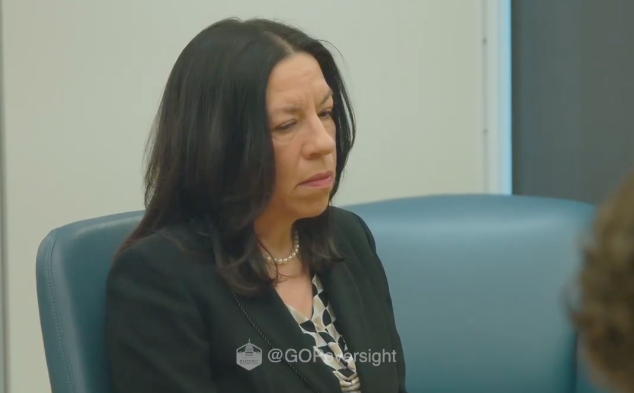
DHS would regularly ‘check-in’ with fraud-reporting employees
“Gandhi confirmed in her testimony whistleblower reports that DHS upper management would regularly meet, or ‘check-in,’ with employees who have reported fraud concerns,” the committee report states on page 108, citing her Feb. 17 taped interview with committee staffers.
Ghandi said she continued regular check-ins with whistleblower Faye Bernstein, who was placed on investigatory leave after flagging contract irregularities in November 2019, for another “year or two” following Bernstein’s leave. She maintained that Bernstein was “disruptive,” but later admitted not having much first-hand knowledge of Bernstein’s conduct.
Meanwhile, former DHS commissioner Jodi Harpstead conceded in a Feb. 23 interview that she was aware of the agency hiring outside Human Resources personnel to “add to our capacity to do investigations,” but was unsure if any outside law firms were hired.
When Gandhi was asked the same question in her interview, she too acknowledged DHS hiring external personnel for internal investigations, but was unsure if law firms were commissioned for help.
“They may be. I don’t know,” she told committee staff members.
The report details shocking allegations from whistleblowers who claimed agency investigators photographed their homes and vehicles, monitored their phones and computers, sought information about their children’s schools, and denied them promotion opportunities after they reported suspected fraud. But when Gandhi was asked about one alleged retaliation incident, she said people are generally “sensitive” when making retaliation claims and “anything can be perceived as retaliation.”
One of the most striking allegations surrounds Emmanuel Nwala, a U.S. Army veteran and former interim manager at DHS, who allegedly sought to leverage his “military intelligence connections” to identify the locations of whistleblowers who were critical of department leadership’s handling of fraud reports, according to an email corroborated by former DHS assistant commissioner Eric Grumdahl.
Despite Grumdahl’s confirmation of Nwala’s communications, Walz repeatedly said “I am not” when asked whether he was aware of the email.
Grumdahl told House investigators that Nwala had been the target of anonymous messages against him, but that “that was not helpful or appropriate” and said he hoped he wouldn’t “be doing that in the future.”
An internal fraud hotline ‘deanonymized’ reports
Committee investigators further highlighted that a DHS fraud hotline intended to provide anonymous reporting became effectively “deanonymized” sometime after 2022 and before April 2023, causing whistleblowing employees to fear their complaints would be routed to management and human resources officials.
Whistleblowers eventually resorted to using an external email account and later moved their communications to the more public social media venue X around April 2023 after their external email channel was allegedly blocked by DHS servers.
The Republican majority behind the report concluded that Walz and the state attorney general were aware of credible fraud concerns for years, yet ultimately failed to use their authority to halt payments or remove questionable providers from government programs.
Even Walz’s former chief of staff, Chris Schmitter, said he was aware of then-U.S. Attorney Andrew Luger’s warnings to state officials early last year regarding concerns that frontline employees did not feel comfortable flagging fraud-related issues, according to the transcribed interview on page 117 of the report.
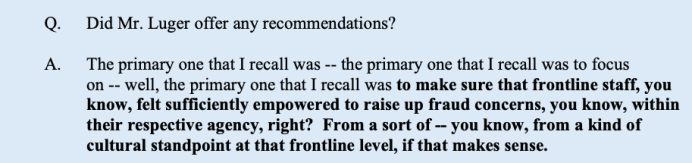
Luger, an appointee by the Biden administration, stepped down in January last year and was succeeded by Daniel Rosen, whom President Donald Trump had nominated.
Despite these repeated warnings, Minnesota agencies continued directing taxpayer funds to entities later implicated in fraud schemes, including Feeding Our Future, the nonprofit at the center of a massive federal child nutrition fraud case. The fraud from this scheme alone has been estimated to have cost roughly $300 million in federal child nutrition funding, with a total of nearly $9 billion in Medicaid-related funds may have been lost or placed at serious risk.
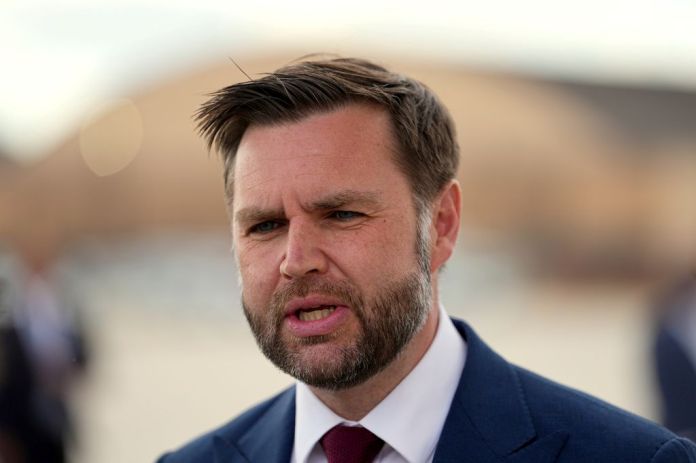
Comer also sent a letter on Monday to Vice President JD Vance, urging the White House Task Force to Eliminate Fraud to conduct a comprehensive review of Minnesota’s social service programs and anti-fraud controls.
“Billions of dollars were stolen because Minnesota state leaders turned a blind eye to rampant fraud and retaliated against state employees who dared to raise concerns,” Comer said, adding he will continue to support the Trump administration’s anti-fraud initiatives to have the “backs of hardworking Americans.”
VANCE GOES AFTER CRAIG FOR MINNESOTA’S FRAUD RECORDS: ‘FIGHTING SO HARD TO HIDE THE DATA’
Walz and Ellison have previously disputed Republican allegations that state officials knowingly allowed fraud to continue. During prior congressional testimony, Walz said he was unaware of some whistleblower allegations and agreed that intimidation of employees would be inappropriate if it occurred. Walz, who was eyeing a third term as governor, ended his campaign on Jan. 5, compounding scrutiny over his state’s fraud management failures.
The report comes as House Republicans prepare to advance a package of anti-fraud legislation this week aimed at strengthening oversight of federal programs. The Government Accountability Office estimates that fraud costs the federal government between $233 billion and $521 billion annually.