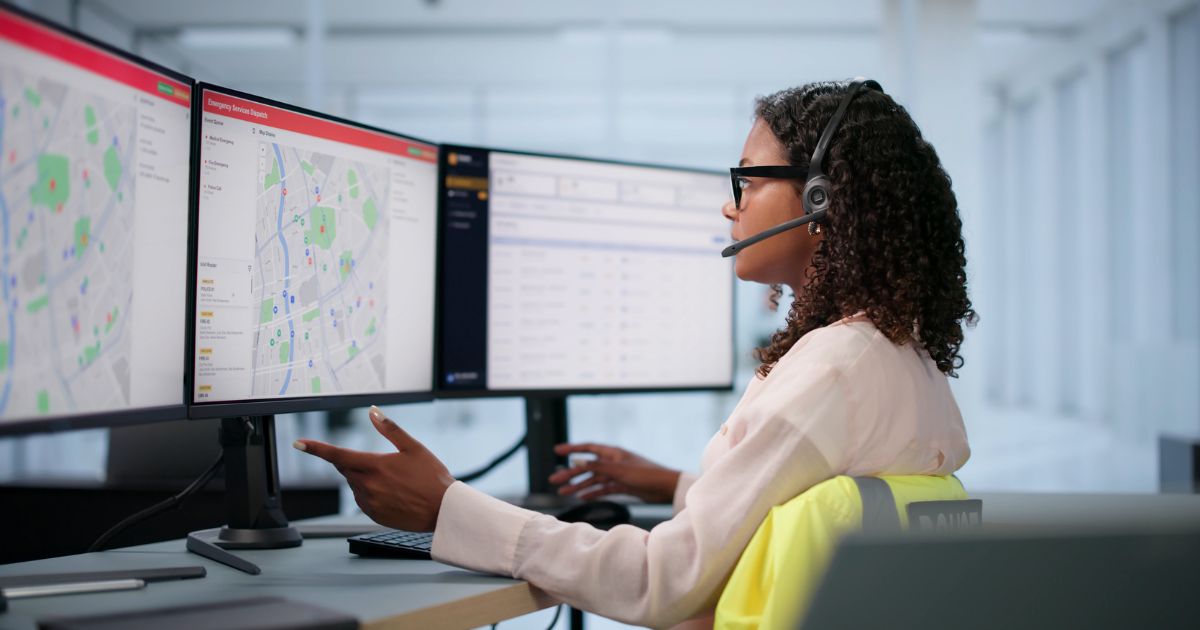
Down in New Orleans, artificial intelligence is deciding which 911 callers get to speak to a person and which do not.
The Orleans Parish Communication District is turning to technology to limit the calls humans handle, according to the Shreveport Times.
New Orleans began using AI this spring for non-emergency calls coming to its 311 line and is now rolling it out to an agency that takes about 1,000 calls per day.
Carbyne’s AI Emergency Call Triage, for example, sends what it thinks are multiple calls for one incident to an AI bot. They get an AI response if they are calling about a previously reported incident, but are transferred to a human if they are not.
AI is not being used to handle calls — only to route them to humans when needed, the OPCD said.
“If somebody calls about a relative having a heart attack, when that call is coming in, we don’t know what it is. Calls get answered in the order that they’re received,” Karl Fasold, executive director of the OPCD, said, according to WVUE-TV.
“If someone is available, the call goes to them. If no one is available, you go to queue. You get frustrated because you’re in a queue waiting, and you want to talk to somebody, and it results in my personnel handling calls back-to-back-to-back. So, there’s increased stress levels on both sides,” he said.
Fasold said not every 911 call is an emergency. He noted that car crash reports often get 20 calls per crash during rush hours.
“You can’t really staff for those occurrences of surges. It’s impossible, both fiscally and practically,” he said.
“What we have the AI doing is looking to see if you’re calling within 200 meters of somewhere we know that there’s an accident already. With the AI handling your incoming calls about the [motor vehicle accident], you get instant service,” he said. That leaves the humans to deal with what only they can deal with.
Seattle has been using AI for about two years, according to the Seattle Times.
The Seattle Fire Department, for example, uses it to decide who gets a fast response.
The city’s technology is prompting the dispatchers to route certain 911 patients to a nurse-staffed call center in Texas.
Some think the public should be made aware that this is a possibility.
“The potential that this company could be a part of the experience that Seattle 911 callers have and they don’t know it, that raises serious concerns,” Ryan Calo, a University of Washington law professor and co-director of the university’s Tech Policy Lab, said.
“I’m troubled on a number of levels.”
“The dispatcher still has the ultimate authority,” Chris Lombard, SFD’s assistant chief of resource management, said.
“Every determination on a 911 call … is made by a trained SFD dispatcher following SFD’s protocols,” a representative of Corti, the company supplying Seattle’s technology, said. “Corti’s role is to support that work, not replace or override clinical judgment.”
Advertise with The Western Journal and reach millions of highly engaged readers, while supporting our work. Advertise Today.