Iran warned Sunday that it was prepared for a “doomsday war” if the United States resumes its attacks, while leaving the door open to further negotiations one day after President Donald Trump rejected Tehran’s latest proposal to reopen the Strait of Hormuz.
The post Iran Warns of ‘Doomsday War’ — Trump Expects Talks After Rejecting Tehran’s Proposal appeared first on Breitbart.
Iran warned Sunday that it was prepared for a “doomsday war” if the United States resumes its attacks, while leaving the door open to further negotiations one day after President Donald Trump rejected Tehran’s latest proposal to reopen the Strait of Hormuz.
Iranian Foreign Minister Abbas Araghchi, who has led Tehran’s negotiations with Washington, said the Islamic Republic was prepared for renewed fighting but maintained that it remains willing to reach an agreement with the Trump administration.
“We are fully prepared for the war to be resumed,” Araghchi told NBC News’s Meet the Press. “We stand firm in the face of any new aggression, even if it comes to a doomsday war.”
Araghchi coupled the warning with an offer to keep negotiating, saying, “At the same time, we stand ready for diplomacy. It is up to President Trump to choose.”
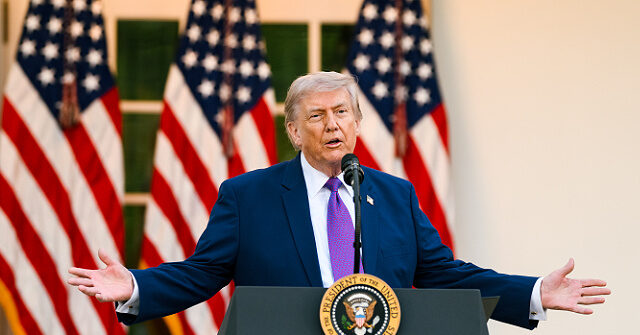
Trump, meanwhile, said Sunday that he expects talks with Iran to continue this week despite rejecting Tehran’s latest terms a day earlier, arguing that Tehran had overplayed its hand and was now seeking terms the United States might have accepted before the war.
“I expect more talks with Iran [this week],” Trump told Axios in a phone interview. “They want to make a deal, but it is not the deal that I want to make.”
“It is what we would have maybe agreed to a year ago,” he added. “They overplayed their hand.”
Trump also left open the possibility of resuming U.S. strikes. Asked whether he was considering further military action against Iran, the president replied: “I am always thinking about it.”
The negotiations have continued behind the scenes, with Qatar shuttling between Washington and Tehran through the weekend in an effort to find terms acceptable to both sides, according to the report.
Trump on Saturday rejected an Iranian proposal under which Tehran would reopen the Strait of Hormuz and resume nuclear negotiations within a week if Washington lifted its naval blockade, removed restrictions on Iranian oil sales and restored a regional ceasefire.
Qatar subsequently discussed the Iranian proposal with both sides and presented Washington and Tehran with compromise language for them to consider, according to a U.S. official and two regional sources. The mediators continued carrying proposed revisions between the two sides through the weekend, with another round of indirect talks possible as early as Monday.
The latest mediation builds on negotiations Tuesday on the sidelines of the United Nations General Assembly in New York, where Qatari intermediaries shuttled messages between White House envoy Steve Witkoff and Jared Kushner and an Iranian delegation that included Araghchi.
Trump administration officials said Washington rejected the Iranian proposal in part because Tehran was demanding substantial relief from the U.S. blockade and sanctions — along with access to billions of dollars in frozen assets — before committing to substantive negotiations over its nuclear program.
U.S. Ambassador to the United Nations Mike Waltz said Sunday that Iran was effectively asking Washington to surrender much of its economic leverage upfront in exchange for a promise to negotiate afterward.
“The bottom line is they were asking for everything upfront with a promise that they would then talk,” Waltz told CNN’s State of the Union.
Washington’s skepticism is compounded by Iran’s conduct following the previous U.S.-Iran memorandum of understanding, after which Tehran attacked commercial shipping in the Strait of Hormuz. Waltz, speaking separately to NBC News, called the latest offer a “pretty cynical attempt” to obtain relief from the blockade and sanctions and access to frozen assets “just to talk.”
Waltz nevertheless said Trump remains open to an eventual arrangement with Tehran while keeping military options available.
“At the end of the day, of course, this has to end in some type of arrangement,” he said. “But he’s going to leave all options on the table to get there.”
The nuclear program remains a central divide in the negotiations. Tehran wants to defer the issue until a later stage, while Washington has insisted that Iran address the program that prompted U.S. strikes on its nuclear facilities earlier this year.
Waltz pointed to Iran’s enrichment of uranium to 60 percent, its deeply buried nuclear facilities, and the highly enriched uranium he said Tehran moved and dispersed in arguing that the regime’s program went far beyond what was necessary for peaceful civilian purposes.
“Why are you enriching to 60%? Why are you burying these facilities under mountains?” Waltz asked, arguing that a civilian nuclear energy program does not require uranium enriched to levels approaching weapons grade.
Araghchi maintained that Iran’s 60-percent enrichment was peaceful and confirmed that Tehran wants to leave the nuclear issue for a later stage, after Washington first takes the steps Iran has demanded on the blockade, sanctions, and other issues.
“We decided to put everything nuclear for the later stages and go for confidence building in this stage,” he told NBC.
Araghchi said Iran could eventually negotiate over its stockpile of 60-percent enriched uranium, while arguing that Washington’s conduct during previous rounds of diplomacy had left Tehran deeply distrustful of another agreement.
“If you ask us, there is no reason why we should go back to diplomacy,” he said. “But I am still trying diplomacy because I think we shouldn’t miss any chance for peace.”
Despite Trump’s public rejection Saturday, Araghchi said Tehran was still waiting for Washington’s formal response through the mediators before deciding its next move.
“I have to say that although we heard from President Trump that he is rejecting this deal, we are still waiting for an official response through the mediators,” he said.
The Trump administration, meanwhile, has continued tightening the blockade and its broader economic pressure campaign, cutting off Iranian oil exports and further isolating Tehran financially.
Treasury Secretary Scott Bessent said Sunday that only about 15 million barrels of Iranian oil remained on the water and predicted Iran would make its final deliveries to China within roughly two weeks, after which he said Tehran would have little left to trade.
“Then they will have nothing,” Bessent told Fox News. “It is an empty set, and I believe they are feeling the pressure here and that’s why they want a deal.”
Bessent contrasted Iran’s blocked exports with the more than one billion barrels of non-Iranian oil he said have passed through Hormuz under U.S. protection since the conflict began.
“Think of it this way: the score is United States, one billion — more than one billion barrels have gotten out — and Iran, zero,” he said.
Trump likewise touted the increasing flow of non-Iranian oil through Hormuz on Sunday, saying the United States had moved a “record amount of oil” through the strait overnight — more, he said, than before the war.
“As soon as Iran gives up, as soon as the war is over, which will be soon, oil is going to come plummeting down,” Trump told reporters before departing the White House.
Araghchi, however, warned that Iran had used the previous rounds of fighting to prepare for another U.S. attack.
“We have learned our lesson from the two previous wars, and we have corrected our tactics,” he said. “We have changed our tactics.”
Araghchi said Iran was now “fully prepared” for another confrontation, underscoring that Tehran was preparing for renewed fighting even as it continued pursuing negotiations through intermediaries.
Qatari mediators continued exchanging proposed revisions between Washington and Tehran through the weekend, with another round of indirect talks possible as early as Monday. Trump said he expects negotiations with Iran to continue this week, while both Washington and Tehran have made clear they are preparing for renewed fighting if diplomacy fails.
Joshua Klein is a reporter for Breitbart News. Email him at [email protected]. Follow him on Twitter @JoshuaKlein.