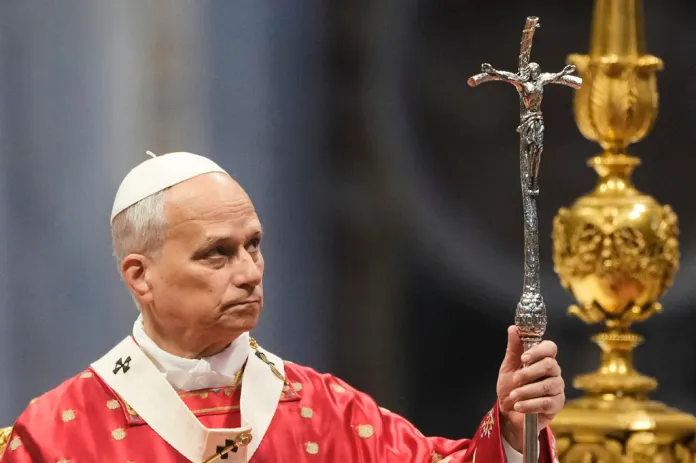
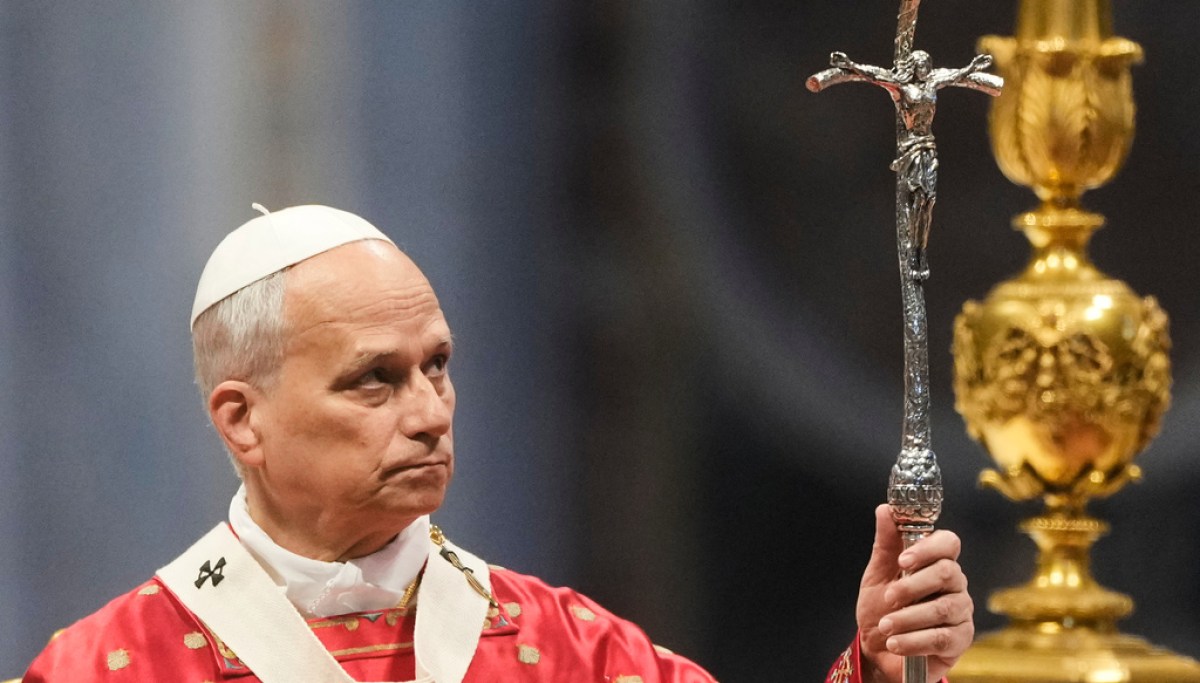
Pope Leo XIV apologized on Monday for the Catholic Church’s legitimization of slavey, saying the delay in denouncing the practice was a “wound in Christian memory.”
Leo, the first American pope, released his first encyclical, titled “Magnifica Humanitas.” The 43,000-word manifesto focused on the rise of artificial intelligence and how the church should respond to protect human dignity in the digital age.
“A significant part of the digital economy’s functioning relies on the silent work of millions of people engaged in essential yet largely unseen activities, such as data labeling, model training and content moderation, often involving disturbing material,” the pope wrote.
“Added to this invisible labor is the even harsher work of extracting the resources required for the production of the devices and microprocessors on which AI depends,” the pope added. “In some regions of the world, children and adolescents work in dangerous conditions, crushing the materials from which rare earth elements are extracted.”
Warning that human traffickers were using the same tool, Leo said AI could produce new forms of “emancipation” as well as “new forms of global subordination.”
“The fight against new forms of slavery is a decisive test for the ethical discernment of AI and digital transformation,” the pope wrote.
Leo said that as the Church weighed how to respond to AI and its possible manipulation by criminals, there was also the need to address the delay that it took the institution to “denounce the scourge of slavery.”
“In antiquity and the Middle Ages many individuals and even ecclesiastical institutions had slaves,” the pope wrote. “Already in the early modern period, the Apostolic See of Rome, responding to requests from Sovereigns, intervened several times in order to regulate and legitimize forms of subjugation, and, in certain cases, the enslavement of infidels.’ It was only in the nineteenth century that a formal, absolute and universal condemnation of slavery was clearly articulated, notably under Pope Leo XIII.”
POPE LEO DOES ‘6-7’ TREND FOR CHILDREN AT THE VATICAN
Leo wrote that “slavery was long tolerated before being unequivocally condemned” and bemoaned the fact that it “took eighteen centuries for its full incompatibility” with Church teachings to be fully recognized.
“This constitutes a wound in Christian memory, one from which we cannot consider ourselves detached,” he wrote. “It is impossible not to feel deep sorrow when contemplating the immense suffering and humiliation endured by so many in stark contrast to their immeasurable dignity as persons infinitely loved by the Lord. For this, in the name of the Church, I sincerely ask for pardon.”