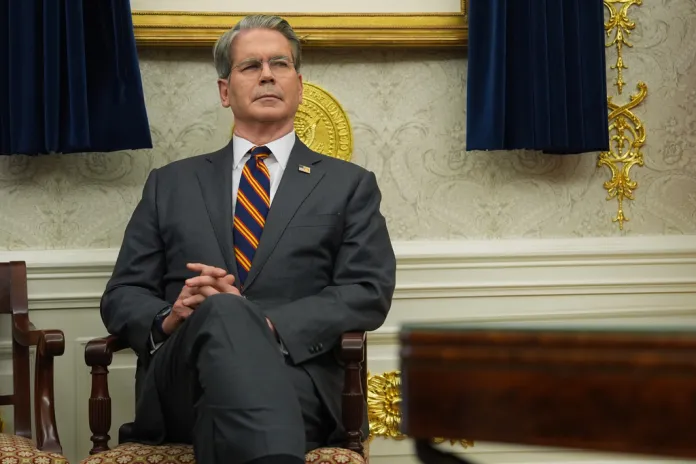
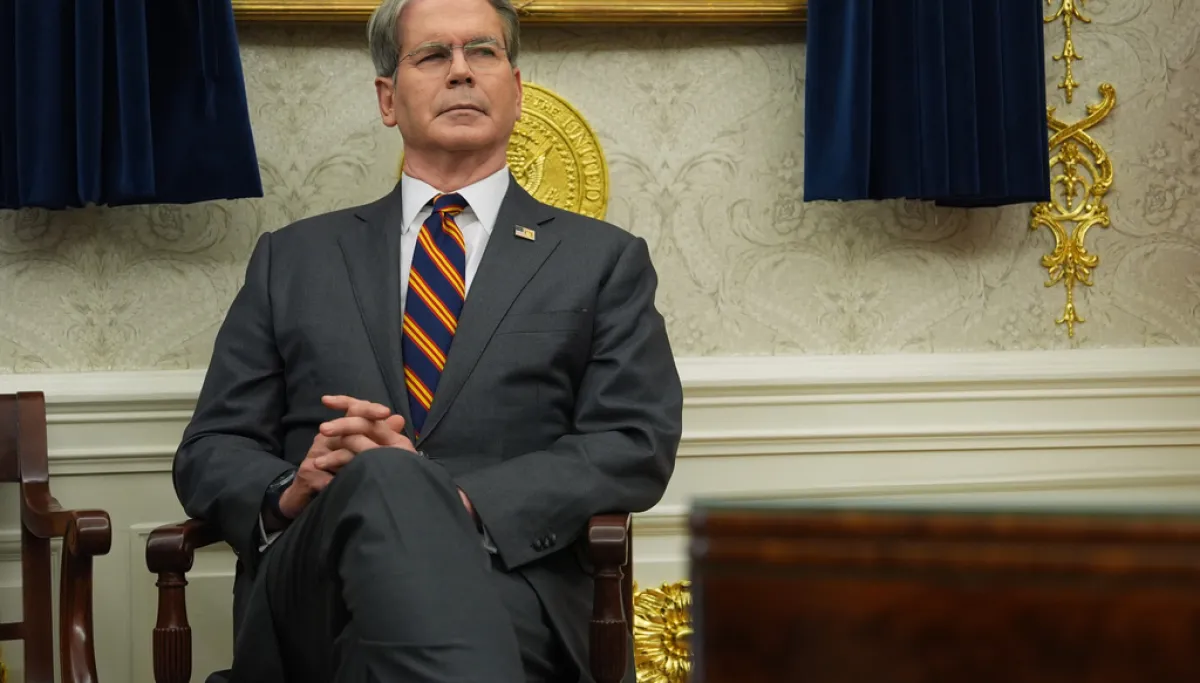
Treasury Secretary Scott Bessent dismissed Denmark as “irrelevant” on Wednesday after its pension operator threatened to pull its investments from the United States.
As the European Union continues to search for a response to President Donald Trump’s desire to acquire Greenland and the resulting tariffs, Denmark’s pension operator, AkademikerPension, announced on Tuesday that it would be selling $100 million in U.S. Treasury bonds, which investing chief Anders Schelde ascribed to “poor [U.S.] government finances.” Bessent hit back at the decision at a World Economic Forum press conference, saying the move wouldn’t do anything.
FULL LIST OF EXECUTIVE ORDERS, ACTIONS, AND PROCLAMATIONS TRUMP HAS MADE AS PRESIDENT
“Denmark’s investment in U.S. Treasury bonds, like Denmark itself, is irrelevant,” Bessent said, when asked about the move. “That is less than $100 million. They’ve been selling treasuries for years. I’m not concerned at all.”
He touted “record foreign investment” in the U.S., and said his knowledge of U.S. Treasury auctions kept him calm despite wider tensions.
“I think it is very difficult to just aggregate any of the noise around Greenland, around these inflammatory statements by President Macron, by President Van der Leyen,” Bessent said.
He ascribed recent market troubles solely to Japan’s six-standard-deviation move in ten-year bonds over just two days, which spilled into other markets. He buttressed this by assuring that he’d spoken with his Japanese counterparts and was assured that measures would be taken to stabilize their market.
Bessent then waved away the possibility that the EU would mass sell off its U.S. assets, sharing that the CEO of Deutsche Bank had personally called him to assure such a thing wouldn’t happen.
“And just so everyone knows that this notion that Europeans would be selling US assets came from a single analyst at Deutsche Bank, the fake news media led by the Financial Times amplified it, and the CEO of Deutsche Bank called to say that Deutsche Bank does not stand by that analyst report,” he said.
A Deutsche Bank spokesperson didn’t confirm or deny Bessent’s statement that its CEO had personally called him, in comments to CNBC, saying that it generally does not comment on “potential communication between the bank and government representatives.”
“As a matter of long-standing policy, Deutsche Bank Research is independent in their work, therefore views expressed in individual research notes do not necessarily represent the view of the bank’s management,” they added.
Elsewhere in the press conference, Bessent laid out the U.S.’s argument for acquiring Greenland, and urged European leaders not to make policy decisions around the anger triggered by the recent spat.
“President Trump has made it clear that we will not outsource our national security or our hemispheric security to any other countries,” he said. “Our partner, the U.K., is letting us down with the base on Diego Garcia, which we had shared together for many, many years, and they want to turn it over to Mauritius. So, President Trump is serious here.”
“Just as I said after liberation day last year, I would tell everyone, ‘take a deep breath, do not have this reflexive anger that we’ve seen, and this bitterness.’ Why don’t they sit down and wait for President Trump to get here and listen to his argument, because I think they are going to be persuaded,” Bessent continued.
WHAT IS EUROPE’S ‘TRADE BAZOOKA’ BEING FLOATED AS AN ANSWER TO TRUMP’S GREENLAND THREATS?
Meanwhile, Germany has joined France in considering the use of the E.U.’s Anti-Coercion Instrument, five diplomats familiar with the matter told Politico. The two are likely to ask the EU Commission to consider the use of the mechanism at an emergency meeting on Sunday, a move that would unleash broad economic punishment against the U.S.
The use of the “trade bazooka” could also harm the EU, however, and is always intended only as a last resort. The EU’s position has been made difficult due to its sudden divestment from Russia following its invasion of Ukraine.