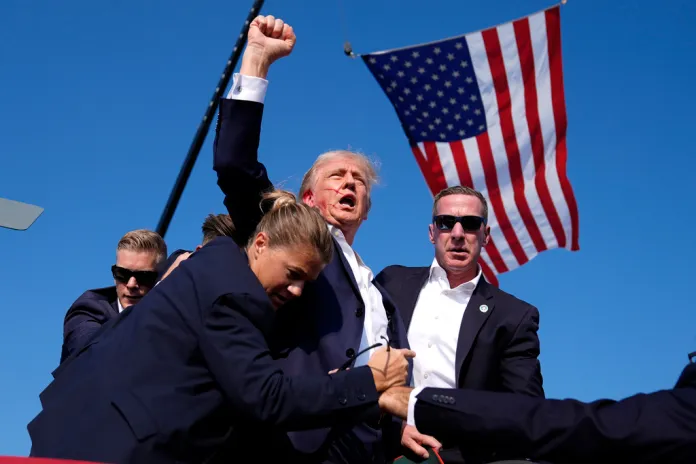
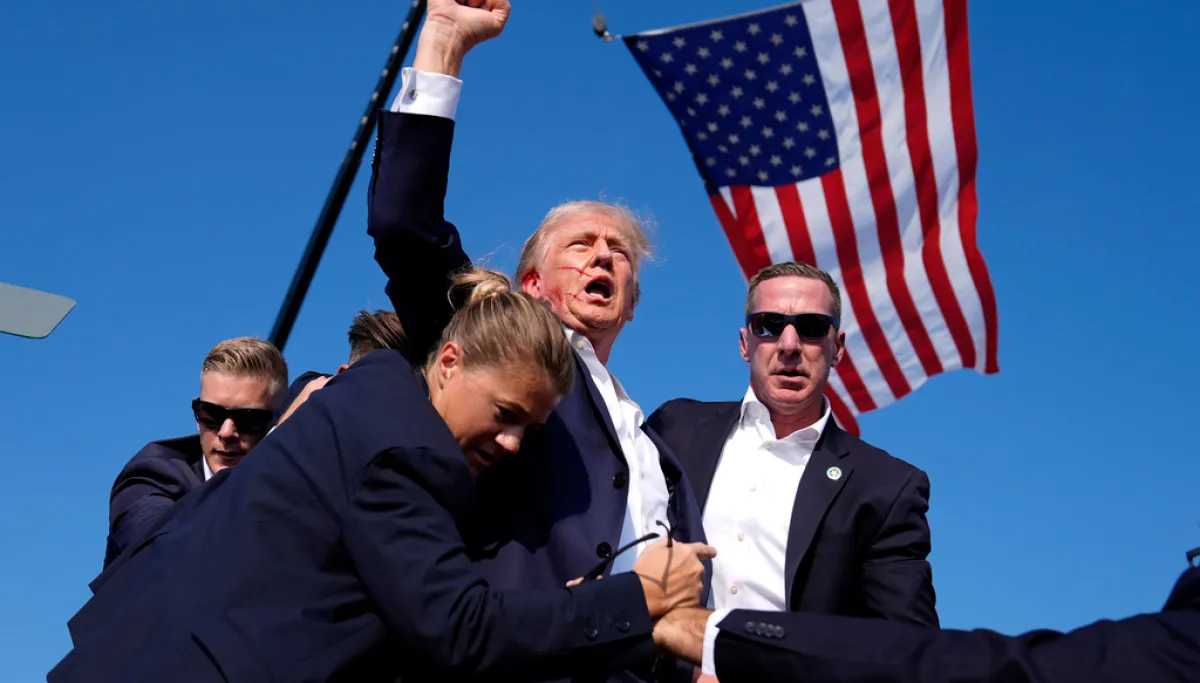
The attempted assassination of President Donald Trump in Butler, Pennsylvania, exposed vulnerabilities inside an agency long regarded as the world’s premier protective service, the Secret Service.
Congressional investigations, independent reviews, and the Secret Service’s own admissions pointed to communication breakdowns, lapses in coordination, and security gaps that allowed a gunman to open fire at a then-former president from a nearby rooftop.
Nearly two years after Butler exposed failures in command, communication, and protective planning, Secret Service officials say the agency has fundamentally changed how it identifies and responds to threats, shares intelligence, and coordinates with federal, state, and local partners. New intelligence units have been created, communications systems have expanded, and threat investigators have been given additional resources and authority.
Recent armed incidents near the White House and at the White House Correspondents’ Association dinner, which Trump attended, have become early tests of whether those reforms are keeping pace with a threat landscape former agents and law enforcement say is growing more complex by the day.
Both events demonstrate how the Secret Service’s challenge is no longer simply correcting the mistakes of Butler. It is adapting to a threat environment that officials say has become more volatile, unpredictable, and difficult to manage than at any point in recent memory.
The attempted assassination of Trump at an outdoor campaign event in Butler unfolded when Thomas Matthew Crooks, 20, fired multiple shots from an adjacent rooftop, wounding Trump in the ear, killing an attendee, and critically injuring two other spectators. Crooks was fatally shot by a Secret Service counter-sniper.
“There’s no debate that Butler was a failure on part of the Secret Service,” Secret Service spokesman Anthony Guglielmi told the Washington Examiner.
A failure too big to ignore
For former Secret Service agent Don Mihalek, the public discussion surrounding Butler has often focused on the wrong details. Much of the scrutiny centered on the rooftop used by Crooks and the tactical decisions made that day. Those failures mattered, Mihalek said, but they were symptoms of a larger problem.
“There was a couple of tactical failure, including not covering the roof of the building, not having a clear radio plan, not having a clear communication plan,” he said. The larger issue, he argued, was “the failure of the Secret Service to establish complete command and control over the Butler site.”
That command-and-control failure manifested itself in several ways, including communications issues, separate command posts, and confusion among the agencies responsible for securing the event.
For more than a century, the Secret Service has operated under a simple philosophy: control everything possible. “When you’re doing protection, you have to control every aspect of the protection,” Mihalek said.
Protective operations are designed to be tightly coordinated environments where federal, state, and local agencies operate under a unified security plan. When that structure breaks down, gaps emerge. The Secret Service is the agency that examines all the moving parts to make them work together. Mihalek described it as looking at a situation “asymmetrically.”
“The Secret Service is the coach on the sideline looking at the whole game,” he said.
That broader view, he said, is what failed in Butler. The consequences were immediate, and the lessons continue to shape the agency today.
Building a different Secret Service
The aftermath of Butler forced the agency to examine not only what happened that day but also how threats are evolving.
Under Director Sean Curran, who was present during the Butler shooting, the Secret Service has significantly expanded what it calls protective intelligence operations. Guglielmi said one of Curran’s first moves was strengthening the agency’s Strategic Intelligence and Information Directorate, adding leadership positions and resources dedicated to threat investigations.
“We’re a different agency today than we were in 2024,” Guglielmi said.
The agency also created an Advanced Threat Interdiction Unit, a team of agents, analysts, and data specialists focused on identifying potential threats before they reach a protectee.
“We want to get to a point where they do not end up as an exchange of gunfire on a D.C. street,” Guglielmi said.
The reforms have extended beyond intelligence gathering. Following Butler, the Secret Service established new communications capabilities designed to improve coordination among federal, state, and local agencies during protective operations. The agency also invested in mobile command vehicles capable of supporting radio and communications coordination at major events.
Guglielmi said the agency now deploys dedicated personnel focused on communications coordination and radio deconfliction at protective sites. The effort reflects one of Butler’s clearest lessons: communication failures can quickly become security failures.
The threat environment has changed
The Secret Service’s challenge today is not simply preventing another Butler, but rather identifying which of the thousands of threats could become a similar situation.
Patrick Burke, a former Metropolitan Police Department official who spent decades coordinating major security events in Washington, said law enforcement agencies today face a different challenge than they did in the years following 9/11.
Back then, officials worried about information sharing, but today, Burke said the problem is often too much information. “I think one of the challenges now is you’re inundated with information,” Burke told the Washington Examiner.
Threats against public officials have surged in recent years. Social media platforms have created new pathways for radicalization. Mental health crises increasingly intersect with political grievances. The result is a constant stream of tips, social media posts, and threats that must be reviewed and assessed.
“How do you discern what’s a real threat, what’s a prosecutable threat?” Burke asked.
The Secret Service is not doing the work alone. Burke explained that threat investigations increasingly rely on cooperation between federal, state, and local agencies. “Nobody’s got the staffing to deal with it alone,” he said.
ANTI-TRUMP PROGRAMMING HEATS UP IN PROGRESSIVE PUSH TO ‘RECLAIM’ AMERICA 250 MESSAGING
Mihalek sees the same challenge from a different angle. He compared today’s threat to the era of Lee Harvey Oswald in the 1960s, when individuals seeking extremist ideologies or violent movements often had to find them in person. Today, those influences can be accessed instantly through a smartphone.
People who once might never have encountered extremist content can now find it within seconds. Individuals in crisis can rapidly move from grievance to action.
That shift has transformed the Secret Service’s mission, as agents are no longer primarily focused on protecting individuals from physical threats and now must also identify warning signs hidden within an endless stream of online activity.
The next test is already here
The value of those reforms has been tested rapidly in recent months.
An armed suspect was stopped before reaching the White House Correspondents’ Association dinner, where Trump and his Cabinet were in attendance. More recently, Secret Service officers confronted an armed man near the White House after he approached the area carrying a firearm.
Agency officials point to those incidents as evidence that the Secret Service’s response capabilities remain strong. Guglielmi described both situations as successful threat mitigation efforts that prevented harm to protected officials or members of the public.
“We feel very strongly that the men and women of the Secret Service did their job,” he said.
Outside experts paint a more complicated picture. Burke said the WHCA dinner incident remains concerning because of how close the suspect came to a venue attended by the president and other senior officials.
“That’s concerning because he had more access than he should have,” Burke said.
The more recent White House shooting was different, he said, because the president was never in immediate danger.
Still, Burke warned against focusing only on amateur threats. “Even if you look at Pennsylvania, amateur hour almost worked,” he said. “You’ve got to really be concerned about a professional attempt.”
No finish line
At the same time, the agency continues to operate under significant staffing pressures. Mihalek said the Secret Service’s responsibilities expanded dramatically after Sept. 11, but staffing levels never grew proportionately. “The protective mission doubled overnight,” he said. “But their personnel never doubled.”
That reality continues to strain agents, who often spend weeks moving from assignment to assignment with little downtime. “The agents and the personnel there, they’re on a constant travel rotation, work rotation,” Mihalek said.
WHAT TO KNOW ABOUT THE FREEDOM 250 UFC FIGHT ON THE WHITE HOUSE LAWN
Burke expressed confidence that the agency will continue adapting. “I know they study every citation and try to evolve from every situation,” he said. “I have no doubt that they’ll evolve to meet current challenges.”
For all of the reforms implemented after Butler, both current and former officials agree that there is no finish line. The threat environment continues to evolve with new technologies creating new vulnerabilities, social media accelerating radicalization, and political polarization fueling anger and grievance.