A quartet of major multi-level marketing ventures, described by some as “legal pyramid schemes,” have poured roughly $2.5 million into the political process since the 2024 electoral cycle through campaign contributions from their political committees and leadership, a Washington Examiner review of campaign finance filings has found.
Contributions from Amway, doTerra, Mary Kay, and Herbalife — four of the largest MLMs in America — almost exclusively benefitted members of the Republican Party. Democratic candidates and committees received just around $100,000 of the approximately $2.5 million the industry has paid out between January 2023 and present. In many cases, politicians who receive cash from MLM firms have gone on to pursue legislative actions viewed as beneficial to the industry, which critics often describe as predatory.
In MLMs, unsalaried sales representatives earn money in two ways: by selling products on commission or by recruiting other sales representatives. Successful recruiters receive generous bonuses for each new member they bring in as well as each member their recruits rope in, forming a “downline.”
Often, the only way to make meaningful amounts of money in an MLM is through recruitment, as salespeople must share their profits with everyone above them in the recruiting pyramid. MLM participants are required to purchase inventory — sometimes in quantities exceeding what they can reasonably sell — from the MLM itself, funneling even more cash to the top of the hierarchy.
Some have characterized this arrangement, where the vast majority must operate at a loss so that a select few can profit, as akin to a predatory pyramid scheme. Legally, MLMs are distinct from pyramid schemes because they generate non-recruitment revenue, though that revenue, too, is pushed to the top through inventory payments and commission cuts.
Despite their poor reputation, MLMs have built a robust influence network on Capitol Hill, including several influential members of Congress.
The Direct Selling Association, a trade group representing the interests of MLMs, maintains a caucus of 31 members of the House of Representatives who, through various means, work to assist MLMs using the powers available to them.
Of the caucus’s 31 members, 10 have received at least $10,000 from the MLM industry since the 2024 election cycle across their primary campaign accounts, leadership PACs, and joint fundraising committees. A further six members accepted donations of $1,000 or more.
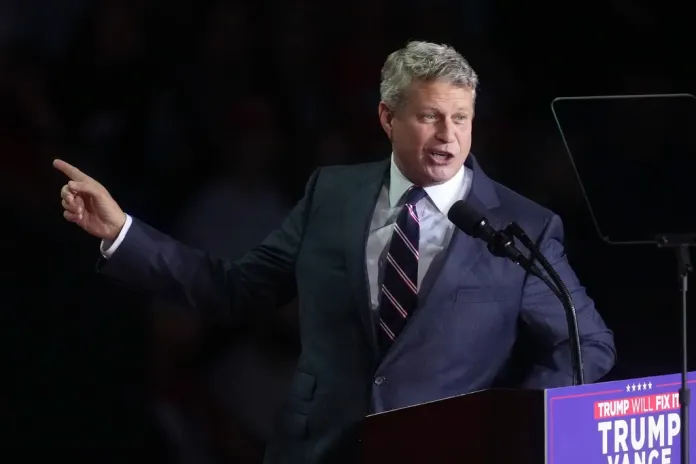
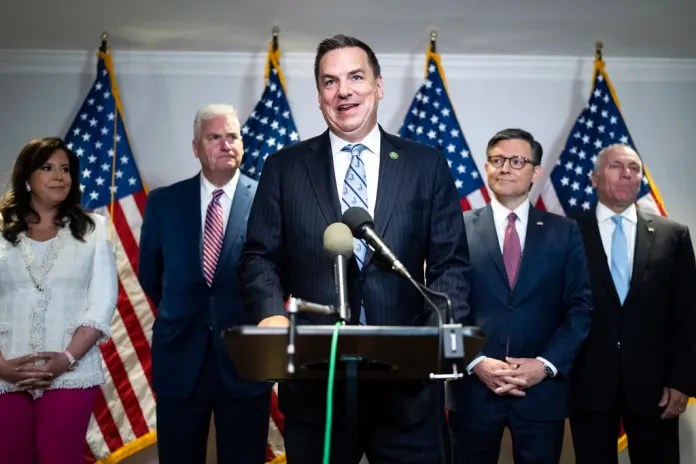
Rep. Bill Huizenga (R-MI), a member of the caucus, is one of the top recipients of MLM funds in Congress. The Michigan Republican has, across all his committees, accepted nearly $120,000 in donations from individuals and PACs linked directly to the MLM industry since January 2023. He took an additional $85,000 from the wife of Amway chairman Steve Van Andel between 2024 and 2025.
On top of his membership in the Direct Selling Caucus, Huizenga has been a staunch ally of the MLM industry on the House floor, giving briefs in support of the industry’s sales techniques and cosponsoring legislation supported by the Direct Selling Association.
Contributions from the MLM industry were geographically concentrated, the Washington Examiner’s analysis of campaign finance records found.
The congressional delegations from Michigan, where Amway is headquartered, and Utah, where MLMs are exceedingly popular, for instance, both benefit strongly from the industry’s political giving.
Eight of the 13 members of Michigan’s House delegation, including all seven of its Republicans, and all four of Utah’s representatives, plus both of its senators, have received financial support from the MLM industry. Members of these delegations have emerged as some of the strongest supporters of MLMs on the Hill.
Rep. Tim Walberg (R-MI), who has taken in just over $36,000 from the MLM industry since the 2024 election cycle, for example, is responsible for what the industry describes as the “most significant legislative victory for the direct selling channel in decades.”
Walberg, a member of the Direct Selling Caucus, chairs the House Committee on Education and the Workforce, which, in September, advanced the Direct Seller and Real Estate Agent Harmonization Act. The legislation, long sought by the MLM industry, would define participants in MLMs as independent contractors, a move critics argue would strip them of certain employment or labor rights.
Rep. Kevin Kiley (R-CA), who has received roughly $11,000 from MLMs since the 2024 election cycle, was responsible for introducing the legislation. Walberg introduced the same legislation in 2023, during the previous Congress, receiving praise from the industry for doing so. He also introduced the Preserving Direct Seller Independence Act in August 2021, another bill supported by MLMs that would designate their participants as independent contractors, showcasing the congressman’s long-standing support for the industry.
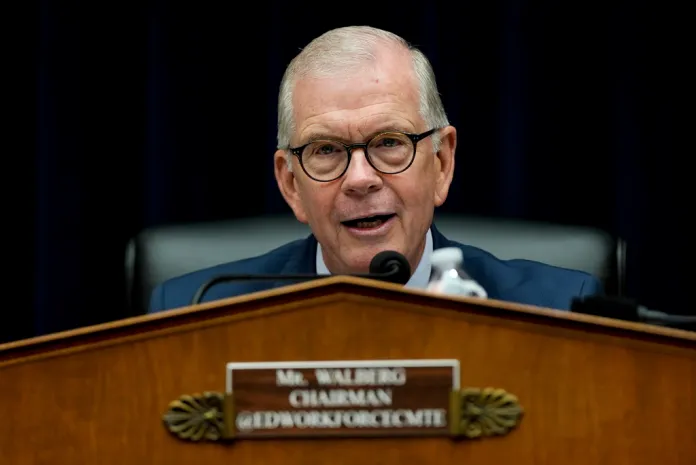
Legislation aside, Walberg has used his position on the House workforce committee as a bully pulpit for MLMs.
While questioning Department of Labor Wage and Hour Division administrator Jessica Looman during a February 2024 hearing, Walberg made clear his support for the MLM industry and pressed Looman on whether she shared his support.
“As you may know, I am the lead sponsor of H.Q. 5419, the Direct Seller and Real Estate Harmonization Act, which is a bipartisan bill. It would incorporate language from the Internal Revenue Code into the Fair Labor Standards Act, to harmonize the statutes and ensure that individuals who choose to work in direct selling or real estate are classified as independent contractors under both laws,” Walberg said. “Ms. Looman, do you commit to working with me to ensure additional guidance is provided so legacy independent contractors have clarity under both statutes?”
Walberg isn’t the only member of Congress to go to bat for the MLM industry while taking checks from its leaders.
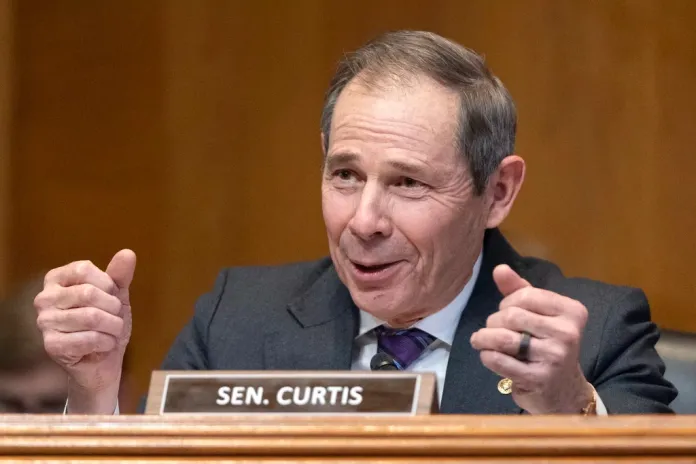
“Mr. Meador, in the waning days of the Biden administration, the FTC noticed two proposed rulemakings regarding earnings claims. These rules unfairly targeted the direct selling industry, which is a large industry in Utah,” Sen. John Curtis (R-UT) stated during a February 2025 confirmation hearing. “An industry that I know from firsthand observation works diligently to obey all the laws, to stay within all the parameters, and yet frequently finds themselves attacked by bureaucrats. So my question for you is, can you commit to voting against implementing the two proposed rules?”
Mark Meador, who was being considered for a commissioner role on the Federal Trade Commission, declined to answer the question.
“Can you commit to giving full and fair consideration to their concerns of the direct selling industry, and what they have about these two proposed rulings?” Curtis followed up.
Meador answered in the affirmative.
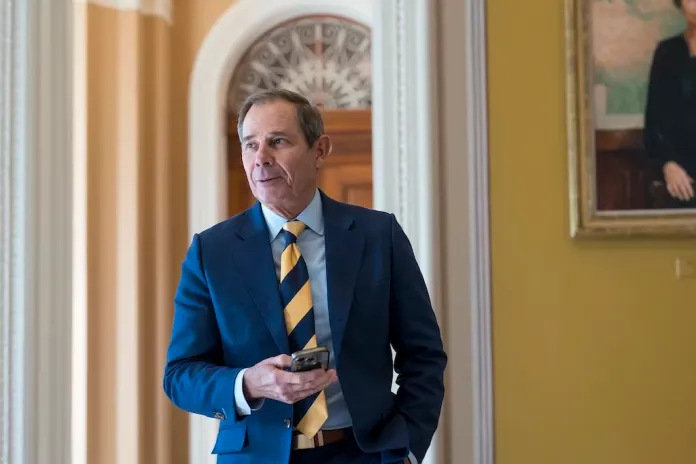
Curtis, who has received nearly $34,000 from the MLM industry since the 2024 election cycle, is correct that they are extremely popular in Utah. So much so that “Mormons losing money” has become a popular faux-acronym to mock MLMs, which have been criticized for targeting stay-at-home mothers with promises of working from home, setting their own hours, and being able to spend time with their children while earning an income, only for the vast majority to lose money.
Curtis, however, is less correct to assert that the industry “works diligently to obey all the laws.” Most notably, Herbalife, a donor to Curtis via its PAC, agreed in 2016 to pay a $200 million settlement to the FTC over its allegedly deceptive practices. Other MLMs have entered into similar settlement agreements over similar allegations in recent years.
Before ascending to the Senate, Curtis joined Walberg, Kiley, and a number of other House members funded by the MLM industry in sponsoring a 2024 resolution that sought to overturn a Department of Labor rule that could block MLM participants from being considered independent contractors. Individuals listed as co-sponsors of legislation favored by the MLM industry are, perhaps unsurprisingly, often funded by the industry.
Reps. Richard Hudson (R-NC) and Darren Soto (D-FL), the respective Republican and Democratic co-chairs of the Direct Selling Caucus, are also among the top beneficiaries of MLM funds in the House. Hudson, for his part, has taken in about $15,000 from the industry since January 2023, while Soto has received roughly $25,000 over the same period.
The duo wrote a letter to congressional leadership in 2020 seeking concessions for MLMs in coronavirus relief legislation, including protections against participants in the schemes being considered employees — a long-standing priority for the industry.
“Direct selling is the greatest industry for people to achieve the American dream,” Hudson said in late 2024.
A 2021 study found that 99.94% of participants in MLMs lost money.
All told, the Washington Examiner identified six senators and 13 representatives, among them 18 Republicans and one Democrat, who received at least $10,000 from the MLM industry since the 2024 election cycle.
“The direct selling channel operates in communities across all 50 states and is woven into local economies through millions of independent sellers, hundreds of thousands of corporate and manufacturing employees, and a wide network of small businesses and suppliers,” a spokeswoman for the Direct Selling Association told the Washington Examiner. “That broad presence means direct selling is part of daily economic life in virtually every congressional district. Lawmakers across the political spectrum represent constituents who participate in the channel as independent workers, entrepreneurs, employees, and consumers.”
The spokeswoman went on to cite the Direct Selling Education Foundation’s 2024 Economic Impact Report, which found that the industry had an “economic impact” of $111.4 billion in 2022.
“This breadth and impact help explain why engagement with direct selling is common and bipartisan: the channel represents a meaningful and visible part of the American economic story,” the spokeswoman added.
GOP DONORS COULD WIN BILLIONS AFTER TRUMP DISMANTLED KEY PUERTO RICO OVERSIGHT BOARD
While MLMs spend considerable funds supporting friendly members of Congress, the industry opens its checkbook the most for committees broadly aimed at bankrolling the Republican Party.
From January 2023 onwards, the MLM industry donated roughly $350,000 to political committees supporting President Donald Trump, over $100,000 each to the NRSC and NRCC, about $115,000 to the Republican National Committee, and about $75,000 to the GOP-aligned Congressional Leadership Fund. Amy Van Andel, the wife of Amway’s chairman, gave an additional $63,400 to the NRCC during that period.
As with Republicans in Congress, the White House appears to have smiled upon the MLM industry after receiving a cut of the funds it extracts from its members.
In October, the Trump administration rescinded a Biden-era labor rule that made it more difficult for MLMs to classify their participants as independent contractors, handing the industry a major win.
The Washington Examiner reached every member of Congress mentioned and the White House for comment.