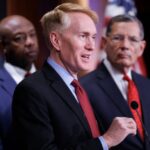
The Democratic Congressional Progressive Caucus has taken advantage of the waning public support, making the “abolish ICE” movement a pillar in its 2026 legislative platform — vowing to block all Department of Homeland Security funding until meaningful reforms are enacted.
DHS Secretary Kristi Noem has remained a staunch defender of the agency’s tactics, stating that federal agents have “been serving [their] country [their] entire life” and describing pushback from local leaders and media as “reckless behavior.”
“President Trump and I will always stand with you. Please take some time today to thank an officer or agent today,” Noem said in a news release Jan. 9, Law Enforcement Appreciation Day. “Make them a meal, buy them a cup of coffee, or simply thank them. To every officer who puts on the badge each day: thank you. Your service is paramount to our nation’s safety.”
The shift in public sentiment comes amid the massive federal immigration enforcement campaign known as “Operation Metro Surge,” which deployed approximately 2,000 federal officers to cities such as Minneapolis.
Tensions reached a boiling point following the fatal shooting of Renee Good by ICE officer Jonathan Ross after Good struck Ross with her SUV, causing internal bleeding.
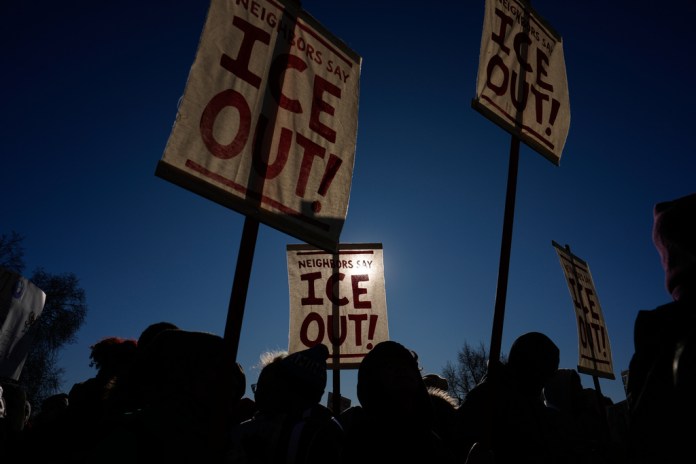
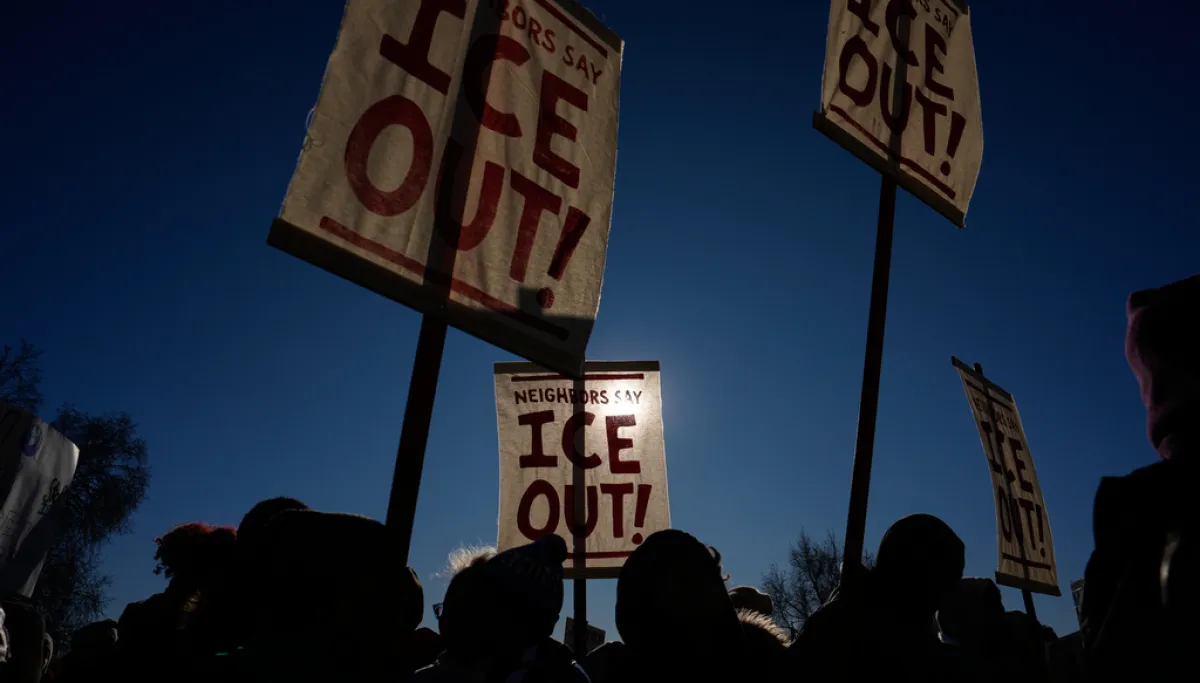
The killing has sparked national protests and a fierce public clash between Minnesota leadership and the Trump administration over ICE’s presence.
Support dropped when campaign promises became enforcement
Recent data from the Economist and YouGov shows a hard shift in how the public views federal immigration officers.
According to mid-January 2026 polling, 46% of respondents support abolishing ICE, a staggering increase from March 2025, when polling showed only 8% of respondents supported eliminating ICE.
As the administration moves beyond its more than 150,000 arrests, 47% of the public believes the agency is making the country less safe.
While the exact cause of the shift in public opinion is unknown, Roberto Suro, a professor of journalism and public policy at the University of Southern California, argued the backlash stems from a campaign promise by Trump that has been carried out far differently than originally pitched to voters.
“The predominant image is of these big, burly masked men wrestling people to the ground and grabbing people out of their cars and, you know, cussing and pulling guns and looking, you know, like stormtroopers,” Suro told the Washington Examiner. “That message that, ‘We are taking dangerous people off the street’ is getting drowned out by the fact that they’re putting dangerous people on the street. I mean, it’s just not working.”
On the campaign trail, Trump promised the “largest deportation operation in the history of our country,” specifically targeting “criminal illegal alien gang members.”
At a December 2023 rally, he told supporters, “We have no choice (but) the largest deportation operation in American history.”
“In 2024, his rhetoric and his campaigning, the ads … all focused relentlessly on criminal immigrants, and as would put it, the worst of the worst,” Suro said. “The most visible part of the effort, which is now the deportation campaign in the cities, was not the forefront of his campaign. It is a big deal, and people are reacting to it, and it’s not what they voted for, nor is it what I think they expected.”
Trump presented a plan in 2024 to militarize the border to keep people from illegally entering the U.S., and he followed through with that. However, once ICE was deployed to metropolitan and sanctuary cities, the visuals of how agencies have conducted immigration operations have turned off viewers.
Suro said the administration’s shift from militarizing the border to deploying masked agents into metropolitan and sanctuary cities has created a “visual barrage” that is failing to resonate with voters who initially backed a crackdown on illegal immigration.
The YouGov poll found that a majority of the public now supports major changes to the agency’s tactics, 73% of respondents said ICE should be required to wear uniforms when making arrests and 56% said officers should not be allowed to wear masks.
In direct challenges to the Trump administration, several Democratic-led jurisdictions have moved to ban law enforcement officers, including federal agents, from wearing face coverings during operations.
In September 2025, California became the first state to pass such a measure, the “No Secret Police Act,” which makes it a misdemeanor for officers to wear masks that conceal their identity.
The Trump administration has vehemently pushed back, with the Justice Department filing a lawsuit to strike down California’s law.
Furthermore, 50% of respondents said the recent fatal ICE shooting in Minnesota was “unjustified.”
The shooting and killing of Good in her car became a flashpoint for national debate, with the Trump administration arguing that Good used her vehicle as a “deadly weapon.” Good was allegedly impeding immigration operations by using her SUV to block the road while she and her wife taunted ICE. When officers approached her vehicle and demanded she get out so they could arrest her, she hit the gas and struck an officer, leading to a debate as to whether the shooting was justified regardless of whether she intended to hit the officer.
Critics of ICE pointed to the bystander video and said Good was trying to turn away from Ross before he fired the three shots. ICE supporters pointed to the fact that Good’s wheels began spinning while they were pointed directly at Ross, before she started to turn and struck him with the SUV.
After the shooting of Good, a Siena poll said that while people approve of deportations, they do not approve of ICE, with 61% of respondents saying ICE has “gone too far.”
The administration ‘won’t back down’
Despite the optics, the Trump administration remains unrelenting in its support for the agency.
White House press secretary Karoline Leavitt recently described Trump as a “strong leader who keeps the American people safe,” asserting that his handling of immigration remains among his “best polling issues.”
One year into his second term, the administration continues to emphasize that it will not back down, even as the president’s popularity polling has reached new lows.
A January 2026 Economist/YouGov poll shows that only 37% of the public approves of the president’s job performance, while 57% disapprove.
Despite these numbers, Trump has remained defiant about the operations, recently stating at a White House press conference that federal agents are “dealing with rough people” and that mistakes will happen.
Suro said Trump’s continued support has a lot to do with public image, especially as a president who has continually gone after political enemies.
“The president has sort of committed himself publicly, so loudly now that backing down would … be portrayed as giving in to his critics,” Suro said.
The administration defends the current crackdown as a necessary response to “sanctuary” policies in liberal cities. DHS officials have accused local leaders of refusing to cooperate with federal agents and releasing hundreds of criminal illegal immigrants from local jails back into the community.
As the legal and political challenges mount, the administration has reportedly had conversations about dialing back immigration enforcement.
“It’s the nature of American politics now that a view that is not the majority view can produce a nomination,” Suro said. “Trump knows that.”
Immigration enforcement is not new, just different
The nature of internal enforcement has changed significantly since the Obama and Bush eras.
Under former President Barack Obama, internal enforcement relied heavily on “detainers,” which involved cooperation with local jails to seize individuals already in custody.
As blue cities withdrew that cooperation, the Trump administration pivoted to Metro Surge, deploying thousands of federal officers directly into residential neighborhoods.
Suro said that once Trump shut down the border, his pivot to sending ICE into metropolitan areas led people to turn against immigration enforcement.
“He would continue to have great support for his immigration policies, if that was the focus,” Suro said.
Instead, the images of officers enforcing the law in the streets have sparked a resurgence of the “Abolish ICE” movement. Rep. Ilhan Omar (D-MN) recently announced that the movement is now a formal part of the Congressional Progressive Caucus platform.
Despite this congressional opposition, the House passed a DHS funding bill on Jan. 22 that increases the ICE detention capacity without the reforms demanded by the Progressive Caucus.
Suro said that while the majority opinion has shifted, the segment of the population that decides Republican primaries remains highly supportive of aggressive enforcement.
There is also a possible political upside for the White House if demonstrations turn violent, Suro said. During past unrest in Los Angeles, the administration successfully used images of chaos to frame their opponents as “radicals.”
“Maybe they’re thinking that they’ll go into blue cities and they’ll provoke a riot in which they can say, ‘Look, they’re the ones who are out of hand,’” Suro suggested.
As the 2026 midterm elections loom, these aggressive visuals are increasingly used as political ammunition by left-wing politicians.
While the administration hopes to frame the opposition as radicals and adjust immigration enforcement approaches, Democratic politicians push forward on their “Abolish ICE” mantra by saying they will not support ICE’s upcoming budget approval.
Republicans can deploy the same tactic by using images of protests in Minneapolis and previous protests in Los Angeles as a strategic weapon.
By highlighting “shock and awe” tactics, such as daily tally arrests and photographs of handcuffed deportees, they aim to paint their opponents as soft on crime or weak on security.
HOW TRUMP CAN FLIP THE SCRIPT IN THE ICE WARS
“It’s an old playbook, it goes back all the way to the ’60s, and the idea of protecting you from radicals is a very old trope in American politics,” Suro said.
Ultimately, the administration is betting that the visuals of “law and order” will outweigh the data of disapproval by the time voters head to the polls for midterm elections.