Congressional Republicans in Michigan published a letter to Canadian Prime Minister Mark Carney on Wednesday demanding that his government act to improve forest management after years of negligence, noting that millions of people in the Midwest and Northeast United States will be dealing with toxic wildfire plumes for much of this week.
The post ‘American Lungs Are Paying for Canadian Inaction’: Congressional Republicans Demand Action on Wildfires appeared first on Breitbart.
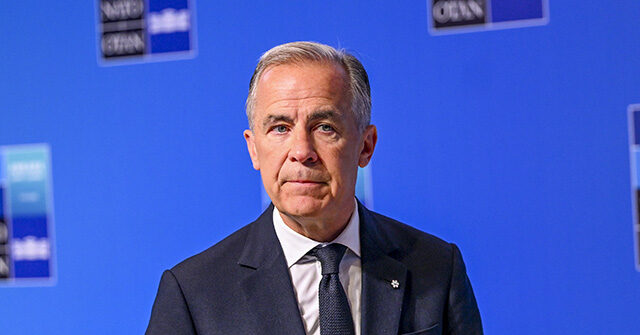
Congressional Republicans in Michigan published a letter to Canadian Prime Minister Mark Carney on Wednesday demanding that his government act to improve forest management after years of negligence, noting that millions of people in the Midwest and Northeast United States will be dealing with toxic wildfire plumes for much of this week.
The lawmakers — Reps. Jack Bergman (R-MI), John James (R-MI), Lisa McClain (R-MI), and John Moolenaar (R-MI) — noted that their letter was the third of its kind in three years demanding that Canada take proactive measures to contain the possibility of pervasive forest fires, which dump prodigious amounts of pollution throughout the continent and have devastated communities throughout the country. This year’s fires have so far crossed the border into Minnesota and are currently ravaging much of Ontario, covering the regional capital of Toronto in a cloud of orange-brown smoke.
As of Tuesday, the pollution monitor IQ Air declared Detroit, Michigan, the city with the world’s worst air quality as a result of the Canadian fires, followed by Minneapolis, Minnesota, for the same reason, and Kinshasa, Democratic Republic of the Congo (DRC), which regularly tops the list for unrelated reasons. Toronto was second only to Kinshasa on Tuesday and continued to be shrouded in orange plumes throughout the week. At press time, dark grayish-brown smoke is covering much of the Midwest and Northeast as far down as the Jersey Shore.
Air quality in much of North America during the summer has deteriorated significantly in the past decade as increasingly large and uncontrolled forest fires consume much of Canada, sending the fumes wafting south to the United States. Canada does not have a national emergency management organization, leaving provinces to fend for themselves and use the federal government for coordination more than established resources. Internal criticism of the government’s response to fires has persisted for years from environmentalists, emergency professionals, and First Nations leadership who observe that indigenous groups traditionally set controlled fires and cleared dry undergrowth to diminish the threat of massive fires.
The lawmakers writing to Prime Minister Carney expressed exasperation on Wednesday, declaring that their “patience has run out.”
“We were told last year that this would be treated with urgency. It was not,” they wrote. “We were told the causes, chronic under-investment in forest thinning, fuel reduction, and prescribed burns, along with inadequate enforcement against arson, were being addressed. They were not, or not adequately enough to matter to the people we represent.”
Provincial leaders have offered excuses instead of results, and in some cases have openly dismissed the health of American citizens as an inconvenience to their own summer. That attitude is unacceptable from a neighbor and an ally,” the letter continued. “We are done accepting apologies in place of action.”
The congresspersons declared that Canada’s “inaction” before the prolonged crisis was “unacceptable” and demanded concrete answers as to what exactly the Canadian government was doing to mitigate the threat of wildfires and wildfire smoke devastating both countries.
“What funded, measurable steps has your government taken since last summer to reduce fuel loads and wildfire risk in the provinces responsible for the smoke reaching the American Midwest?” they asked. “What accountability exists for provincial leaders who treat this as someone else’s problem? And what will genuinely be different by this time next year, rather than another season of statements followed by the same result?”
The lawmakers observed that “American lungs are paying the price for Canadian inaction” and urged the Canadian government to accept that “sovereignty comes with responsibility, and the responsibility to prevent a foreseeable disaster from crossing into another country’s airspace has not been met.”
The tone of outrage in Congress towards Canada’s inability to control its forest situation has not been echoed at press time at the federal level. U.S. Ambassador to Canada Pete Hoekstra also addressed the Ontario fires on Wednesday, but his statement expressed gratitude to Ottawa for collaborating as the fires spread into Minnesota and commitment to help Canada fight the emergency.
“This is a shared challenge, and it demands a shared response,” Hoekstra wrote. “I commend the outstanding cooperation between the United States and Canada as we confront these fires together.”
The ambassador thanks the first responders fighting the fires and vowed, “the United States will continue to coordinate closely with Canada, just as we have for more than four decades of shared wildfire emergencies.”
Firefighting experts and public officials in Canada have for years demanded the government establish a national firefighting authority given the repeated urgency of the situation in the summer and the lack of forest management, which includes removing especially dry underbrush and setting controlled fires to prevent flammable material from accumulating. The Canadian government has done so little to stop the fires that many burn throughout the winter as “zombie” fires, continuing to burn thanks to the abundant dry plant material buried under the snow.
In May, the Canadian Senate published a report describing the lack of an overarching authority to organize fire response, demanding a “whole of society” approach that includes greater government involvement.