U.S. Central Command (CENTCOM) commander Adm. Brad Cooper revealed Friday that America's naval blockade and economic pressure campaign have inflicted “devastating costs” on Iran, denying the regime at least $25 billion in oil exports and leaving its Islamic Revolutionary Guard Corps (IRGC) unable to pay its own troops.
The post CENTCOM Commander: U.S. Blockade Imposed ‘Devastating Costs’ on Iran — IRGC Unable to Pay Troops appeared first on Breitbart.
U.S. Central Command (CENTCOM) commander Adm. Brad Cooper revealed Friday that America’s naval blockade and economic pressure campaign have inflicted “devastating costs” on Iran, denying the regime at least $25 billion in oil exports and leaving its Islamic Revolutionary Guard Corps (IRGC) unable to pay its own troops.
In a video update Friday, Cooper outlined how the United States has targeted three pillars of the Iranian regime’s financial survival — oil exports, digital financing, and security-force payroll — building on the devastation inflicted during the 38-day Operation Epic Fury military campaign earlier this year.
“The sum total of these actions has imposed devastating costs on Iran’s security apparatus and the IRGC specifically,” Cooper declared.
The blockade has prevented Iran from exporting at least $25 billion worth of crude oil, Cooper said, cutting off billions that Tehran could otherwise channel into its terrorist proxy networks, weapons production, and attacks against American forces and regional allies.
Beyond oil exports, CENTCOM has helped U.S. government agencies freeze nearly $350 million in cryptocurrency assets, further cutting off funds Iran could use to finance terrorism, replenish its weapons stockpiles, or rebuild military factories destroyed by American strikes.
The financial squeeze has now reached the regime’s own security apparatus, with Cooper reporting that Iran’s government is “withholding salaries, pensions, and benefits” across industries including oil, energy, manufacturing, construction, and the IRGC itself.
In a striking reversal of Tehran’s longstanding role as financier of its regional proxies, the money is now reportedly flowing in the opposite direction — back toward the IRGC itself.
“The financial strain on Iran’s military has become so significant that there are reports of Iran-aligned militia groups across the region withholding payments to their soldiers in order to funnel money back to the IRGC, which also is not paying its troops,” Cooper said.
Cooper’s assessment underscores the mounting impact of President Donald Trump’s broader campaign to cripple Iran’s military capabilities and financial lifelines, combining the destruction inflicted during Operation Epic Fury with Operation Economic Outcast’s naval blockade and sweeping financial restrictions.
Treasury Secretary Scott Bessent, who has spearheaded Operation Economic Outcast, described it as the greatest economic isolation operation in history and announced at the beginning of October that September marked the first month on record in which Iran loaded no crude oil for export.
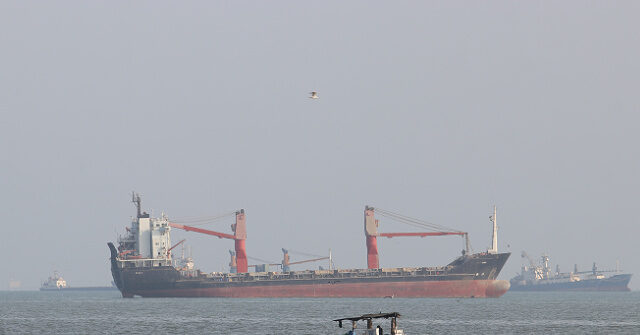
Reimposed in July, the U.S. naval blockade has effectively shut down Iran’s seaborne crude exports while American forces keep the Strait of Hormuz open to commercial traffic, allowing Gulf oil shipments to continue flowing despite Tehran’s repeated attacks.
Cooper said humanitarian assistance was the only exception to the blockade, emphasizing that Iran has “no exports and no imports by sea.”
Despite continued Iranian attacks on commercial shipping, Cooper rejected Tehran’s claims of controlling the strategic waterway.
“Let me be clear: the Strait of Hormuz is controlled by the United States and our regional partners, not Iran, and it remains open for business,” Cooper declared.
Over the past week alone, roughly 400 merchant ships passed through Hormuz, while U.S. forces helped regional partners move more than 100 million barrels of crude oil through the waterway, Cooper reported.
Those shipments add to more than 1.3 billion barrels of Gulf crude that American forces have helped regional partners move through Hormuz in recent months — even as the U.S. blockade continues to deny Tehran access to its own oil-export lifeline.
More than 50,000 American service members remain deployed across the Middle East, where U.S. forces continue clearing Iranian mines, enforcing the naval blockade, defending regional partners, and protecting commercial shipping.
“The Islamic regime is clearly feeling the economic pain, and the IRGC is increasingly showing signs of greater desperation as a result,” Cooper said.
The Revolutionary Guards have nevertheless continued attacking merchant vessels in the Strait of Hormuz, killing more than 20 civilian mariners since February, according to International Maritime Organization figures cited by Cooper.
Cooper’s assessment comes as Trump weighs renewed military action against Iran while maintaining the blockade and pursuing negotiations aimed at ending the conflict.
Speaking at a rally in Georgia on Friday, Trump underscored the extent of Iran’s military losses, quipping that American strikes had eliminated so many layers of the regime’s leadership that Washington was running out of officials with whom to negotiate.
“I might have gone too far with the leaders because I have nobody to talk to. Their first leaders are gone. Their second level of leaders is gone. Part of their third level,” Trump said.
Trump also pointed to Iran’s deepening economic troubles, citing inflation of 301 percent and declaring that its navy, air force, and broader military capabilities had been devastated.
Tehran has continued demanding relief from the American blockade and sanctions, even as Iranian officials publicly reject Washington’s claims of military dominance.
Iranian President Masoud Pezeshkian condemned the U.S. sanctions Friday as “beyond the bounds of humanity,” insisting that Tehran would not submit to American coercion despite the mounting economic pressure.
Iranian Army spokesman Brig. Gen. Mohammad Akraminia also disputed American control of Hormuz, claiming Friday that U.S. warships had been forced more than 500 kilometers from Iran’s shores and warning of new operations intended to push American forces farther from the region.
Despite Tehran’s continued threats and rejection of American pressure, Cooper said the blockade and financial restrictions are increasingly undermining the regime’s ability to sustain its military and security apparatus.
“The Islamic regime is clearly feeling the economic pain, and the IRGC is increasingly showing signs of greater desperation as a result.”
Joshua Klein is a reporter for Breitbart News. Email him at [email protected]. Follow him on Twitter @JoshuaKlein.