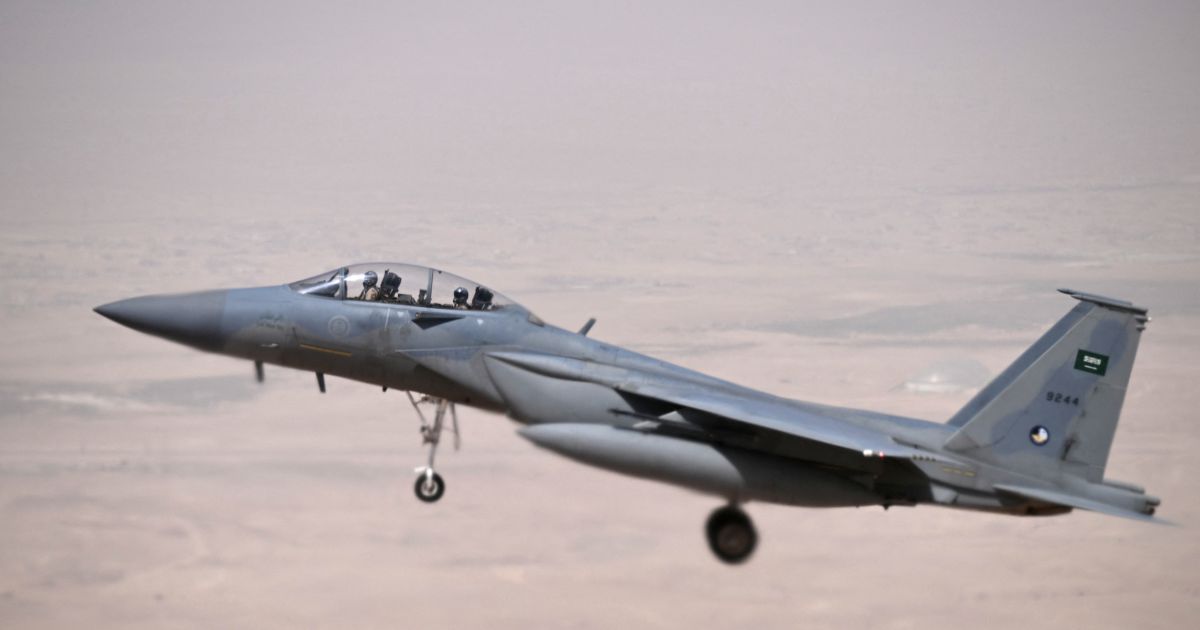
Saudi Arabia covertly counterattacked Iran after Saudi sites were attacked during the recent conflict, according to a new report.
The news from Reuters comes after previous reports said the United Arab Emirates also attacked Iran.
The previously unpublicized attacks took place in late March, Reuters reported, citing a source it did not name as saying the attacks were in retaliation for Iranian strikes.
Exclusive: Saudi Arabia launched numerous, unpublicized strikes on Iran in retaliation for attacks carried out in the kingdom during the Middle East war, two Western officials briefed on the matter and two Iranian officials said https://t.co/roQOErwt5k
— Reuters (@Reuters) May 12, 2026
Reuters noted that while the two Arab nations counterattacked Iran, the UAE has been more aggressive and largely eschewed diplomacy during the conflict, while the Saudis kept in touch with Iran through diplomatic channels.
The report said that after the Saudi attacks, Saudi officials and Iranian officials agreed to de-escalate.
An Iranian official said the nations agreed to “cease hostilities, safeguard mutual interests, and prevent the escalation of tensions.”
🚨 HOLY CRAP! Now, SAUDI ARABIA has launched missiles inside Iranian territory, on top of the United Arab Emirates
Saudi Arabia and the UAE have BOTH joined President Trump and Israel
Iran made a huge mistake. Imagine if the fighting resumes.
“Reports say UAE has been carrying… pic.twitter.com/Hwdqcsi238
— Eric Daugherty (@EricLDaugh) May 13, 2026
Ali Vaez, the Iran Project Director at the International Crisis Group, said there is “pragmatic recognition on both sides that uncontrolled escalation carries unacceptable costs.”
The de-escalation agreement showed “not trust, but a shared interest in imposing limits on confrontation before it spiraled into a wider regional conflict.”
In an op-ed in the Saudi-owned Arab News, former Saudi intelligence chief Prince Turki al-Faisal wrote that “when Iran and others tried to drag the kingdom into the furnace of destruction, our leadership chose to endure the pains caused by a neighbor in order to protect the lives and property of its citizens.”
🚨 🇸🇦🇮🇷 Saudi secretly struck Iran directly.
It’s the first time the kingdom has ever done this, and it changes everything about how Gulf states see their own security.
For decades, Riyadh outsourced its deterrence to Washington. That era may be over.
When a country starts… https://t.co/Jgz37pU0gp pic.twitter.com/zjqxKgrpOF
— Mario Nawfal (@MarioNawfal) May 12, 2026
The UAE attacks in particular are a “big deal” because they represent the “operationalization” of the UAE’s decision to ally itself with the U.S. and Israel, Bilal Saab, senior managing director of TRENDS US, said, according to Newsweek.
There is “no friendly return on something like this,” Saab added.
Center for Strategic and International Studies Middle East Program Director Mona Yacoubian said the Saudi attacks were also significant.
Tom Cotton just said Arab nations aren’t begging for peace. They’re asking President Trump for targeting info so they can join the fight against Iran. That’s a real coalition. When Iran hit them, they didn’t cry to the UN. They lined up with America. Only happens under strength. pic.twitter.com/h4h4KUjjER
— John Fitzgerald Kennedy Jr. (@RealMrJohnJr) May 12, 2026
“A Saudi decision to strike Iran, if verified, underscores the acuteness of threat perceived from Iran by Saudi Arabia and a need to respond offensively to deter future Iranian strikes,” Yacoubian said.
Advertise with The Western Journal and reach millions of highly engaged readers, while supporting our work. Advertise Today.
Submit a Correction →