The Los Angeles mayoral primary election raised an eyebrow for voters and onlookers alike. This is California, after all.
While incumbent Democratic Mayor Karen Bass secured her spot on the ballot for the city’s general election in November, Republican Spencer Pratt was not so fortunate.
Pratt lost out on the second-place spot needed to advance over Los Angeles City Councilwoman Nithya Raman, a member of the Democratic Socialists of America.
The story of Pratt’s defeat unfortunately sounds all too familiar with positive results early on, only for mail-in ballots for Raman to come in just when they were needed.
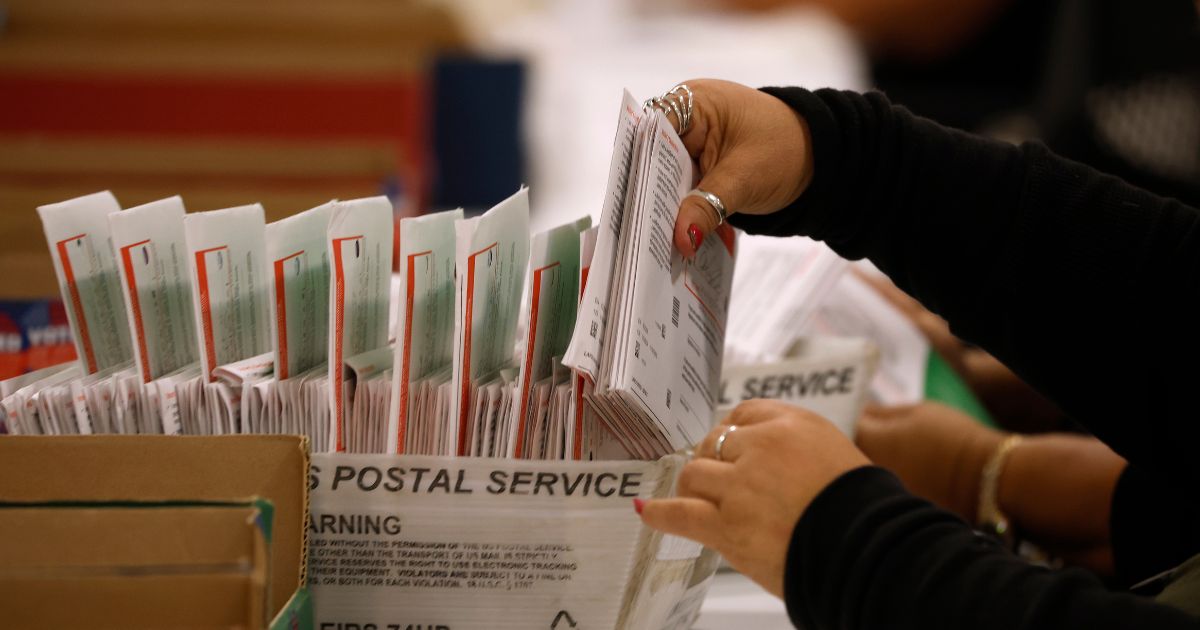
It’s not just mere suspicion that something was off. One woman working in a ballot processing center spoke out on social media platform X about what she personally witnessed.
Jennifer Callahan made an X post with a few important notes.
“Signatures only need to be 40% accurate (!) this is the setting the machines are set at for LA County (called the ASV),” she wrote.
“The last two drops disproportionately supported Raman. Are those coming from specific neighborhoods since they’re such an anomaly? Or are the neighborhoods pretty spread out that you count from on a given day?” she asked another worker.
The answer was, “We’re not sure.”
Things get ridiculous from here, as workers admitted there was no way of knowing who actually cast a vote through a mail-in ballot.
“If you’re unable to sign, you can make a ‘mark’ like a dot or slash instead of signing. A witness then signs below. I asked them how they verify these signatures. Turns out, they simply don’t. Well, you must check the witness signatures, right? ‘No, we don’t.’”
“So what if I stole a ballot, made a dash by the person’s name, and signed my name? ‘You shouldn’t do that, but in theory it would be counted,’ they said. How many of these ‘marked’ ballots get in per election? ‘We don’t know,’ they said.”
In other words, election workers have no idea who is casting a mail-in ballot.
What a joke.
Wildest takeaways from my time at the Ballot Processing Center today.
✍🏻 Signatures only need to be 40% accurate (!) this is the setting the machines are set at for LA County (called the ASV)
🗳️ The last two drops disproportionately supported Raman. Are those coming from…
— Jennifer Callahan (@jenlynncallahan) June 7, 2026
A former Republican nominee for the House of Representatives, David Ganezer, told Callahan she should report this to First Assistant U.S. Attorney Bill Essayli so that the federal authorities were aware.
That’s exactly what she did.
I did personally witness this, along with another person. We’ve emailed Bill more details at the email he shared for fraud tips. Thank you!
— Jennifer Callahan (@jenlynncallahan) June 7, 2026
When asked about how many ballots were rejected, the number she gave was very low, at just .9 percent.
.9% is what I was told.
— Jennifer Callahan (@jenlynncallahan) June 7, 2026
She explained the standards, shedding light on why the figure was small.
“If a signature is flagged, CA rules reject only on ‘beyond reasonable doubt’ with two officials agreeing,” Callahan told another user.
exactly! Even after this step, if a signature is flagged, CA rules reject only on “beyond reasonable doubt” with two officials agreeing. And yes I emailed him, thank you!
— Jennifer Callahan (@jenlynncallahan) June 7, 2026
Although Callahan’s statements have not been corroborated, they are alarming if they even resemble the truth.
Essayli is attempting to audit the state, but the New York Post reported California officials are showing resistance.
In August 2025, Essayli requested California’s voter registration list to ensure compliance with maintenance requirements through the National Voter Registration Act and also the Help America Vote Act.
A legal battle has ensued in the Ninth Circuit Court of Appeals as a result.
Essayli posted a letter from the Department of Justice Civil Rights division to California Secretary of State Shirley Weber on June 7.
He noted in his post, “California allows first-time voters to register using forms of ID that most Americans would find surprising, including: Gym membership card, Employer ID card, Credit or debit card, Prescription drug label, Insurance card (California provides free health coverage to undocumented immigrants).”
California Is Blocking a Federal Audit of Its Voter Rolls
California allows first-time voters to register using forms of ID that most Americans would find surprising, including:
-Gym membership card
-Employer ID card
-Credit or debit card
-Prescription drug label
-Insurance… pic.twitter.com/kOEOzpctmb— F.A. United States Attorney Bill Essayli (@USAttyEssayli) June 7, 2026
“This is permitted when a voter fails to provide a Social Security number or driver’s license at registration.”
After citing concerns about voter rolls and ballot harvesting, Essayli noted that Assistant Attorney General for the Civil Rights Division Harmeet Dhillon “sent California a letter explaining our legal authority,” after which “California refused to comply, claiming state privacy laws block the review.”
Cases like these are why we need the Safeguard American Voter Eligibility Act, also known as the SAVE America Act, passed yesterday.
California has an atrocious election system, allowing nearly anyone under any circumstances to vote.
The New York Post added that election workers are to interpret ID requirements “liberally,” which perfectly sums up the problem — doing things “liberally” seems to mean compromising elections.
Advertise with The Western Journal and reach millions of highly engaged readers, while supporting our work. Advertise Today.