Authored by Nick Giambruno via InternationalMan.com,
It’s no secret that China and Russia have been stashing away as much gold as possible for many years.
China is the world’s largest producer and buyer of gold. Russia is number two. Most of that gold finds its way into the Russian and Chinese governments’ treasuries.
Russia has over 2,300 tonnes—or nearly 74 million troy ounces—of gold, one of the largest stashes in the world. Nobody knows the exact amount of gold China has, but most observers believe it is even larger than Russia’s stash.
Russia and China’s gold gives them access to an apolitical neutral form of money with no counterparty risk.
Remember, gold has been mankind’s most enduring form of money for over 2,500 years because of unique characteristics that make it suitable to store and exchange value.
Gold is durable, divisible, consistent, convenient, scarce, and most importantly, the “hardest” of all physical commodities.
In other words, gold is the one physical commodity that is the “hardest to produce” (relative to existing stockpiles) and, therefore, the most resistant to inflation. That’s what gives gold its superior monetary properties.
Russia and China can use their gold to engage in international trade and perhaps back the currencies.
That’s why gold represents a genuine monetary alternative to the US dollar, and Russia and China have a lot of it.
Today it’s clear why China and Russia have had an insatiable demand for gold.
They’ve been waiting for the right moment to pull the rug from beneath the US dollar. And now is that moment…
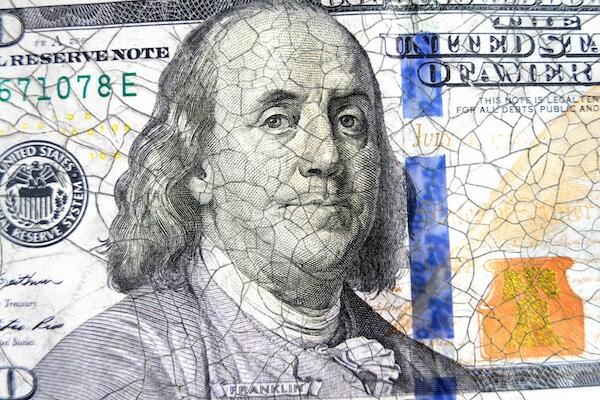
This is a big problem for the US government, which reaps an unfathomable amount of power because the US dollar is the world’s premier reserve currency. It allows the US to print fake money out of thin air and export it to the rest of the world for real goods and services—a privileged racket no other country has.
Russia and China’s gold could form the foundation of a new monetary system outside of the control of the US. Such moves would be the final nail in the coffin of dollar dominance.
Five recent developments are a giant flashing red sign that something big could be imminent.
Warning Sign #1: Russia Sanctions Prove Dollar Reserves “Aren’t Really Money”
In the wake of Russia’s invasion of Ukraine, the US government has launched its most aggressive sanctions campaign ever.
Exceeding even Iran and North Korea, Russia is now the most sanctioned nation in the world.
As part of this, the US government seized the US dollar reserves of the Russian central bank—the accumulated savings of the nation.
It was a stunning illustration of the dollar’s political risk. The US government can seize another sovereign country’s dollar reserves at the flip of a switch.
The Wall Street Journal, in an article titled “If Russian Currency Reserves Aren’t Really Money, the World Is in for a Shock,” noted:
“Sanctions have shown that currency reserves accumulated by central banks can be taken away. With China taking note, this may reshape geopolitics, economic management and even the international role of the U.S. dollar.”
Russian President Putin said the US had defaulted on its obligations and that the dollar is no longer a reliable currency.
The incident has eroded trust in the US dollar as the global reserve currency and catalyzed significant countries to use alternatives in trade and their reserves.
China, India, Iran, and Turkey, among other countries, announced, or already are, doing business with Russia in their local currencies instead of the US dollar. These countries represent a market of over three billion people that no longer need to use the US dollar to trade with one another.
The US government has incentivized almost half of mankind to find alternatives to the dollar by attempting to isolate Russia.
Warning Sign #2: Rubles, Gold, and Bitcoin for Gas, Oil, and Other Commodities
Russia is the world’s largest exporter of natural gas, lumber, wheat, fertilizer, and palladium (a crucial component in cars).
It is the second-largest exporter of oil and aluminum and the third-largest exporter of nickel and coal.
Russia is a major producer and processor of uranium for nuclear power plants. Enriched uranium from Russia and its allies provides electricity to 20% of the homes in the US.
Aside from China, Russia produces more gold than any other country, accounting for more than 10% of global production.
These are just a handful of examples. There are many strategic commodities that Russia dominates.
In short, Russia is not just an oil and gas powerhouse but a commodity superpower.
After the US government seized Russia’s US dollar reserves, Moscow has little use for the US dollar. Moscow does not want to exchange its scarce and valuable commodities for politicized money that its rivals can take away on a whim. Would the US government ever tolerate a situation where the US Treasury held its reserves in rubles in Russia
The head of the Russian Parliament recently called the US dollar a “candy wrapper” but not the candy itself. In other words, the dollar has the outward appearance of money but is not real money.
That’s why Russia is no longer accepting US dollars (or euros) in exchange for its energy. They are of no use to Russia. So instead, Moscow is demanding payment in rubles.
That’s an urgent problem for Europe, which cannot survive without Russian commodities. The Europeans have no alternative to Russian energy and have no choice but to comply.
European buyers must now first buy rubles with their euros and use them to pay for Russian gas, oil, and other exports.
This is a big reason why the ruble has recovered all of the value it lost in the initial days of the Ukraine invasion and then made further gains.
In addition to rubles, the top Russian energy official said Moscow would also accept gold or Bitcoin in return for its commodities.
“If they want to buy, let them pay either in hard currency—and this is gold for us… you can also trade Bitcoins.”
Here’s the bottom line. US dollars are no longer needed (or wanted) to buy Russian commodities.
Warning Sign #3: The Petrodollar System Flirts With Collapse
Oil is by far the largest and most strategic commodity market.
For the last 50 years, virtually anyone who wanted to import oil needed US dollars to pay for it.
That’s because, in the early ’70s, the US made an agreement to protect Saudi Arabia in exchange for ensuring, among other things, all OPEC producers only accept US dollars for their oil.
Every country needs oil. And if foreign countries need US dollars to buy oil, they have a compelling reason to hold large dollar reserves.
This creates a huge artificial market for US dollars and forces foreigners to soak up many of the new currency units the Fed creates. Naturally, this gives a tremendous boost to the value of the dollar.
The system has helped create a deeper, more liquid market for the dollar and US Treasuries. It also allows the US government to keep interest rates artificially low, thereby financing enormous deficits it otherwise would be unable to.
In short, the petrodollar system has been the bedrock of the US financial system for the past 50 years.
But that’s all about to change… and soon.
After it invaded Ukraine, the US government kicked Russia out of the dollar system and seized hundreds of billions in dollar reserves of the Russian central bank.
Washington has threatened to do the same to China for years. These threats helped ensure that China cracked down on North Korea, didn’t invade Taiwan, and did other things the US wanted.
These threats against China may be a bluff, but if the US government carried them out—as it recently did against Russia—it would be like dropping a financial nuclear bomb on Beijing. Without access to dollars, China would struggle to import oil and engage in international trade. As a result, its economy would come to a grinding halt, an intolerable threat to the Chinese government.
China would rather not depend on an adversary like this. This is one of the main reasons it created an alternative to the petrodollar system.
After years of preparation, the Shanghai International Energy Exchange (INE) launched a crude oil futures contract denominated in Chinese yuan in 2017. Since then, any oil producer can sell its oil for something besides US dollars… in this case, the Chinese yuan.
There’s one big issue, though. Most oil producers don’t want to accumulate a large yuan reserve, and China knows this.
That’s why China has explicitly linked the crude futures contract with the ability to convert yuan into physical gold—without touching China’s official reserves—through gold exchanges in Shanghai (the world’s largest physical gold market) and Hong Kong.
PetroChina and Sinopec, two Chinese oil companies, provide liquidity to the yuan crude futures by being big buyers. So, if any oil producer wants to sell their oil in yuan (and gold indirectly), there will always be a bid.
After years of growth and working out the kinks, the INE yuan oil future contract is now ready for prime time.
And now that the US has banned Russia from the dollar system, there is an urgent need for a credible system capable of handling hundreds of billions worth of oil sales outside of the US dollar and financial system.
The Shanghai International Energy Exchange is that system.
Back to Saudi Arabia…
For nearly 50 years, the Saudis had always insisted anyone wanting their oil would need to pay with US dollars, upholding their end of the petrodollar system.
But that could all change soon…
Remember, China is already the world’s largest oil importer. Moreover, the amount of oil it imports continues to grow as it fuels an economy of over 1.4 billion people (more than 4x larger than the US).
China is Saudi Arabia’s top customer. Beijing buys over 25% of Saudi oil exports and wants to buy more.
The Chinese would rather not have to use the US dollar, the currency of their adversary, to buy an essential commodity.
In this context, The Wall Street Journal recently reported that the Chinese and the Saudis had entered into serious discussions to accept yuan as payment for Saudi oil exports instead of dollars.
The WSJ article claims the Saudis are angry at the US for not supporting it enough in its war against Yemen. They were further dismayed by the US withdrawal from Afghanistan and the nuclear negotiations with Iran.
In short, the Saudis don’t think the US is holding up its end of the deal. So they don’t feel like they need to hold up their part.
Even the WSJ admits such a move would be disastrous for the US dollar.
“The Saudi move could chip away at the supremacy of the US dollar in the international financial system, which Washington has relied on for decades to print Treasury bills it uses to finance its budget deficit.”
Here’s the bottom line.
Saudi Arabia—the linchpin of the petrodollar system—is flirting in the open with China about selling its oil in yuan. One way or another—and probably soon—the Chinese will find a way to compel the Saudis to accept the yuan.
The sheer size of the Chinese market makes it impossible for Saudi Arabia—and other oil exporters—to ignore China’s demands to pay in yuan indefinitely. Moreover, using the INE to exchange oil for gold further sweetens the deal for oil exporters.
Sometime soon, there will be a lot of extra dollars floating around suddenly looking for a home now that they are not needed to purchase oil.
It signals an imminent and enormous change for anyone holding US dollars. It would be incredibly foolish to ignore this giant red warning sign.
Warning Sign #4: Out of Control Money Printing and Record Price Increases
In March of 2020, the chair of the Federal Reserve, Jerome Powell, exercised unfathomable power…
At the time, it was the height of the stock market crash amid the COVID hysteria. People were panicking as they watched the market plummet, and they turned to the Fed to do something.
In a matter of days, the Fed created more dollars out of thin air than it had for the US’s nearly 250-year existence. It was an unprecedented amount of money printing that amounted to more than $4 trillion and nearly doubled the US money supply in less than a year.
One trillion dollars is almost an unfathomable amount of money. The human mind has trouble wrapping itself around such figures. Let me try to put it into perspective.
One million seconds ago was about 11 days ago.
One billion seconds ago was 1988.
One trillion seconds ago was 30,000 BC.
For further perspective, the daily economic output of all 331 million people in the US is about $58 billion.
At the push of a button, the Fed was creating more dollars out of thin air than the economic output of the entire country.
The Fed’s actions during the Covid hysteria—which are ongoing—amounted to the biggest monetary explosion that has ever occurred in the US.
When the Fed initiated this program, it assured the American people its actions wouldn’t cause severe price increases. But unfortunately, it didn’t take long to prove that absurd assertion false.
As soon as rising prices became apparent, the mainstream media and Fed claimed that the inflation was only “transitory” and that there was nothing to be worried about.
Of course, they were dead wrong, and they knew it—they were gaslighting.
The truth is that inflation is out of control, and nothing can stop it.
Even according to the government’s own crooked CPI statistics, which understates reality, inflation is rising. That means the actual situation is much worse.
Recently the CPI hit a 40-year high and shows little sign of slowing down.
I wouldn’t be surprised to see the CPI exceed its previous highs in the early 1980s as the situation gets out of control.
After all, the money printing going on right now is orders of magnitude greater than it was then.
Warning Sign #5: Fed Chair Admits Dollar Supremacy Is Dead
“It’s possible to have more than one reserve currency.”
These are the recent words of Jerome Powell, the Chairman of the Federal Reserve.
It’s a stunning admission from the one person who has the most control over the US dollar, the current world reserve currency.
It would be as ridiculous as Mike Tyson saying that it’s possible to have more than one heavyweight champion.
In other words, the jig is up.
Not even the Chairman of the Federal Reserve can go along with the farce of maintaining the dollar’s supremacy anymore… and neither should you.
Conclusion
It’s clear the US dollar’s days of unchallenged dominance are quickly ending—something even the Fed Chairman openly admits.
To recap, here are the five imminent, flashing red warning signs the end of dollar hegemony is near.
-
Warning Sign #1: Russia Sanctions Prove Dollar Reserves “Aren’t Really Money”
-
Warning Sign #2: Rubles, Gold, and Bitcoin for Gas, Oil, and Other Commodities
-
Warning Sign #3: The Petrodollar System Flirts With Collapse
-
Warning Sign #4: Out of Control Money Printing and Record Price Increases
-
Warning Sign #5: Fed Chair Admits Dollar Supremacy Is Dead
If we take a step back and zoom out, the Big Picture is clear.
We are likely on the cusp of a historic shift… and what’s coming next could change everything.
* * *
The economic trajectory is troubling. Unfortunately, there’s little any individual can practically do to change the course of these trends in motion. The best you can and should do is to stay informed so that you can protect yourself in the best way possible, and even profit from the situation. That’s precisely why bestselling author Doug Casey and his colleagues just released an urgent new PDF report that explains what could come next and what you can do about it. Click here to download it now.
Authored by Nick Giambruno via InternationalMan.com,
It’s no secret that China and Russia have been stashing away as much gold as possible for many years.
China is the world’s largest producer and buyer of gold. Russia is number two. Most of that gold finds its way into the Russian and Chinese governments’ treasuries.
Russia has over 2,300 tonnes—or nearly 74 million troy ounces—of gold, one of the largest stashes in the world. Nobody knows the exact amount of gold China has, but most observers believe it is even larger than Russia’s stash.
Russia and China’s gold gives them access to an apolitical neutral form of money with no counterparty risk.
Remember, gold has been mankind’s most enduring form of money for over 2,500 years because of unique characteristics that make it suitable to store and exchange value.
Gold is durable, divisible, consistent, convenient, scarce, and most importantly, the “hardest” of all physical commodities.
In other words, gold is the one physical commodity that is the “hardest to produce” (relative to existing stockpiles) and, therefore, the most resistant to inflation. That’s what gives gold its superior monetary properties.
Russia and China can use their gold to engage in international trade and perhaps back the currencies.
That’s why gold represents a genuine monetary alternative to the US dollar, and Russia and China have a lot of it.
Today it’s clear why China and Russia have had an insatiable demand for gold.
They’ve been waiting for the right moment to pull the rug from beneath the US dollar. And now is that moment…
This is a big problem for the US government, which reaps an unfathomable amount of power because the US dollar is the world’s premier reserve currency. It allows the US to print fake money out of thin air and export it to the rest of the world for real goods and services—a privileged racket no other country has.
Russia and China’s gold could form the foundation of a new monetary system outside of the control of the US. Such moves would be the final nail in the coffin of dollar dominance.
Five recent developments are a giant flashing red sign that something big could be imminent.
Warning Sign #1: Russia Sanctions Prove Dollar Reserves “Aren’t Really Money”
In the wake of Russia’s invasion of Ukraine, the US government has launched its most aggressive sanctions campaign ever.
Exceeding even Iran and North Korea, Russia is now the most sanctioned nation in the world.
As part of this, the US government seized the US dollar reserves of the Russian central bank—the accumulated savings of the nation.
It was a stunning illustration of the dollar’s political risk. The US government can seize another sovereign country’s dollar reserves at the flip of a switch.
The Wall Street Journal, in an article titled “If Russian Currency Reserves Aren’t Really Money, the World Is in for a Shock,” noted:
“Sanctions have shown that currency reserves accumulated by central banks can be taken away. With China taking note, this may reshape geopolitics, economic management and even the international role of the U.S. dollar.”
Russian President Putin said the US had defaulted on its obligations and that the dollar is no longer a reliable currency.
The incident has eroded trust in the US dollar as the global reserve currency and catalyzed significant countries to use alternatives in trade and their reserves.
China, India, Iran, and Turkey, among other countries, announced, or already are, doing business with Russia in their local currencies instead of the US dollar. These countries represent a market of over three billion people that no longer need to use the US dollar to trade with one another.
The US government has incentivized almost half of mankind to find alternatives to the dollar by attempting to isolate Russia.
Warning Sign #2: Rubles, Gold, and Bitcoin for Gas, Oil, and Other Commodities
Russia is the world’s largest exporter of natural gas, lumber, wheat, fertilizer, and palladium (a crucial component in cars).
It is the second-largest exporter of oil and aluminum and the third-largest exporter of nickel and coal.
Russia is a major producer and processor of uranium for nuclear power plants. Enriched uranium from Russia and its allies provides electricity to 20% of the homes in the US.
Aside from China, Russia produces more gold than any other country, accounting for more than 10% of global production.
These are just a handful of examples. There are many strategic commodities that Russia dominates.
In short, Russia is not just an oil and gas powerhouse but a commodity superpower.
After the US government seized Russia’s US dollar reserves, Moscow has little use for the US dollar. Moscow does not want to exchange its scarce and valuable commodities for politicized money that its rivals can take away on a whim. Would the US government ever tolerate a situation where the US Treasury held its reserves in rubles in Russia?
The head of the Russian Parliament recently called the US dollar a “candy wrapper” but not the candy itself. In other words, the dollar has the outward appearance of money but is not real money.
That’s why Russia is no longer accepting US dollars (or euros) in exchange for its energy. They are of no use to Russia. So instead, Moscow is demanding payment in rubles.
That’s an urgent problem for Europe, which cannot survive without Russian commodities. The Europeans have no alternative to Russian energy and have no choice but to comply.
European buyers must now first buy rubles with their euros and use them to pay for Russian gas, oil, and other exports.
This is a big reason why the ruble has recovered all of the value it lost in the initial days of the Ukraine invasion and then made further gains.
In addition to rubles, the top Russian energy official said Moscow would also accept gold or Bitcoin in return for its commodities.
“If they want to buy, let them pay either in hard currency—and this is gold for us… you can also trade Bitcoins.”
Here’s the bottom line. US dollars are no longer needed (or wanted) to buy Russian commodities.
Warning Sign #3: The Petrodollar System Flirts With Collapse
Oil is by far the largest and most strategic commodity market.
For the last 50 years, virtually anyone who wanted to import oil needed US dollars to pay for it.
That’s because, in the early ’70s, the US made an agreement to protect Saudi Arabia in exchange for ensuring, among other things, all OPEC producers only accept US dollars for their oil.
Every country needs oil. And if foreign countries need US dollars to buy oil, they have a compelling reason to hold large dollar reserves.
This creates a huge artificial market for US dollars and forces foreigners to soak up many of the new currency units the Fed creates. Naturally, this gives a tremendous boost to the value of the dollar.
The system has helped create a deeper, more liquid market for the dollar and US Treasuries. It also allows the US government to keep interest rates artificially low, thereby financing enormous deficits it otherwise would be unable to.
In short, the petrodollar system has been the bedrock of the US financial system for the past 50 years.
But that’s all about to change… and soon.
After it invaded Ukraine, the US government kicked Russia out of the dollar system and seized hundreds of billions in dollar reserves of the Russian central bank.
Washington has threatened to do the same to China for years. These threats helped ensure that China cracked down on North Korea, didn’t invade Taiwan, and did other things the US wanted.
These threats against China may be a bluff, but if the US government carried them out—as it recently did against Russia—it would be like dropping a financial nuclear bomb on Beijing. Without access to dollars, China would struggle to import oil and engage in international trade. As a result, its economy would come to a grinding halt, an intolerable threat to the Chinese government.
China would rather not depend on an adversary like this. This is one of the main reasons it created an alternative to the petrodollar system.
After years of preparation, the Shanghai International Energy Exchange (INE) launched a crude oil futures contract denominated in Chinese yuan in 2017. Since then, any oil producer can sell its oil for something besides US dollars… in this case, the Chinese yuan.
There’s one big issue, though. Most oil producers don’t want to accumulate a large yuan reserve, and China knows this.
That’s why China has explicitly linked the crude futures contract with the ability to convert yuan into physical gold—without touching China’s official reserves—through gold exchanges in Shanghai (the world’s largest physical gold market) and Hong Kong.
PetroChina and Sinopec, two Chinese oil companies, provide liquidity to the yuan crude futures by being big buyers. So, if any oil producer wants to sell their oil in yuan (and gold indirectly), there will always be a bid.
After years of growth and working out the kinks, the INE yuan oil future contract is now ready for prime time.
And now that the US has banned Russia from the dollar system, there is an urgent need for a credible system capable of handling hundreds of billions worth of oil sales outside of the US dollar and financial system.
The Shanghai International Energy Exchange is that system.
Back to Saudi Arabia…
For nearly 50 years, the Saudis had always insisted anyone wanting their oil would need to pay with US dollars, upholding their end of the petrodollar system.
But that could all change soon…
Remember, China is already the world’s largest oil importer. Moreover, the amount of oil it imports continues to grow as it fuels an economy of over 1.4 billion people (more than 4x larger than the US).
China is Saudi Arabia’s top customer. Beijing buys over 25% of Saudi oil exports and wants to buy more.
The Chinese would rather not have to use the US dollar, the currency of their adversary, to buy an essential commodity.
In this context, The Wall Street Journal recently reported that the Chinese and the Saudis had entered into serious discussions to accept yuan as payment for Saudi oil exports instead of dollars.
The WSJ article claims the Saudis are angry at the US for not supporting it enough in its war against Yemen. They were further dismayed by the US withdrawal from Afghanistan and the nuclear negotiations with Iran.
In short, the Saudis don’t think the US is holding up its end of the deal. So they don’t feel like they need to hold up their part.
Even the WSJ admits such a move would be disastrous for the US dollar.
“The Saudi move could chip away at the supremacy of the US dollar in the international financial system, which Washington has relied on for decades to print Treasury bills it uses to finance its budget deficit.”
Here’s the bottom line.
Saudi Arabia—the linchpin of the petrodollar system—is flirting in the open with China about selling its oil in yuan. One way or another—and probably soon—the Chinese will find a way to compel the Saudis to accept the yuan.
The sheer size of the Chinese market makes it impossible for Saudi Arabia—and other oil exporters—to ignore China’s demands to pay in yuan indefinitely. Moreover, using the INE to exchange oil for gold further sweetens the deal for oil exporters.
Sometime soon, there will be a lot of extra dollars floating around suddenly looking for a home now that they are not needed to purchase oil.
It signals an imminent and enormous change for anyone holding US dollars. It would be incredibly foolish to ignore this giant red warning sign.
Warning Sign #4: Out of Control Money Printing and Record Price Increases
In March of 2020, the chair of the Federal Reserve, Jerome Powell, exercised unfathomable power…
At the time, it was the height of the stock market crash amid the COVID hysteria. People were panicking as they watched the market plummet, and they turned to the Fed to do something.
In a matter of days, the Fed created more dollars out of thin air than it had for the US’s nearly 250-year existence. It was an unprecedented amount of money printing that amounted to more than $4 trillion and nearly doubled the US money supply in less than a year.
One trillion dollars is almost an unfathomable amount of money. The human mind has trouble wrapping itself around such figures. Let me try to put it into perspective.
One million seconds ago was about 11 days ago.
One billion seconds ago was 1988.
One trillion seconds ago was 30,000 BC.
For further perspective, the daily economic output of all 331 million people in the US is about $58 billion.
At the push of a button, the Fed was creating more dollars out of thin air than the economic output of the entire country.
The Fed’s actions during the Covid hysteria—which are ongoing—amounted to the biggest monetary explosion that has ever occurred in the US.
When the Fed initiated this program, it assured the American people its actions wouldn’t cause severe price increases. But unfortunately, it didn’t take long to prove that absurd assertion false.
As soon as rising prices became apparent, the mainstream media and Fed claimed that the inflation was only “transitory” and that there was nothing to be worried about.
Of course, they were dead wrong, and they knew it—they were gaslighting.
The truth is that inflation is out of control, and nothing can stop it.
Even according to the government’s own crooked CPI statistics, which understates reality, inflation is rising. That means the actual situation is much worse.
Recently the CPI hit a 40-year high and shows little sign of slowing down.
I wouldn’t be surprised to see the CPI exceed its previous highs in the early 1980s as the situation gets out of control.
After all, the money printing going on right now is orders of magnitude greater than it was then.
Warning Sign #5: Fed Chair Admits Dollar Supremacy Is Dead
“It’s possible to have more than one reserve currency.”
These are the recent words of Jerome Powell, the Chairman of the Federal Reserve.
It’s a stunning admission from the one person who has the most control over the US dollar, the current world reserve currency.
It would be as ridiculous as Mike Tyson saying that it’s possible to have more than one heavyweight champion.
In other words, the jig is up.
Not even the Chairman of the Federal Reserve can go along with the farce of maintaining the dollar’s supremacy anymore… and neither should you.
Conclusion
It’s clear the US dollar’s days of unchallenged dominance are quickly ending—something even the Fed Chairman openly admits.
To recap, here are the five imminent, flashing red warning signs the end of dollar hegemony is near.
-
Warning Sign #1: Russia Sanctions Prove Dollar Reserves “Aren’t Really Money”
-
Warning Sign #2: Rubles, Gold, and Bitcoin for Gas, Oil, and Other Commodities
-
Warning Sign #3: The Petrodollar System Flirts With Collapse
-
Warning Sign #4: Out of Control Money Printing and Record Price Increases
-
Warning Sign #5: Fed Chair Admits Dollar Supremacy Is Dead
If we take a step back and zoom out, the Big Picture is clear.
We are likely on the cusp of a historic shift… and what’s coming next could change everything.
* * *
The economic trajectory is troubling. Unfortunately, there’s little any individual can practically do to change the course of these trends in motion. The best you can and should do is to stay informed so that you can protect yourself in the best way possible, and even profit from the situation. That’s precisely why bestselling author Doug Casey and his colleagues just released an urgent new PDF report that explains what could come next and what you can do about it. Click here to download it now.