Internet access in Iran is being cut as disgruntled citizens increasingly demand an end to the ruling Islamic regime.
Reports of a national blackout began surfacing on Thursday, following almost two weeks of civilians’ mass mobilization against the Islamic Republic and the collapsing economy.
TRUMP FIRST YEAR REPORT CARD: A- PROMISE KEEPER OR ‘NIGHTMARE’ FAILURE
Officials have performed sweeping arrests of individuals involved in the unrest, but threats from foreign countries have forced the Iranian government to — at least rhetorically — acknowledge a difference between licit “demonstrators” and illegal “rioters.”
Why did the protests start?
The current round of demonstrations began in late December, centralized in the capital city of Tehran.
Spikes in inflation and the collapse in value of Iranian currency have created a desperate environment for average Iranians. Economic woes have been intensified by President Donald Trump’s harsh sanctions, their loss in last year’s Twelve-Day War against Israel, and the U.S. bombing of one of their nuclear facilities.
One U.S. dollar is now worth approximately 1.4 million Iranian rials.
“With the economy foundering, many Iranians are financially under strain and unhappy with the government’s response, which has led to one of the largest protests movements that the country has seen in several years,” according to the Council on Foreign Relations.
KAI TRUMP WANTS DEMOCRATS AND REPUBLICANS TO ‘MEET IN THE MIDDLE’
Merchants in the country’s bazaars have closed their shops, and the Grand Bazaar in Tehran was the site of a large sit-in this week, during with law enforcement deployed tear gas.
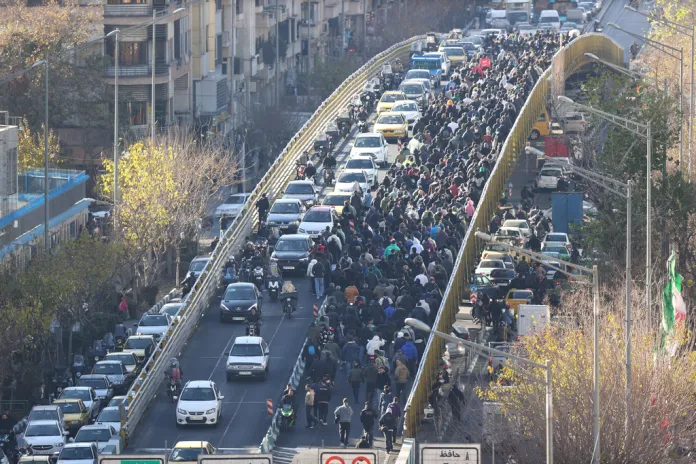
Anti-government demonstrations are nothing new for Iran, with activity having risen and fallen routinely since the 1979 Islamic Revolution that transformed the nation into an autocratic theocracy.
But the scope and sustained momentum of these latest protests have captured observers’ attention.
How widespread are they?
Since December, similar protests have emerged in the majority of the country’s provinces and are gaining momentum.
“At least 37 cities witnessed protests in the form of street gatherings, protest actions, or labor strikes, spanning 24 provinces, a scale that underscores the sustained nationwide character of the unrest,” according to Human Rights Activists in Iran, a US-based monitoring group.
HOW TRUMP’S OIL TANKER SEIZURES FIT IN THE US-VENEZUELA STRATEGY
The organization estimates approximately 2,000 individuals were arrested by law enforcement, and approximately 38 died.
“Reports indicate that some of these arrests were carried out not only at protest sites but also through summonses, on-the-ground identification, and follow-up actions, an approach aimed not merely at dispersing gatherings, but at exerting psychological pressure and long-term deterrence,” according to Human Rights Activists in Iran.
Iran’s internet is heavily censored even under normal circumstances, making information from within the country difficult to disseminate.
The reported blackouts further confound outside authorities and humanitarian organizations’ efforts to understand the granular details of the protests as they unfold.
FOUR TAKEAWAYS FROM HOUSE OVERSIGHT’S HEATED MINNESOTA FRAUD HEARING
Iranian leaders distinguish “protesters” versus “rioters”
Ayatollah Ali Khamenei, the supreme leader of Iran, drew a distinction over the weekend between “protesters” and “rioters.”
“We talk to protesters, the officials must talk to them,” Khamenei said. “But there is no benefit to talking to rioters. Rioters must be put in their place.”
President Mohammad Jafar Ghaempanah allegedly ordered at a Cabinet meeting on Wednesday that “no security measures be taken against the demonstrators,” according to Vice President Mohammad Jafar Ghaempanah.
Ghaempanah explained that “those who carry firearms, knives, and machetes and who attack police stations and military sites are rioters, and we must distinguish protesters from rioters.”
Gen. Ahmad Reza Radan, Iran’s chief of police, promised in a statement earlier this week that rioters “will be identified at any time and in any place, and will be prosecuted and punished until the last person is arrested.”
TRUMP WARNS OF JANUARY GOVERNMENT SHUTDOWN OVER OBAMACARE
Radan offered a glimmer of leniency for those who willfully turn themselves over to authorities.
“There is still time for those who were deceived by enemy intelligence services or their leaders to turn themselves in and benefit from the Islamic Republic’s Islamic mercy,” he warned.
General Amir Hatami, the commander-in-chief of the Iranian army, warned foreign nations against intervention or support for the unrest — threatening to take preemptive actions.
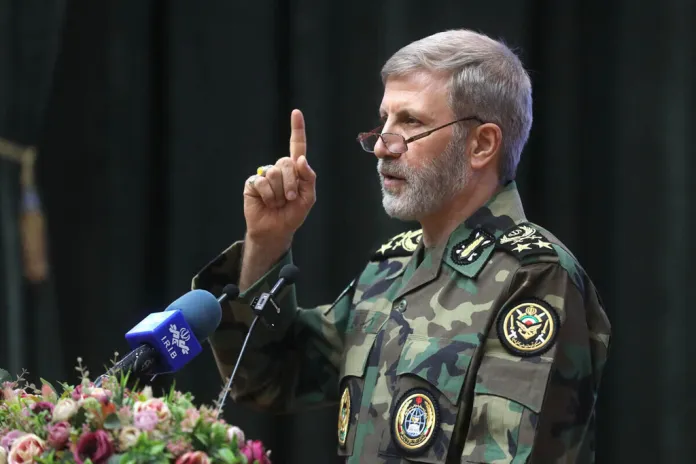
“The Islamic Republic of Iran considers the escalation of hostile rhetoric against the Iranian nation a threat and will not tolerate its continuation without responding,” Hatami said.
Chief Justice Gholamhossein Mohseni Ejei, the senior legal authority in the country, has been less generous in his rhetoric.
“From now on, there will be no leniency for whoever helps the enemy against the Islamic Republic and the calm of the people,” he said on Wednesday. “Following announcements by Israel and the US president, there is no excuse for those coming to the streets for riots and unrest.”
DEMOCRATS NEED TO TEMPER THEIR EXPECTATIONS OF A 2026 BLUE WAVE
Trump issues warning to Khamenei over protesters
President Donald Trump, smelling blood in the water for the Khamenei regime, has made bombastic threats to support demonstrators if the government takes violent action.
The president warned that if the Iranian regime “violently kills peaceful protesters, which is their custom, the United States of America will come to their rescue.”
He later sharpened the point when he told reporters aboard Air Force One on Monday that “if they start killing people like they have in the past, I think they’re going to get hit very hard by the United States.”
Holly Dagres, a senior fellow in the Washington Institute’s Viterbi Program on Iran and U.S. Policy, posted a video to social media of a protester putting up a symbolic street sign renaming a boulevard in Tehran after Trump.
“Since Trump’s comments about the Iran protests, I’ve seen numerous videos of Iranian protesters either thanking him or, in this case, renaming streets after the US president,” she said of the footage.
Sen. Lindsey Graham, speaking with Fox News on Tuesday, called the ayatollah a “religious Nazi” and told the people of Iran that the U.S. stands with them in their protest.
“To the Ayatollah — you need to understand, if you keep killing your people who are demanding a better life, Donald J. Trump is gonna kill you,” he added.
TRUMP ADVISES THAT ANYONE BURNING AMERICAN FLAG WILL BE IMPRISONED FOR A YEAR
The Iranian government has not acknowledged the reports of a nationwide blackout, but such measures have been taken during previous bouts of civil unrest.
Crown Prince Reza Pahlavi, the son of Iran’s deposed Shah and a leading figure in anti-regime coordination, warned earlier on Thursday that demonstrators’ internet access could be cut.
WHAT WILL THE US AND ISRAEL DO ABOUT THE IRAN PROTESTS
He encouraged his supporters to chant in unison at 8 p.m. on Thursday and Friday — “whether in the streets or even from your own homes” — in order to demonstrate their numbers and level of coordination.
“Based on your response, I will announce the next calls to action,” the crown prince said in a video statement on Wednesday.