Authored by Autumn Spredemann via The Epoch Times (emphasis ours),
Carmen Alvarez looks down at a five-year-old coffee plant and frowns. She points to the wide brown spots afflicting some of the leaves and says “Ashes are good for [dealing with] the plagues.”
Mrs. Alvarez and her husband Francisco Mamani have been working with coffee plants near Bolivia’s Amboro National Park for 30 years.
In that time, they’ve had their fair share of environmental setbacks.
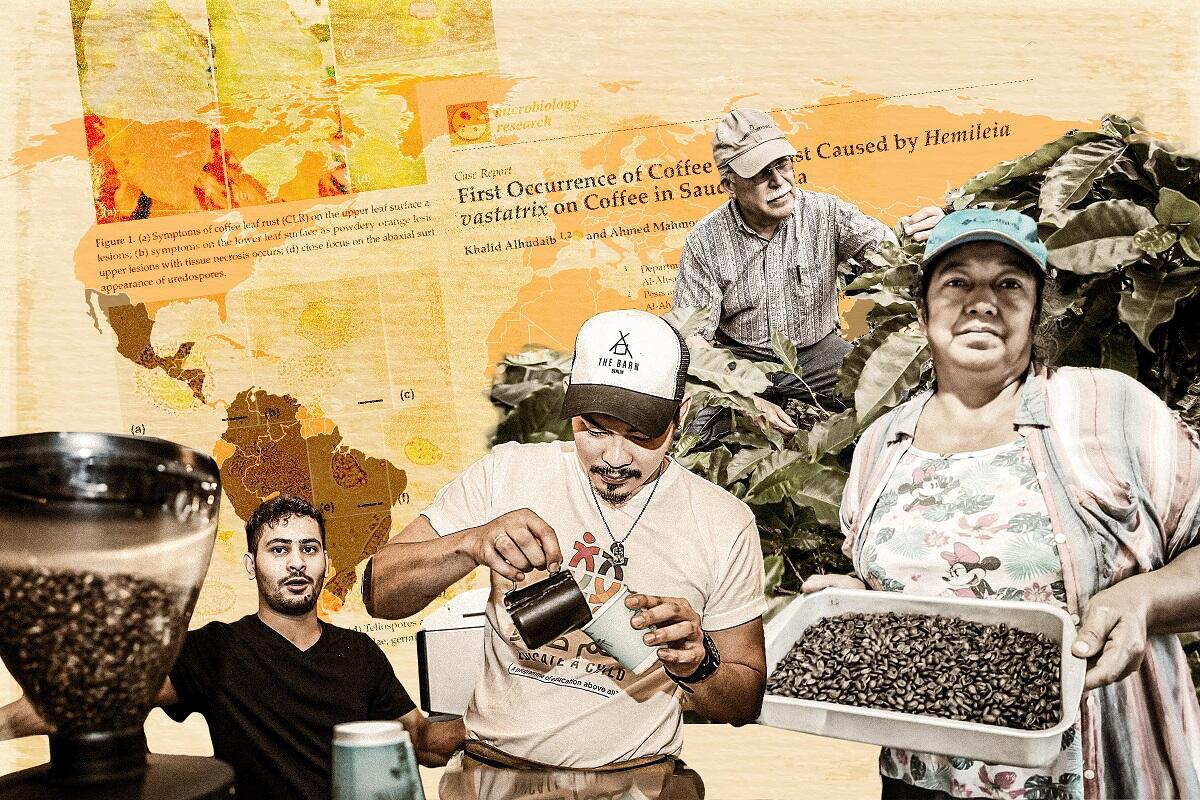
Coffee has always been a fragile plant that requires specific microclimates to thrive. Controlling fungal diseases and pests are just part of the job.
Most growers within the world’s “coffee belt” nations are well-versed in dealing with these problems—every season brings a different challenge.
As one of the most traded commodities in the world, the global coffee market was valued at $138 billion last year, according to Expert Market Research. FairTrade says the industry employs roughly 125 million people in at least 70 countries.
In the United States, coffee represents 2.2 million jobs and creates more than $100 billion in wage revenue, according to the National Coffee Association.
Mrs. Alvarez said both the wet and dry seasons are becoming less predictable, most noticeably since a few years ago. Consequently, infestations and diseases affecting coffee are now becoming harder to predict and more difficult to mitigate.
The Alvarez family, which runs both a plantation and the coffee roasting company Buenavisteno, isn’t alone.
The increasing struggle to bring in a healthy crop of coffee “cherries” is part of a larger pattern affecting the world’s producers.
As weather and seasons become more erratic, diseases have become more widespread, threatening the future of growers everywhere.
The fungal disease known in the industry as coffee leaf rust is one of the primary blights that affects coffee—particularly the Arabica strains—and spreads like a pathogen.
The dreaded coffee leaf rust was detected for the first time in Saudi Arabia, a country that had harbored one of the few remaining coffee regions free of the disease, according to a study published in January.
The presence of coffee leaf rust was observed for the first time in August 2023 on plantations in the mountainous Fyfa district.
The area lies within the heart of Saudi Arabia’s coffee production region in Jazan.
The United States imports 200,000 60-kilogram (132-pound) bags of roast and ground coffee per year from the Middle Eastern nation, according to the U.S. Department of Agriculture.
Due to the compounding effect of increased disease and insects, along with shifting weather patterns, one study in the journal “Science” estimates that 60 percent of all coffee species are at risk of extinction.
However, this isn’t the first time scientists have identified coffee as being at risk of extinction due to evolving and shifting climates.
One study from 2012 noted that wild Arabica strains—known for having the best taste—could be extinct “well before” the end of this century.
Currently, the United States consumes 1.62 billion pounds of coffee per year, according to data compiled by Cafely.

Facing a Triple Threat
Some in the industry predict a significant loss in coming years.
“Research shows that the number of regions best suited for growing coffee will be cut in half over the course of the next 25 years or so,” Amanda Archila, executive director of Fairtrade America, told The Epoch Times.
The organization says it works with more than 2 million farmers worldwide, giving it a finger on the pulse of coffee producers’ struggles.
Ms. Archila said countries such as Brazil, Vietnam, Indonesia, and Colombia are especially affected by changing temperatures.
“For coffee farmers, that means a dramatic change in how they farm—or whether they farm at all,” she said.
“Some may choose to grow crops better suited to the new environment. Some may relocate. Some may abandon farming altogether in search of more stable, profitable jobs.
“What we certainly know is that already unstable livelihoods are at stake, with families and communities all around the world on the line,” she said.
Ms. Archila said Fairtrade-certified farmers in Colombia have reported serious problems with irregular rainfall.
“They are waiting months for rainfall. The sun is so hot that it is drying out their wells and there isn’t enough water to irrigate crops quickly,” she said.
“Plants are smaller and thinner than they used to be, and pests and diseases are spreading more easily.”
Thriving in humid, tropical climates, coffee plants naturally require a lot of water. However, too much can be just as damaging.
Heavy rains, especially during the dry season, can lead to erosion, and soil nutrient loss, and leave saturated root systems prone to disease and rot.
Challenges aside, some have no intention of giving up on their multi-generational farms.
Mrs. Alvarez said her family is getting creative with solutions for the plagues afflicting their coffee production.
“We prepare different products to cure and protect from the diseases,” she said.
One type of insect Mrs. Alvarez described is what she called a “miner.”
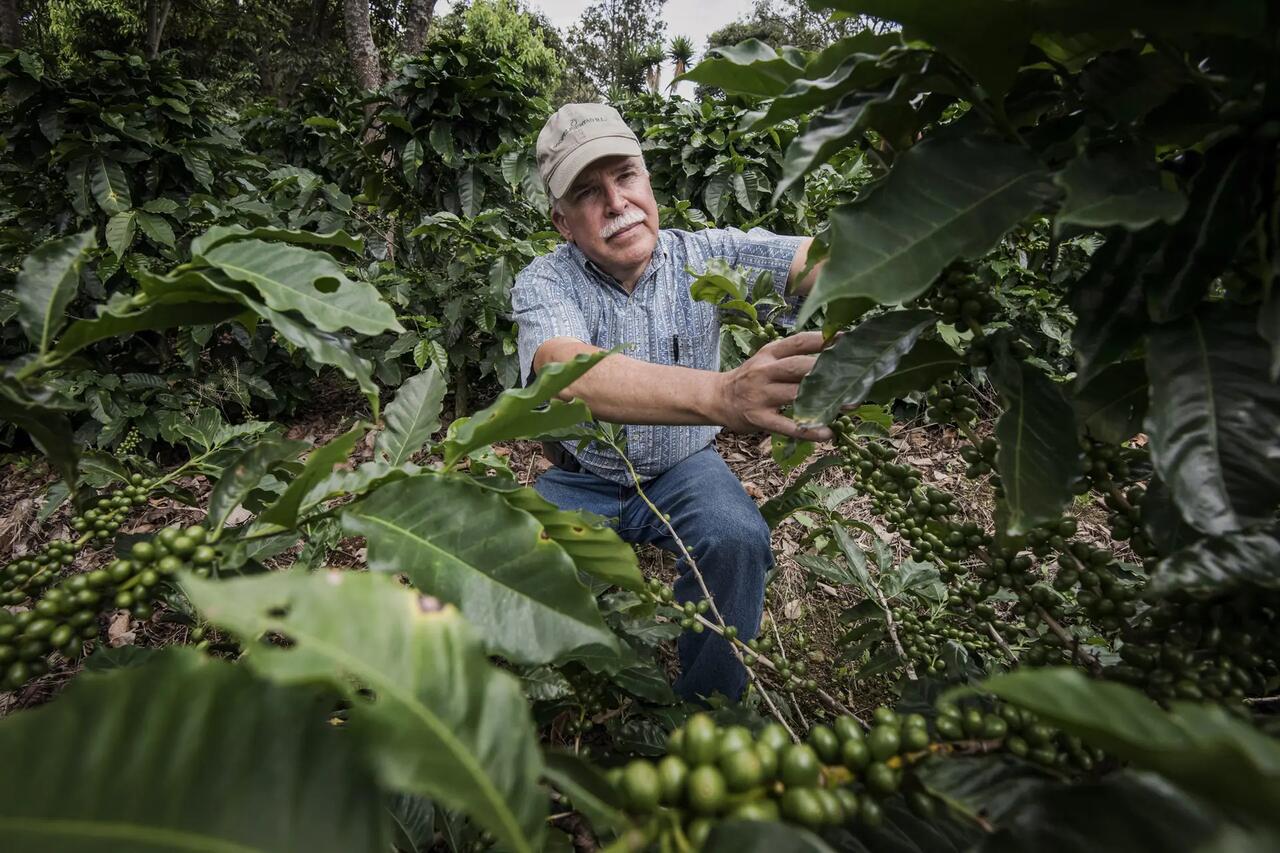
The bug burrows into the coffee plants, killing it as efficiently as coffee leaf rust.
When the wet and dry seasons around her farm were stable, it was easy to predict and control the “miners.” They were part of the seasons, just like the rains.
However, with the drastic swings in rainfall and temperatures around Amboro National Park, she said the insect attacks have become a daily battle.
Then there’s what she called the “damping.”
“Damping is a plague. It’s not like a beetle that we can see and kill. It’s just crazy weather. It rains when it’s not supposed to or it’s cold when it’s supposed to be warm. It’s very difficult to protect the plants,” Mrs. Alvarez said.
The term “damping” is used throughout the region of Buena Vista to describe the effect of sudden, erratic weather changes on coffee plants.
Mrs. Alvarez said it takes a heavy toll on saplings younger than one year, but noticed that longer periods of extreme weather are starting to affect well-established plants five years and older.
“It affects the neck [stem] of the coffee. It makes the plant dry out faster,” she said.
When asked how she handles the “damping,” she said they’re still trying different methods. So far, she observed that wood ashes work well for plants that get sick from wild weather changes.
Beyond ashes, Mrs. Alvarez explained her family also uses laundry soap, lime, and sulfur to battle fungal diseases and pests. “That’s also why we plant Castillo [coffee], it’s more resistant.”
Read more here...
Authored by Autumn Spredemann via The Epoch Times (emphasis ours),
Carmen Alvarez looks down at a five-year-old coffee plant and frowns. She points to the wide brown spots afflicting some of the leaves and says “Ashes are good for [dealing with] the plagues.”
Mrs. Alvarez and her husband Francisco Mamani have been working with coffee plants near Bolivia’s Amboro National Park for 30 years.
In that time, they’ve had their fair share of environmental setbacks.
Coffee has always been a fragile plant that requires specific microclimates to thrive. Controlling fungal diseases and pests are just part of the job.
Most growers within the world’s “coffee belt” nations are well-versed in dealing with these problems—every season brings a different challenge.
As one of the most traded commodities in the world, the global coffee market was valued at $138 billion last year, according to Expert Market Research. FairTrade says the industry employs roughly 125 million people in at least 70 countries.
In the United States, coffee represents 2.2 million jobs and creates more than $100 billion in wage revenue, according to the National Coffee Association.
Mrs. Alvarez said both the wet and dry seasons are becoming less predictable, most noticeably since a few years ago. Consequently, infestations and diseases affecting coffee are now becoming harder to predict and more difficult to mitigate.
The Alvarez family, which runs both a plantation and the coffee roasting company Buenavisteno, isn’t alone.
The increasing struggle to bring in a healthy crop of coffee “cherries” is part of a larger pattern affecting the world’s producers.
As weather and seasons become more erratic, diseases have become more widespread, threatening the future of growers everywhere.
The fungal disease known in the industry as coffee leaf rust is one of the primary blights that affects coffee—particularly the Arabica strains—and spreads like a pathogen.
The dreaded coffee leaf rust was detected for the first time in Saudi Arabia, a country that had harbored one of the few remaining coffee regions free of the disease, according to a study published in January.
The presence of coffee leaf rust was observed for the first time in August 2023 on plantations in the mountainous Fyfa district.
The area lies within the heart of Saudi Arabia’s coffee production region in Jazan.
The United States imports 200,000 60-kilogram (132-pound) bags of roast and ground coffee per year from the Middle Eastern nation, according to the U.S. Department of Agriculture.
Due to the compounding effect of increased disease and insects, along with shifting weather patterns, one study in the journal “Science” estimates that 60 percent of all coffee species are at risk of extinction.
However, this isn’t the first time scientists have identified coffee as being at risk of extinction due to evolving and shifting climates.
One study from 2012 noted that wild Arabica strains—known for having the best taste—could be extinct “well before” the end of this century.
Currently, the United States consumes 1.62 billion pounds of coffee per year, according to data compiled by Cafely.

Facing a Triple Threat
Some in the industry predict a significant loss in coming years.
“Research shows that the number of regions best suited for growing coffee will be cut in half over the course of the next 25 years or so,” Amanda Archila, executive director of Fairtrade America, told The Epoch Times.
The organization says it works with more than 2 million farmers worldwide, giving it a finger on the pulse of coffee producers’ struggles.
Ms. Archila said countries such as Brazil, Vietnam, Indonesia, and Colombia are especially affected by changing temperatures.
“For coffee farmers, that means a dramatic change in how they farm—or whether they farm at all,” she said.
“Some may choose to grow crops better suited to the new environment. Some may relocate. Some may abandon farming altogether in search of more stable, profitable jobs.
“What we certainly know is that already unstable livelihoods are at stake, with families and communities all around the world on the line,” she said.
Ms. Archila said Fairtrade-certified farmers in Colombia have reported serious problems with irregular rainfall.
“They are waiting months for rainfall. The sun is so hot that it is drying out their wells and there isn’t enough water to irrigate crops quickly,” she said.
“Plants are smaller and thinner than they used to be, and pests and diseases are spreading more easily.”
Thriving in humid, tropical climates, coffee plants naturally require a lot of water. However, too much can be just as damaging.
Heavy rains, especially during the dry season, can lead to erosion, and soil nutrient loss, and leave saturated root systems prone to disease and rot.
Challenges aside, some have no intention of giving up on their multi-generational farms.
Mrs. Alvarez said her family is getting creative with solutions for the plagues afflicting their coffee production.
“We prepare different products to cure and protect from the diseases,” she said.
One type of insect Mrs. Alvarez described is what she called a “miner.”
The bug burrows into the coffee plants, killing it as efficiently as coffee leaf rust.
When the wet and dry seasons around her farm were stable, it was easy to predict and control the “miners.” They were part of the seasons, just like the rains.
However, with the drastic swings in rainfall and temperatures around Amboro National Park, she said the insect attacks have become a daily battle.
Then there’s what she called the “damping.”
“Damping is a plague. It’s not like a beetle that we can see and kill. It’s just crazy weather. It rains when it’s not supposed to or it’s cold when it’s supposed to be warm. It’s very difficult to protect the plants,” Mrs. Alvarez said.
The term “damping” is used throughout the region of Buena Vista to describe the effect of sudden, erratic weather changes on coffee plants.
Mrs. Alvarez said it takes a heavy toll on saplings younger than one year, but noticed that longer periods of extreme weather are starting to affect well-established plants five years and older.
“It affects the neck [stem] of the coffee. It makes the plant dry out faster,” she said.
When asked how she handles the “damping,” she said they’re still trying different methods. So far, she observed that wood ashes work well for plants that get sick from wild weather changes.
Beyond ashes, Mrs. Alvarez explained her family also uses laundry soap, lime, and sulfur to battle fungal diseases and pests. “That’s also why we plant Castillo [coffee], it’s more resistant.”
Read more here…
Loading…