Over the next nine months leading up to the 2026 midterm elections, Americans should expect a torrent of messaging designed to heighten anxiety over real and perceived AI job losses, a plan left-leaning globalist billionaires hope will sour voters’ economic outlook and help Democrats return to power.
The post ‘CODE RED:’ Inside the Left’s 2026 Strategy to Weaponize AI Job Loss Fears Before the Midterm Elections appeared first on Breitbart.
Over the next nine months leading up to the 2026 midterm elections, Americans should expect a torrent of messaging designed to heighten anxiety over real and perceived AI job losses, a plan left-leaning globalist billionaires hope will sour voters’ economic outlook and help Democrats return to power.
The political playbook has three parts:
- Convince Americans that mass AI job loss is inevitable.
- Channel that fear and ennui into galvanizing support for Universal Basic Income (UBI) redistribution in the long-term.
- Co-opt populist concerns over AI data centers driving up electricity and water bills for everyday Americans in the short-term.
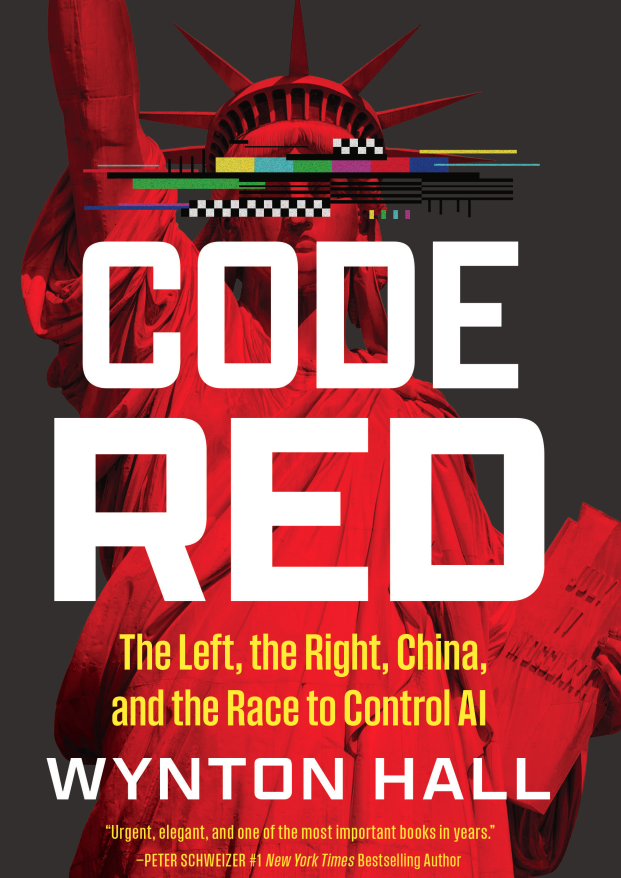
The strategy, years in the making, is backed by hundreds of millions of dollars of left-leaning Silicon Valley cash and a sprawling ecosystem of advocacy groups and nonprofits, which I document in my new book, Code Red: The Left, the Right, China, and the Race to Control AI (HarperCollins). The three-pronged approach to create fear and uncertainty is already kicking into high gear.
Democrats and Billionaire AI CEOs Stoke Jobs Panic
Democrats are wasting no time. “AI is fast becoming a defining issue on the campaign trail for the next generation of Democrats,” Axios reports. The tone is increasingly populist: AI oligarchs will profit while ordinary Americans are forced to pick up the tab or lose their jobs altogether. Indeed, a Senate report by Democratic staffers on the Health, Education, Labor, and Pensions (HELP) Committee led by Sen. Bernie Sanders (I-VT) warned that AI and automation could replace nearly 100 million jobs over the next decade.
The left-leaning billionaire AI titans running America’s frontier labs are playing their part, too. Week after week, they deliver a steady drumbeat of dire, headline-grabbing predictions that keep investors cutting checks, businesses buying in, and everyday Americans nervous. Parents, meanwhile, scramble to help their kids keep up, trying to separate tech hype cycles from real innovation.

Anthropic CEO Dario Amodei (Chance Yeh/Getty)
Just weeks ago, Anthropic’s CEO Dario Amodei published a nearly 20,000-word essay doubling down on his prediction of an AI jobs bloodbath within the next 12 months to five years. How bad will it be? Amodei warns we could see the disruption of 50 percent of entry-level white collar jobs—effectively chopping off the lower rungs of our children’s career ladders.
Two weeks ago, Microsoft AI CEO Mustafa Suleyman said the AI jobs apocalypse could come even sooner. “White-collar work, where you’re sitting down at a computer, either being a lawyer or an accountant or a project manager or a marketing person—most of those tasks will be fully automated by an AI within the next 12 to 18 months,” Suleyman warned ominously.
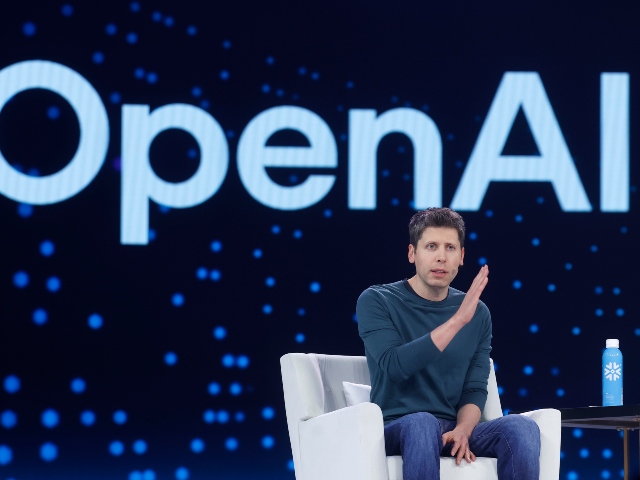
Sam Altman of OpenAI (Justin Sullivan/Getty)
And last week, OpenAI CEO Sam Altman amplified a similar message, stating that a lot of professions will simply “go away.” Furthermore, he revealed that “the inside view” at many AI companies is that “the world is not prepared” because “we’re going to have extremely capable models soon” and that “is stressful and anxiety-inducing.” To his credit, Altman has consistently maintained this position. As Code Red chronicles, Altman funded America’s largest UBI study a decade ago, and more than five years before ChatGPT’s public-facing release.
Trump AI Czar: Job Growth, Not Destruction, Has Materialized
Trump AI czar David Sacks is quick to point out that, so far, mass AI-driven job losses have yet to manifest. To the contrary, he says, the AI data center construction boom—and the surrounding energy production that supports it—is benefitting workers, including electricians, concrete pourers, plumbers, drywall hangers, and other trades. The Wall Street Journal has described data center buildouts as a “gold rush” for construction workers, boosting some wages by as much as 30 percent and lifting some trades into six-figure incomes.
But that’s hardly the story voters hear from AI industry elites. “They are single-mindedly focused on scaring people with some of these headlines around…[AI] job loss.,” said Sacks on the All-In Podcast. “It’s a tried and true tactic of people who want to give more power to the government to scare the population, because if you can scare the population and make them fearful, then they will cry out for the government to solve the problem. And that’s what I see here is that you’ve got this elaborate network of front organizations, which are all motivated by this EA [Effective Altruism] ideology, they’re funded by a hardcore leftist [Facebook cofounder Dustin Moskowitz]…These are committed leftists; they’re Trump haters.”
Follow the Money Behind the Alarm
As Code Red demonstrates, AI’s architects have spent over a decade studying and promoting a Universal Basic Income as a policy solution if their promises of AI’s job-replacing power come to fruition. It’s the classic Machiavellian move: create a problem, then propose your ideas or governmental control as the solution.
But even if a jobs apocalypse requiring UBI doesn’t materialize, such bold declarations help raise investor capital from those who believe AI’s productivity-boosting gains will help slash labor costs. What’s more, AI doom narratives are also amplified by something called the “Effective Altruism” (EA) community, a vast, extremely well-funded network of largely leftist tech elites and billionaires.
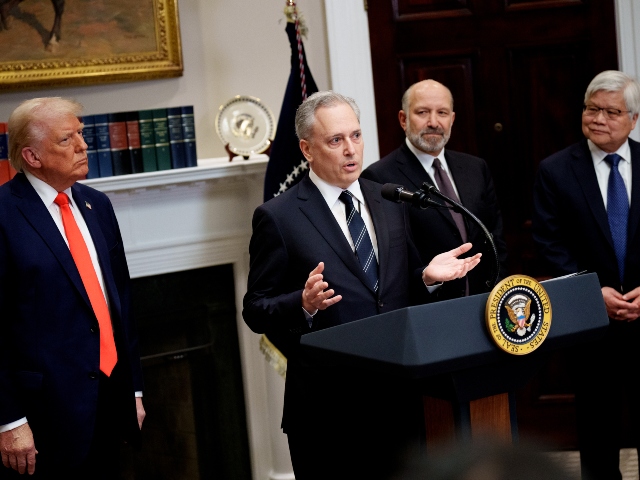
David Sacks, President Trump’s AI Czar (Andrew Harnik/Getty)
The Effective Altruism movement says it uses logic to maximize philanthropic and societal impact on causes like climate change and existential AI risks. EA operates through an expansive ecosystem of nonprofit organizations, most notably Open Philanthropy (OP) (which recently changed its name to Coefficient Giving). Its megadonors include disgraced former FTX CEO Sam Bankman-Fried, Facebook cofounder Dustin Moskowitz and his wife, Cari Tuna. The group describes itself as a “philanthropic funder and advisor” that since 2014 has “directed over $4 billion in grants” to “causes ranging from global health to AI safety and pandemic preparedness.”
The organization was cofounded by Holden Karnofsky, who is married to Daniela Amodei, a cofounder of Anthropic and the sister of its CEO, Dario Amodei. Today, Karnofsky works as an AI safety strategist at Anthropic—the company that the Trump War Department last week said it may sever its relationship with and designate a supply chain risk after contentious disagreements over military use of the technology.
An “Influence Operation” for Global AI Governance?
What is the EA movement’s overarching goal? According to President Trump’s AI czar, David Sacks, conservatives and Republican voters should understand that “hyperbolic and unproven claims” about potential AI job losses are “not an accident” but rather “part of an influence operation.”
Toward what end? “The goal,” Sacks says, is “to further ‘Global AI Governance,’ a massive power grab by the bureaucratic state and globalist institutions.”
Global AI governance is the moniker used to describe the regulatory effort by globalist organizations and leftists to control virtually every dimension of AI deployment under the banner of “AI safety” for the world, the Trump AI czar explains. Furthermore, says Sacks, the organizers behind the push are “billionaires with a long history of funding left-wing causes and Trump hatred.” He adds: “It’s fine to be concerned about a technology as transformational as AI, but if you repeat their claims uncritically, you may be falling for an AstroTurfed campaign by the ‘AI Existential Risk Industrial Complex.’”
Conservatives Are Entering a Code Red AI Era
The double-meaning of Code Red’s title was intentional—one part an alert siren, another part a call for the MAGA red conservative movement to develop a code of policy principles as the AI era introduces 5-D chess complexity to the policy battles of the past. Hence, Code Red covers everything from education, jobs, national security, terrorism, human relationships, and even AI’s impact on religion.
As to the question of whether politically weaponizing fears over AI job losses will result in electoral gains, that will hinge on at least four variables.
1) The Money Battle: Massive spending by pro-AI Super PACs like the $125 million Leading the Future, backed by Trump donor heavyweights like Open AI president Greg Brockman and Andreessen Horowitz, will support a pro-AI innovation, light-touch regulations agenda and square off against pro-AI regulation groups, such as the $50 million Public First 501(c)4, which received a $20 million donation from Anthropic. Both groups will support candidates across the political aisle.
2) AI-Washing: Another factor will be whether voter perceptions will be swayed between now and the November elections by so-called “AI-washing”—the business practice of blaming layoffs on artificial intelligence instead of traditional business factors that may embarrass executives or expose their mismanagement.
3) Bipartisan Opposition to Higher Electricity and Water Costs from Data Centers: Third, the Trump Administration’s handling of growing bipartisan affordability concerns over data center construction’s toll on electricity and water costs for local communities will have a major impact. President Trump is currently developing a compact to make sure power-hungry data centers don’t stick working class Americans with the tab. MAGA loyalist and White House Senior Counselor for Trade and Manufacturing Peter Navarro summed it up best: “All of these data center builders,” he said, “need to pay for all, all of the costs,” including electricity, water, and grid strain. “I just want to assure people that we’re on it, we also feel your pain.”
4. Advancements in Agentic AI and Recursive Self-Improvement (RSI): Finally, and perhaps most importantly, much will hinge on the warp-speed developments of the technology itself. Over the next nine months, much can and will accelerate with agentic AI (i.e. agents that can perform real work) and recursive self-improvement (RSI) (AI that autonomously enhances itself). Factors like these could have significant impacts. A single update this month to Anthropic’s Claude Cowork AI agent sparked a nearly $300 billion market sell-off, accelerating the ongoing debate over whether AI agents will eat into Software as a Service (SaaS). Similarly, gains in RSI could prove pivotal. “If the predictions for recursive self-improvement in 2026 is true,” says influential AI expert and Moonshots podcast host Peter Diamandis, “every prediction curve we have accelerates dramatically—and every governance framework, safety protocol, and regulatory approach is already obsolete. We’re building brakes for a car that’s about to become a rocket.”
Will the conservative movement be prepared for the AI era’s new 5-D political chessboard and prevail at the polls?
We’ll know in nine months.
Wynton Hall is the author of the new book, Code Red: The Left, the Right, China, and the Race to Control AI (HarperCollins), available for pre-order now. Hall is the Social Media Director for Breitbart News, a Distinguished Fellow at the Government Accountability Institute, a former Visiting Fellow at Stanford University’s Hoover Institution, and the author or collaborator of 27 books, including multiple New York Times bestsellers, for world leaders, tech moguls, and celebrities.