This week, the Senate unveiled revamped bipartisan housing legislation that it billed as a compromise between competing housing legislation in the House and the Senate. Here are the highlights of the measures included in the bill.
The legislation is meant to boost the housing supply and ease the affordability crisis plaguing the nation. It would be the most significant bipartisan piece of housing legislation in many years if President Donald Trump signs it into law.
Generally speaking, it is aimed at easing federal regulations that might slow housing construction and encouraging states and cities to reduce land-use regulations that are thought to make it difficult to build.
The now-renamed 21st Century ROAD to Housing Act is a combination of the Senate’s ROAD to Housing Act and the House’s Housing for the 21st Century Act. The newest iteration of the legislation is the Senate’s attempt to reconcile the differences between the two bills before sending it back to the House.
BIG WEEK AHEAD FOR MAJOR LEGISLATION TO ADDRESS HOUSING AFFORDABILITY WOES
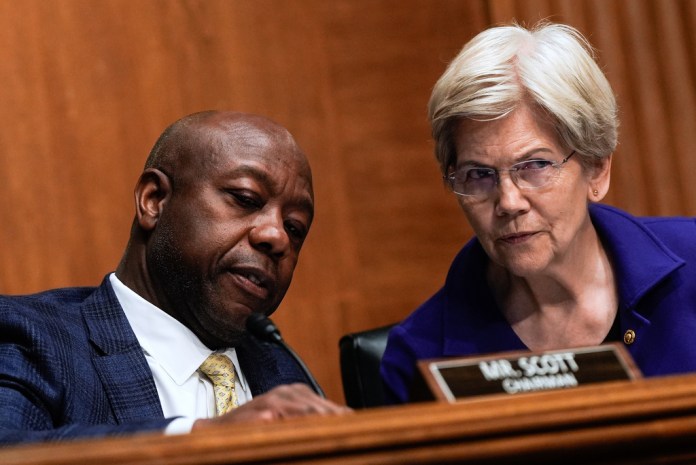
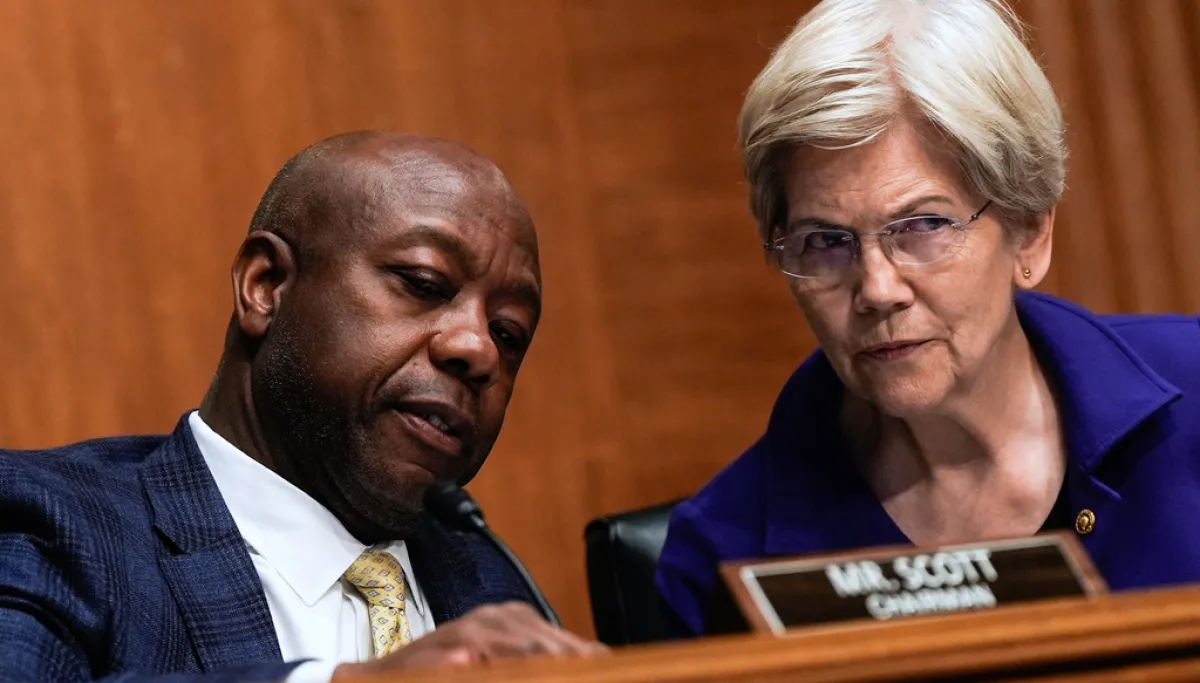
Senate Banking, Housing, and Urban Affairs Committee Chairman Tim Scott (R-SC) told a group of reporters that he is not trying to jam the House with the legislation and asserted that the new version combines the two pieces of legislation “together with an 80% or so significant majority of an overlap.”
There are some notable additions and subtractions in the newest version of the legislation compared to earlier versions introduced in both chambers.
Zoning guidelines
One significant departure from the initial version of ROAD to Housing is that it cuts the Housing Supply Frameworks Act from the language.
That provision in the Senate bill would have had the Department of Housing and Urban Development create zoning guidelines and then essentially grade every locality on how its rules stacked up against the ideal.
States and localities have been blamed for increasing the cost of housing by crimping supply through zoning restrictions and other regulations. The original ROAD legislation would have required HUD officials to engage in local land-use regulation in an advisory capacity.
Some saw the move as a major centerpiece of the bipartisan housing legislation, which has been spearheaded by Scott and banking committee ranking member Elizabeth Warren (D-MA) in the Senate and Financial Services Committee Chairman French Hill (R-AR) and ranking member Maxine Waters (D-CA) in the House.
But it was cut from the combined 21st Century ROAD to Housing Act. In response to a question from the Washington Examiner, Scott said its excision came down to concerns about the “heavy hand” of the federal government telling local jurisdictions what zoning needs to be in place.
“I don’t think it goes that far, but I recognize that the concern is clearly there,” Scott said.
When asked if the Trump administration or outside stakeholders were the ones pushing back on the provision’s inclusion, Scott said that “there was enough noise in the system from multiple parties that just made that untenable” in the housing legislation.
Wall Street firms blocked
Perhaps the most important inclusion is Trump-backed language that would ban large institutional investors from purchasing single-family homes in bipartisan housing legislation.
Trump has advanced such a ban as a key plank of his housing agenda, even though it is at odds with traditional Republican free-market economics. The provision’s inclusion will likely receive a mixed reaction among congressional Republicans.
Trump first announced the proposed ban earlier this year and later signed an executive order intended to partially implement it. But the administration’s goal has always been to have Congress pass such a restriction into law. He mentioned the executive order during the State of the Union last week and called on Congress to codify a ban.
The White House previously circulated draft legislative language on such a ban on large investors, as first reported by the Washington Examiner. The original language in the White House draft defined a “large institutional investor” as any investment fund, corporation, or entity that controls over 100 single-family homes.
The bill released Monday raises that threshold to 350.
Scott pointed out that adding the ban was a priority for Trump, who will ultimately have to support whatever legislation comes out of Congress.
“The president is going to sign legislation that he supports, and if it takes this institutional investor piece to get it passed, [it’s] well worth it for all the benefits and the progress that we’re making,” Scott said.
CBDCs
One surprise inclusion in the latest version of the bill is a temporary ban on central bank digital currencies.
A CBDC is a form of digital currency issued by a central bank. In the United States, that would be the Federal Reserve. Consumers would be able to use digital money issued directly by the Fed in addition to cash. Proponents of a CBDC argue that a centralized dollar would help prevent bank bailouts and increase efficiency.
But opponents, many of whom are Republicans, contend that it could give the Fed too much power or could raise Fourth Amendment concerns, depending on how much control the government would have over individual accounts.
The latest iteration of the bipartisan housing legislation would ban the Fed from issuing a central bank digital currency through 2030.
Scott said that the CBDC provision was part of finding the “smoothest path to the finish line.”
“And I will say that there’s lots of friends on the other side of the aisle that do not find that digestible,” the chairman said.
Housing near transit
The combined 21st Century ROAD to Housing Act also nixed the Build More Housing Near Transit Act. That section’s inclusion would have given some additional federal funding to cities and localities that allowed more housing near transit hubs.
Housing reform proponents, in recent years, have pushed for governments to allow for and incentivize denser housing construction in areas around transit hubs as part of an effort to drive down housing prices and boost housing supply, particularly in urban areas where public transportation is key for many people who do not own vehicles.
Last year, Gov. Gavin Newsom (D-CA), who is seen as a contender for president in 2028, signed a bill that overrides local zoning limitations to permit taller and denser residential developments near transit hubs.
Newsom said at the time that the “world looks to California for leadership — it’s time to build modern, connected communities that fulfill California’s promise, meeting the needs of today and the next generation. The cost of inaction is simply too high.”
Also notably missing from the new text is a section included in the House bill about strengthening community banking’s role in housing.
Hill, a major proponent of the provisions, discussed this exclusion during a Milken Institute event on Tuesday.
“At the heart of [housing] is who finances it,” he said. “So in my judgement, adding those kinds of key community banking elements make the housing bill more fulsome in the sense that you’re addressing finance supply along with that deregulatory, HUD, accountability approach.”
The big picture
Despite the changes, the 21st Century ROAD to Housing Act would be a significant bipartisan achievement in a highly divided Congress. It could also deliver a win for Trump and Republicans on affordability at a time when those are the most pressing issues for voters.
“I think there’s a lot of commonality between both bills,” Dennis Shea, executive vice president and chairman of the Bipartisan Policy Center’s housing policy center, told the Washington Examiner. “I think the bill, the new 21st Century ROAD to Housing bill, incorporates a lot that’s in both Senate and House packages.”
Still, there are major questions about what is next and how the House will handle the Senate’s combined version of the legislation.
SENATE ADDS TRUMP BAN ON PURCHASES BY LARGE INSTITUTIONAL INVESTORS TO BIPARTISAN HOUSING BILL
Dan Schneider, a spokesman for the House Financial Services Committee, told the Washington Examiner on Tuesday that the committee is still reviewing details of the revamped legislation.
“We look forward to the legislative process continuing and remain committed to working with our House and Senate colleagues and the administration to ensure the strongest possible outcome for the American people,” he said.