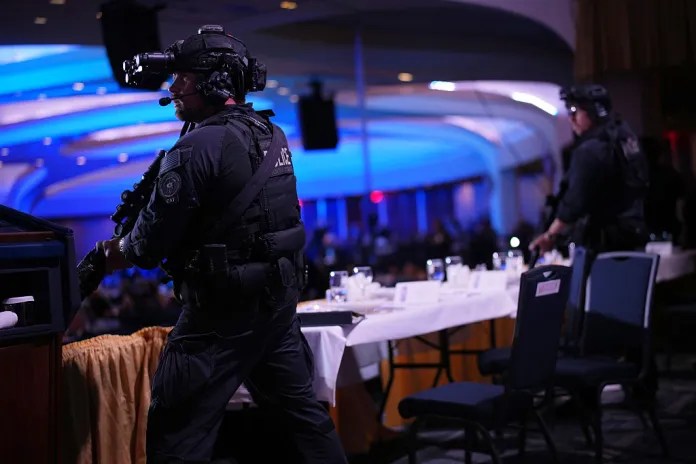
Prosecutors omitted a previously cited injury to a U.S. Secret Service agent in a Wednesday court filing, adding another layer of uncertainty to the fast-moving investigation into the attempted assassination of President Donald Trump at the Washington Hilton.
The 20-page filing, submitted by the U.S. Attorney’s Office for the District of Columbia, urges a federal judge to keep suspect Cole Allen detained pending trial, describing the alleged attack as a calculated effort to kill the president during the White House Correspondents’ Association dinner.
“The defendant traveled across the country with the explicit aim to kill the President of the United States,” prosecutors wrote, calling the incident “a planned attack of unfathomable malice.” The memo argues there are no conditions that would reasonably ensure public safety if Allen were released.
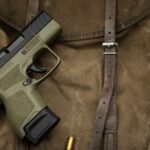
The government’s latest account includes new evidence, including a photo allegedly taken by Allen in his hotel room shortly before the shooting. Prosecutors say the image shows him equipped with a shoulder holster, knife, and what appeared to be an ammunition bag, reinforcing their claim that the attack was premeditated.
But the filing also marks a noteworthy shift in how the government is describing the shooting itself.
The criminal complaint issued Monday stated that a Secret Service officer, identified as Officer V.G., “was shot once in the chest” while wearing a ballistic vest during the encounter. That version was echoed publicly by acting Attorney General Todd Blanche, who said Monday that “one brave officer was injured and is receiving care and has been released from the hospital.”
By contrast, the new detention memo recounts the exchange of gunfire without referencing any injury. It states that an agent observed Allen fire a shotgun toward a staircase leading to the ballroom and then fired five shots in response, but does not indicate whether anyone involved was struck.
The omission comes as investigators continue working to determine the source of the round that reportedly hit the agent’s vest.
Blanche responded to a question surrounding that uncertainty when pressed by reporters on Wednesday, saying he would not “get ahead of the work of law enforcement” but that it “would not surprise” him if the agent was shot by the suspect, while emphasizing that investigators are still working to “get that right.”
According to reporting from USA Today on Tuesday, a law enforcement official briefed on the investigation said current evidence suggests the suspect fired the shot, and that the only Secret Service agent who discharged a weapon during the incident was the one who was injured. Authorities have largely ruled out that the agent could have been struck by friendly fire, although the FBI’s ballistics and forensic analysis remains ongoing.
Officials have also acknowledged key evidence gaps. Investigators have not recovered the projectile fragment that struck the vest, leaving open questions about whether the round came from Allen’s shotgun or another source.
Former FBI special agent Stuart Kaplan told the Washington Examiner the evolving accounts are not unusual in chaotic, close-quarters shootings, where initial assumptions can shift as forensic evidence comes in.
“There may have been an assumption, and they may have now realized it may have been incorrect,” Kaplan said in an interview. “But even if it was friendly fire, that doesn’t change the reality that the only reason any of this happened is because the suspect created that environment.”
Kaplan described so-called “blue-on-blue” incidents as a known risk in high-stress encounters, particularly in confined spaces with multiple officers converging on an active threat. Still, he dismissed speculation about a cover-up as misplaced.
“I see it as a red herring,” he said. “It happens in very fluid situations, but it in no way diminishes the seriousness of what occurred.”
The incident unfolded as Allen allegedly ran through a magnetometer checkpoint with a shotgun and moved toward a staircase leading down to a ballroom hosting roughly 2,500 attendees. Prosecutors say he fired at least one shot from a 12-gauge pump-action shotgun before being confronted and subdued by law enforcement.
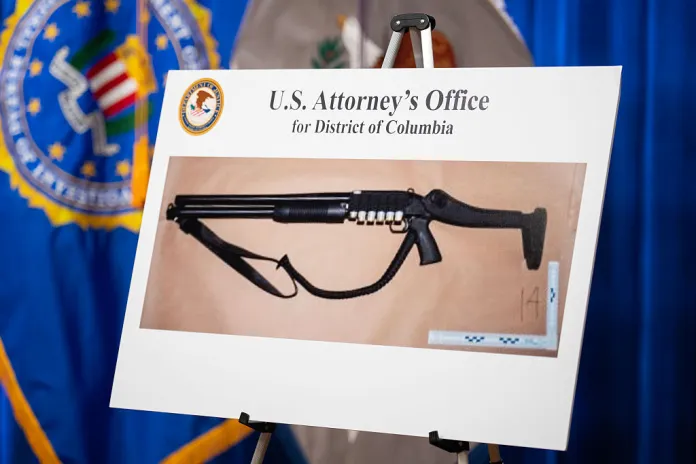
Kaplan said the five return shots fired by law enforcement reflected standard training, not hesitation.
“You don’t just fire downrange blindly,” he said. “There were over a thousand people in that ballroom. Officers have to identify a clear threat before discharging their weapon.”
The president said after the incident that he had spoken with the injured agent, describing him as being in “high spirits.” Local officials initially said the officer had been transported to a hospital after “taking a round” to his vest.
For now, prosecutors are focused on securing Allen’s continued detention, citing the severity of the alleged plot and the risk of future violence. But the absence of any reference to the agent’s injury in the government’s latest filing underscores that key factual questions in the case remain a source of confusion.
The Washington Examiner did not receive a response from representatives at the Secret Service, and a spokesperson for the U.S. attorney’s office declined to comment.
Allen, a 31-year-old from California, is charged by the complaint with one count of attempting to assassinate the president of the United States, transportation of a firearm and ammunition in interstate commerce with intent to commit a felony, and discharging a firearm during a crime of violence.
If convicted, he could face decades in prison, including the possibility of a life sentence.
INJURED SECRET SERVICE AGENT FIRED FIVE SHOTS AT GUNMAN DURING TRUMP ASSASSINATION ATTEMPT
Cole, who has yet to enter a plea, made his first appearance in court on Monday and is scheduled to return at 11 a.m. on Thursday as a judge considers the government’s bid to keep him detained ahead of his trial. He is being held at the Washington, D.C. jail.
In a Wednesday afternoon filing, Cole’s public defenders claimed their client was being deprived of the ability to consult with them without being monitored, saying Department of Corrections staff “have refused Mr. Allen the opportunity to communicate with counsel in a way that protects confidentiality owed to him.”