HELSINKI, Finland — Finland joined the North Atlantic Treaty Organization just over three years ago, expecting to walk into an efficient and well-funded defensive alliance capable of warding off their belligerent Russian neighbors.
Finnish government leaders are not afraid to admit that they found NATO to be much more disorganized and underfunded than they hoped — echoing recent complaints from President Donald Trump.
But as Trump threatens to walk away from an alliance that has “done absolutely nothing to help” with the Iran war, Finland is pleading for the United States not to blow up the defense network just as its fellow European members are beginning to pull their weight.
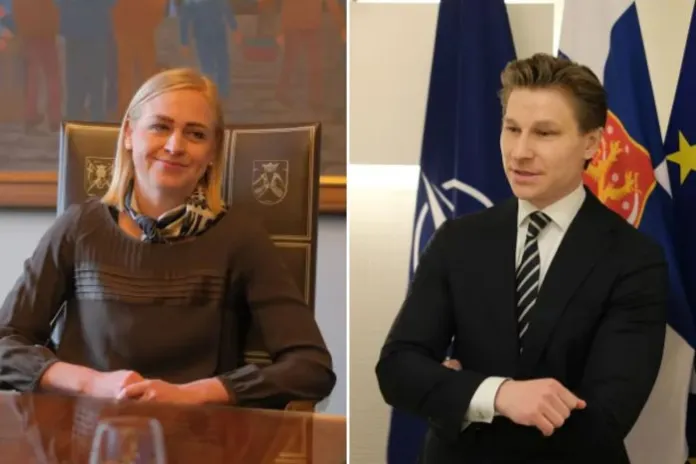
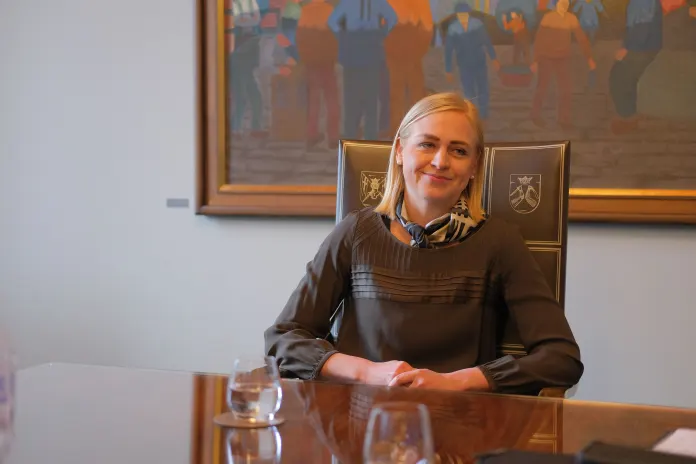
“We have exactly the same position as President Trump in the sense that we think that NATO is not at its full potential yet because most of the European countries have not invested enough in the past years in defense and deterrence,” Finnish Foreign Minister Elina Valtonen said in a private meeting with American journalists, including the Washington Examiner, in Helsinki on Tuesday.
Prior to 2025, multiple members of NATO routinely failed to meet the alliance’s 2014 agreement that each spend at least 2% of gross domestic product on defense. Others packed questionable expenditures into their “defense budgets” in order to pad out their totals without actually contributing to joint security.
Valtonen offered some qualified defense of European counterparts in the alliance, contesting that Trump and previous U.S. administrations have expected the continent to only invest in defense by purchasing American weapons. She suggested that such an arrangement undermines Europe’s ability to produce a credible defense industry.
Trump cracked the whip on the alliance at the beginning of his second term, and NATO Secretary General Mark Rutte has credited the president with forcing a “real shift in mindset” among delinquent members.
She also pointed to “not so long ago” when “not only Americans but many other countries in Europe” urged post-reunification Germany not to invest in its own defense at all. That demand has come back to bite the alliance as one of its wealthiest members struggles to refurbish its decrepit military.
All NATO members are now hitting their spending expectations for the first time, a development that should have solidified confidence in the alliance’s future.
But some states’ failure to even passively support U.S. operations against Iran has led Trump to declare he “needs nothing from NATO” and reduce American personnel in Europe.
“I think sometimes it seems that President Trump, when he speaks about NATO, he speaks about Europe — but Europe and NATO, of course, are two different things,” Valtonen said, adding that Trump should “keep what is happening in the Middle East now separated from NATO.”
Finnish Defense Minister Antti Hakkanen reiterated the idea that “NATO is not only Europe” during a subsequent meeting with reporters.
“The big picture is that Russia and China are trying to separate Western countries,” Hakkanen told reporters in a separate meeting at the Ministry of Defense. “That will benefit China mostly because they don’t have this kind of unique alliance globally.”
NATO’s influence beyond Europe and North America is bolstered by collateral alliances between member countries and outside allies such as Japan and Australia. Through these mutual defense pacts, NATO projects power into regions like the Middle East and the Pacific.
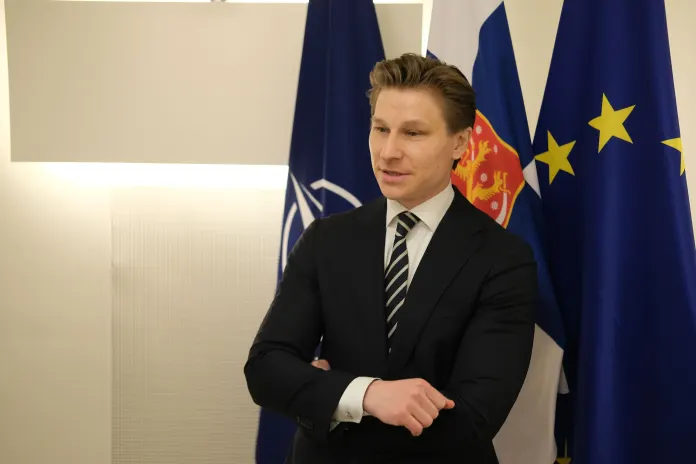
“The U.S.’s biggest influence in the world comes through alliances in the Pacific area, Middle East, Europe, and all that stuff and that’s why this alliance network — not just U.S.-Europe, but the alliance network — is the key,” the defense minister asserted.
He warned that partners and non-NATO allies across the globe are watching the alliance carefully to determine whether the “global U.S. alliance network” has a future.
“Pacific area partners and Middle East partners are also watching closely [to see] what is the future of this global U.S. alliance network,” Hakkanen said. “And this is the main objective for Russia and especially China in [the] long term — to separate this alliance or bring mistrust into that alliance.”
Finland’s decision to abandon decades of neutrality and join NATO was a major geopolitical gamble. Their realignment upset Russia and put a target on their back as one of the West’s easternmost bulwarks against Moscow’s sphere of influence.
Ultimately, their tone toward the mercurial Trump administration is one of desperation, well aware that a U.S. withdrawal would leave them exposed, vulnerable, and unprepared to face the threats that loom in the east.
FINNISH FIRM LAUNCHING THREE-MAN DRONE FACTORIES FOR RAPID, REMOTE PRODUCTION
“Russia might be — just for whatever reason — willing to test Article 5,” Valtonen said. “If there is any doubt that the U.S. would not be on board in that, then of course it crumbles altogether.”
“We definitely hope that the U.S. is not leaving NATO. It is not only out of self-interest but also for basically, I would say, the future of humankind,” she continued. “We do think that those values we represent are the best ones in the world — we stand strong for freedom — and it’s just easier to do that together.”