The Justice Department is pouring more resources into its sprawling investigation into whether officials in the Obama and Biden administrations conspired to target President Donald Trump, with federal officials in South Florida building out a new criminal civil rights section for the inquiry.
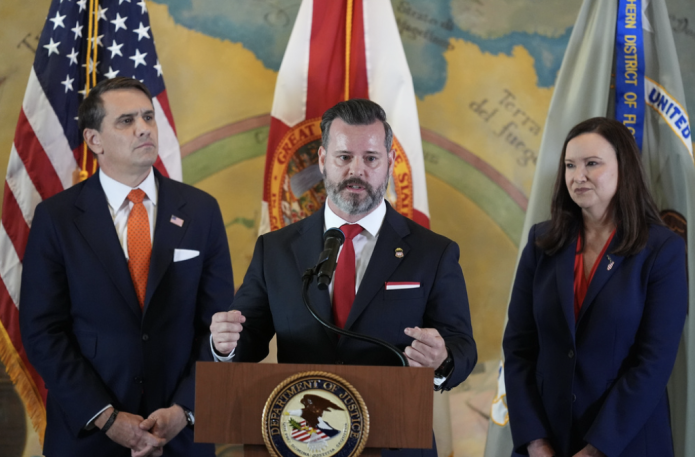
The expansion effort is being led by Joseph diGenova, a Reagan-era former U.S. attorney and longtime Trump ally who now serves as counselor to the attorney general after being tapped earlier this year to help oversee the widening investigation. U.S. Attorney Jason Reding Quinones said Tuesday that diGenova is “off to a fast start” building the Southern District of Florida’s newly created Criminal Civil Rights Section, which already includes a team of 12 prosecutors.
“Today, he led a productive meeting with half the team in person at the federal courthouse in Fort Pierce and the other half joining by video,” Quinones posted on X regarding the updates being made at the U.S. Attorney’s Office for the Southern District of Florida.
Quinones’s post included a photo of diGenova and his wife, Victoria Toensing, a former Detroit-based federal prosecutor, standing outside the Alto Lee Adams Sr. United States Courthouse in Fort Pierce alongside members of the newly created section.
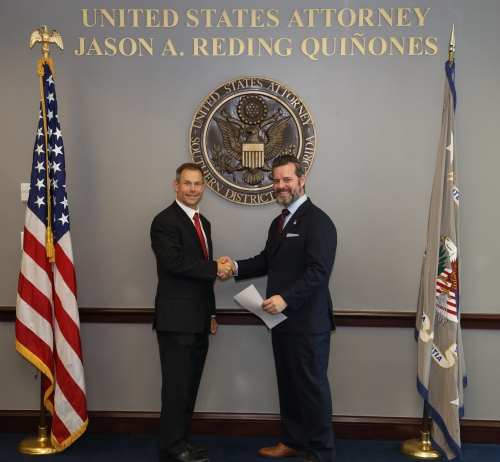
Changes in U.S. attorneys office come amid novel investigation over Trump’s civil rights
The staffing buildup comes as federal prosecutors in South Florida continue examining what some Trump allies have described as a yearslong “grand conspiracy” against the president involving former Obama-era intelligence officials, FBI leadership, and later criminal prosecutions brought during former President Joe Biden’s administration.
The Washington Examiner has reported since October about the prospects of an investigation into whether Trump’s civil rights were violated by his predecessors. The inquiry has been operating in part out of the Southern District of Florida under Quinones, with a federal grand jury active in Miami since January. Multiple media reports have indicated the inquiry centers on former intelligence and law enforcement officials involved in the Trump-Russia investigation and its aftermath.
Former FBI Director James Comey has already been subpoenaed in the investigation, according to a March MS NOW report, which said prosecutors sought documents tied to Comey’s role in the 2017 Intelligence Community Assessment regarding Russian interference in the 2016 election. Intelligence officials concluded in that assessment that Russian President Vladimir Putin aspired to help Trump win the 2016 election despite having virtually no evidence to support that claim, according to documents declassified last year by CIA Director John Ratcliffe and National Intelligence Director Tulsi Gabbard.
Beyond Comey, former CIA Director John Brennan and former FBI officials Peter Strzok and Lisa Page were also reportedly subpoenaed in the investigation being overseen by Quinones’s office last November. Strzok and Page were high-ranking members of the team investigating the Trump campaign for since-debunked allegations of Russian collusion when they exchanged private messages about how much they disliked Trump and wanted to “stop” him from winning the presidency.
Prosecutors in recent months have reportedly been examining whether a string of separate actions taken against Trump could be linked into a broader criminal conspiracy framework ranging from the final days of the Obama administration and continuing through the two federal criminal cases brought by former special counsel Jack Smith during Biden’s presidency.
The developments in South Florida suggest the administration is increasingly building institutional infrastructure around that effort.
While the Southern District of Florida has historically handled criminal civil rights matters involving allegations such as police brutality and official misconduct, those cases were typically prosecuted through existing divisions, including the office’s public corruption section, a source familiar with the office’s structure told the Washington Examiner.
The decision by Quinones to carve out a stand-alone Criminal Civil Rights Section marks a significant structural shift inside the office as the Trump-related investigation continues expanding.
The newly separated unit could also allow Florida prosecutors to pursue a broader range of politically and ideologically sensitive civil rights matters moving forward, including religious liberty-related cases that have become a growing priority for this DOJ.
According to a DOJ press release issued Monday, the section’s mandate includes enforcing federal criminal civil rights laws involving hate crimes, official misconduct, human trafficking, threats, and other constitutional rights offenses.
The announcement regarding diGenova’s expanding progress at the office came one day after Sean M. Lewis had been sworn in as an assistant U.S. attorney assigned to the unit within the office’s criminal division. Lewis, who will serve under diGenova’s leadership in Fort Pierce, previously served as a federal prosecutor in Washington and Michigan and is widely known for prosecuting disgraced former USA Gymnastics doctor Larry Nassar.
DiGenova was sworn in as counselor to the attorney general in April after acting Attorney General Todd Blanche elevated him to a senior advisory role amid the expanding inquiry. His appointment came shortly after veteran national security prosecutor Maria Medetis Long was removed from overseeing portions of the South Florida investigation, including matters tied to Brennan, although she remains employed in the office.
DiGenova served as U.S. attorney for Washington, D.C., from 1983 to 1988 under President Ronald Reagan before later becoming one of the most outspoken legal critics of the FBI’s Trump-Russia investigation and eventually joining Trump’s legal team during the late special counsel Robert Mueller’s investigation.
Why forming a criminal civil rights unit matters
Over the years, diGenova repeatedly accused former Obama-era intelligence and law enforcement officials of improperly weaponizing federal investigative powers against Trump.
In a November 2024 interview with Just the News, diGenova pointed specifically to 18 U.S.C. § 241, the federal conspiracy against rights statute, as a possible framework for investigating conduct surrounding the Russia inquiry.
At the time, diGenova argued one of the “ultimate outcomes” of the alleged conspiracy was the August 2022 FBI raid on Trump’s Mar-a-Lago estate, which he suggested helped justify South Florida’s jurisdictional role in the matter.
“I think there was a violation of Title 18 § 241 that violated the civil rights of Donald Trump,” diGenova said. “There is no doubt that there was a conspiracy.”
He said the conspiracy began during a January 2017 Oval Office meeting involving then-President Barack Obama, Brennan, Comey, then-Vice President Joe Biden, then-national security adviser Susan Rice, and others, where officials discussed the Russia collusion theory despite, according to diGenova, knowing it was false. Documents uncovered years later suggested Hillary Clinton’s campaign had developed a plan months earlier to invent the Russian collusion plot in order to damage Trump’s campaign.
“The president of the United States, Barack Obama, authorized the FBI to investigate it knowing that it was false,” diGenova said. “Barack Obama should get the first grand jury subpoena.”
Recent activity has also suggested the inquiry may be expanding geographically.
CBS News reported last month that cooperating witnesses were subpoenaed to appear before a federal grand jury in Washington shortly after diGenova assumed his DOJ role. Those proceedings appeared to operate parallel to the already active South Florida grand jury activity.
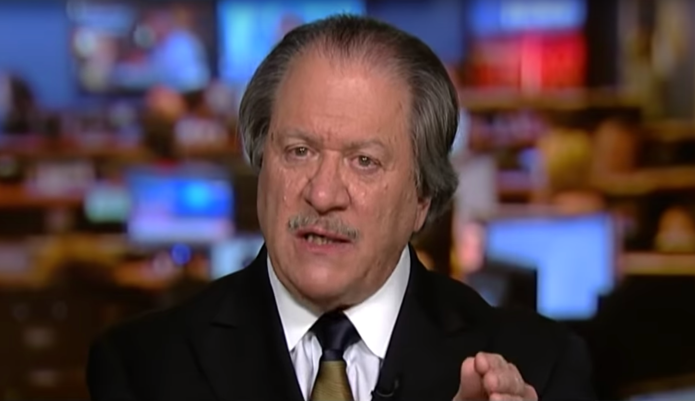
Former prosecutor weighs in on diGenova’s success likelihood
Former federal prosecutor Neama Rahmani told the Washington Examiner the rapid staffing buildup and diGenova’s prominent role inside the department appear designed to signal movement to Trump allies closely following the investigation.
“He’s being brought in as a special assistant to the attorney general. It’s pretty prominent,” Rahmani told the Washington Examiner.
Rahmani said he could envision prosecutors attempting to construct a sweeping conspiracy theory tied to alleged efforts to deprive Trump of his rights, although he expressed skepticism such a prosecution would survive judicial scrutiny.
“I guess you’re going to charge this mass conspiracy, right?” Rahmani said. “They’re all conspiring in a massive criminal conspiracy to deprive Trump of his civil rights. I mean, it’s possible.”
Rahmani cautioned that conspiracy-against-rights prosecutions against former federal officials would face steep legal obstacles, particularly given prosecutorial immunities and the novelty of applying the statute in this context.
“I just don’t see it,” he said. “I can’t see any judge in this country, even a Trump appointee, entertaining a prosecution on this basis.”
At the same time, Rahmani acknowledged that the current DOJ has shown a willingness to test legally aggressive theories in politically charged matters.
“I really wouldn’t put anything past folks there in the Southern District of Florida or the DOJ at large right now,” he said.
WHO IS JOSEPH DIGENOVA? REAGAN-ERA PROSECUTOR TAPPED TO LEAD ‘GRAND CONSPIRACY’ INVESTIGATION
Further complicating matters is diGenova’s own history of controversial rhetoric, including remarks he later apologized for suggesting former Cybersecurity and Infrastructure Security Agency Director Chris Krebs should be “drawn and quartered” and “shot at dawn” after Krebs defended the integrity of the 2020 election.
A representative for Quinones’s office did not respond to a request for comment.