Vulnerable members of Congress who rely on the gambling industry to fund their campaigns are pushing legislation that the industry wants passed, a Washington Examiner review of campaign finance filings has found.
Reps. Susie Lee (D), Steven Horsford (D), Mark Amodei (R), and Diana Titus (D) — all from Nevada — have thrown their support behind legislation that would allow gamblers to deduct 100% of losses from their tax bills, revising a provision in the One Big Beautiful Bill Act that reduced the deduction to 90% of losses. Restoring the full deduction has been a major priority of the gambling industry, which has poured hundreds of thousands of dollars into the campaigns of those representatives since 2020.
Lee took the most from the gambling industry, accepting nearly $400,000 over the past four electoral cycles. She was closely followed by Amodei, who received well over $300,000, then by Horsford, who took almost $300,000, and Titus, who raked in around $200,000, according to a Washington Examiner review of records from the lawmakers’ primary campaign accounts, their victory funds, and their leadership PACs.
Top executives from MGM Resorts, Caesars Entertainment, and Wynn Resorts reportedly met with representatives from the American Gaming Association — the trade group responsible for representing the interests of casinos and other parts of the gambling industry — in December to drum up support for a gambler’s tax break. Lee, Horsford, Amodei, and Titus, who ultimately fulfilled their request, have all accepted large donations from executives working for the three casino operators as well as the AGA.
Casino executives and PACs representing the three operators that pushed for the legislation contributed roughly $140,000 to Lee, $95,000 to Horsford, $85,000 to Titus, and $83,000 to Amodei since 2020. The AGA, meanwhile, gave Lee $3,000, Titus $5,500, Horsford $6,000, and Amodei $5,000 over the same period. Amodei, Horsford, and Lee all represent swing districts, making campaign dollars even more valuable to them, given the difficulty of retaining their seats.
“For decades, our tax code has allowed you to deduct 100% of any gaming losses from your winnings,” Titus said of the change. “It was a commonsense policy. People should only pay tax on money that they actually earn, not phantom money or ghost money.”
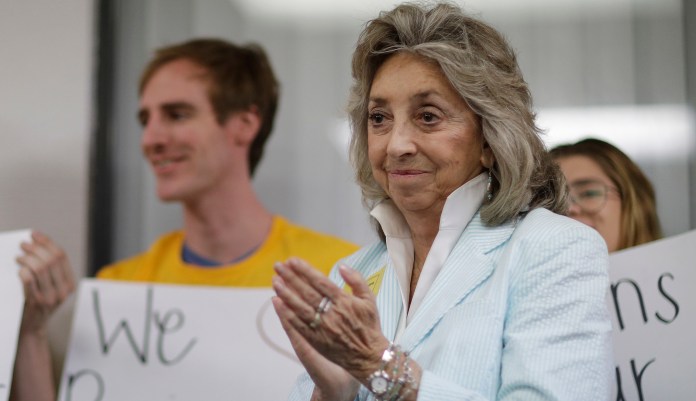
Titus’s rhetoric, and that of others backing the tax change, mirrors that of the AGA.
“We were gratified to see that the House passed bill included the 100% deduction for gambling losses, a 70-year bipartisan principle, that allows gamblers to deduct losses up to their winnings, a standard that was reaffirmed by the 2017 Tax Cuts and Jobs Act,” a July 2025 statement from the AGA reads. “However, because of Senate procedural rules, this provision was changed to allow for only a 90% limitation on gambling loss deductions. The result creates an unfair precedent by taxing phantom income and uniquely penalizing a legal, heavily regulated activity.”
When Titus and the AGA speak of “phantom” income, they refer to a situation in which a gambler who breaks even actually ends up losing money due to taxation. A gambler who wins $10,000 and loses $10,000, but can only deduct 90% of his losses from his tax bill, for instance, would end up paying taxes on $1,000 even though they technically earned nothing.
QATARI FOREIGN AGENTS FREQUENTLY DONATE TO THE CONGRESSIONAL OFFICES THEY LOBBY
American Indian tribes that operate casinos, firms that sell gambling machines, and individual casinos were among the other organizations cutting checks to the trio of representatives. Some members of Congress who don’t receive significant financial support from the gambling industry, such as Reps. Nicole Malliotakis (R-NY) and Max Miller (R-OH), have also thrown their support behind the legislation.
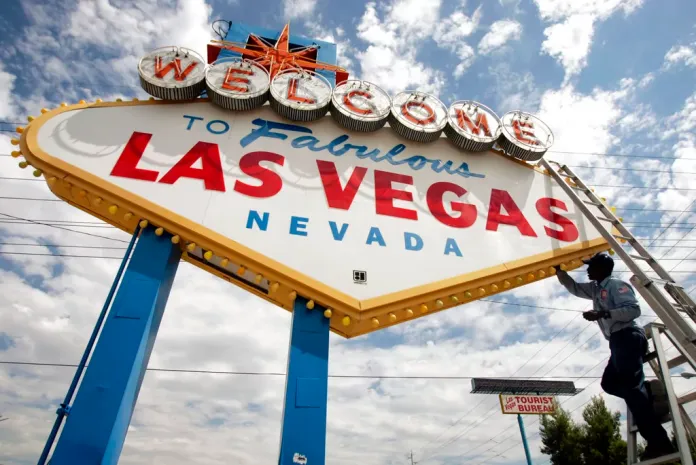
“When a party single-handedly passes a bill in the middle of the night to give tax breaks to billionaires, mistakes happen. And that’s exactly what happened here,” a spokeswoman for Lee told the Washington Examiner, in reference to the OBBB Act. “There is widespread bipartisan support to correct this mistake, and Susie is joining her colleagues from across country who are working to right this wrong — as she should. The gaming industry fuels Nevada’s economy, where it employs close to one in three workers and makes up more than a third of our state’s GDP. Susie is committed to fighting for her constituents and the economy that fuels our state.”
The offices of Titus, Horsford, and Amodei did not respond to requests for comment.