For two decades, the poorest half of humanity had its energy choices dictated by computer-generated climate predictions now considered to be implausible by the people who made them.
Developing countries that are home to the impoverished should be following U.S. actions to abandon these flawed forecasts, which have driven destructive climate policies.
In August, the White House Office of Science and Technology Policy opened a public comment period on a proposed amendment to the country’s Fifth National Climate Assessment, a congressionally mandated report that steers American regulation, research funding, and infrastructure budgets.
The amendment would tell federal agencies that the United Nations’ unrealistic predictions of dangerous global warming from the industrial emissions of carbon dioxide can no longer be used as a reasonable basis for policy development.
According to the U.N.’s own reckoning, its most extreme predictions of warming were never based on science. They were the ceiling of a modeling exercise that used computers and assumptions with no basis in reality.
Matthew Wielicki, who directs the U.S. Global Change Research Program, pointed out that much of NCA5 rests on scenarios the field of climate science itself has shelved, recognizing that guidance built on an implausible future cannot produce sound decisions.
He expects to hear objections to the proposed amendment from activists rather than researchers because the latter already have conceded the point.
The uncomfortable part is that this correction is coming from Washington rather than Delhi or Lagos or Manila.
The governments that could least afford the irrational policy prescriptions of the climate industrial complex spent 20 years acquiescing to them. Their negotiators accepted conditions that no Western capital would have tolerated at a comparable stage of its nation’s industrial ascent.
The 2024 Global Multidimensional Poverty Index counted 1.1 billion people in acute poverty across 112 countries. India has 234 million of them; Pakistan, 93 million; Ethiopia, 86 million; Nigeria, 74 million; and the Democratic Republic of the Congo, 66 million.
Those five countries are home to more than 48 percent of the world’s poor. The so-called deprivation indicators behind that index are electricity and cooking fuel.
A recent report issued by the International Energy Agency found 655 million people without electricity and roughly 2 billion still cooking over polluting fuels. Sub-Saharan Africa accounts for more than 560 million of the first group and 970 million of the second. That region’s rural electricity deficit grew between 2010 and 2024, affecting 447 million people.
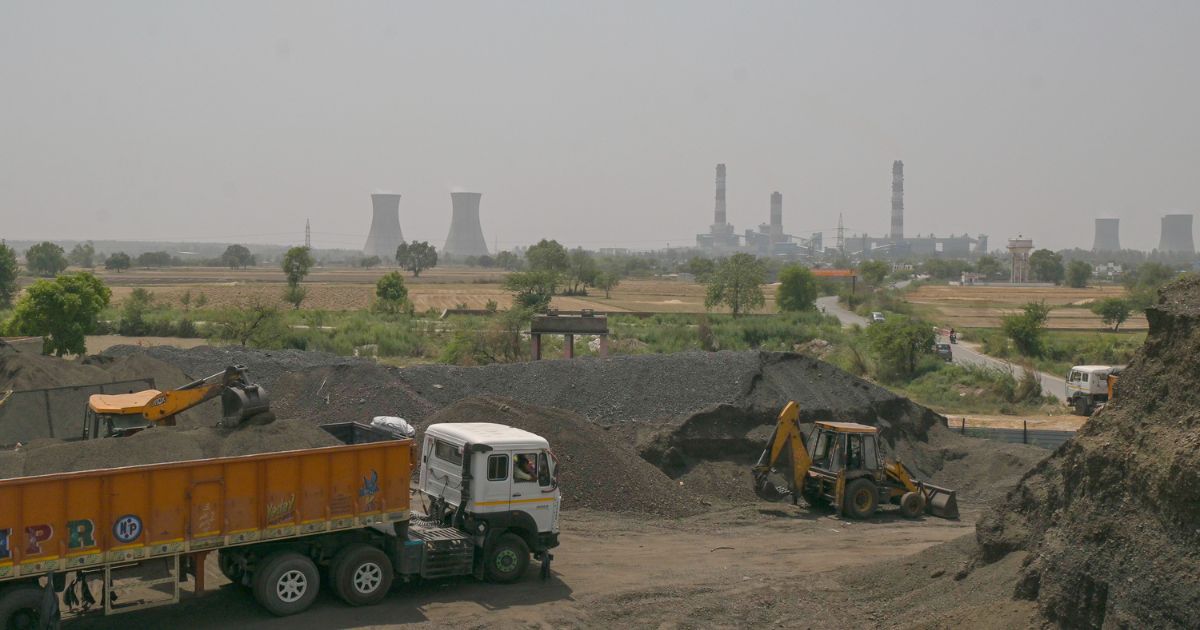
Those are the households whose coal plants were cancelled, whose gas projects lost financing, and whose grid connections were deferred — all on the authority of climate predictions that the modeling community has withdrawn from service.
The effect of climate hyperbole extended to international trade. The European Union’s Carbon Border Adjustment Mechanism entered a definitive phase in January, attaching costs to imported steel, aluminum, cement, fertilizer, hydrogen, and electricity.
India objected 29 times at the World Trade Organization between 2020 and 2024, arguing that the measure violated non-discrimination rules. Iron and steel make up 90 percent of Indian exports exposed to the EU tax.
Brussels based the trade barrier on climate predictions now considered implausible. Does the barrier now come down? Put the question to your trade minister. Then ask why nobody has.
For Africa, Asia, and Latin America, this is not a technical footnote in an American regulatory document. It is an opening to reclaim energy policy — and the associated economic benefits — from the manipulations of a woefully incompetent, or criminally deceptive, climate bureaucracy.
Leaders in victimized countries can either cling to a debunked climate agenda or rewrite energy laws to prioritize their own citizens. Choosing the former would disregard the millions suffering in poverty.
The views expressed in this opinion article are those of their author and are not necessarily either shared or endorsed by the owners of this website. If you are interested in contributing an Op-Ed to The Western Journal, you can learn about our submission guidelines and process here.
Advertise with The Western Journal and reach millions of highly engaged readers, while supporting our work. Advertise Today.