I look out at congregations across America and see the people who policymakers say they want to support: young couples who work hard, marry, worship, and are raising children or dream of doing so soon.
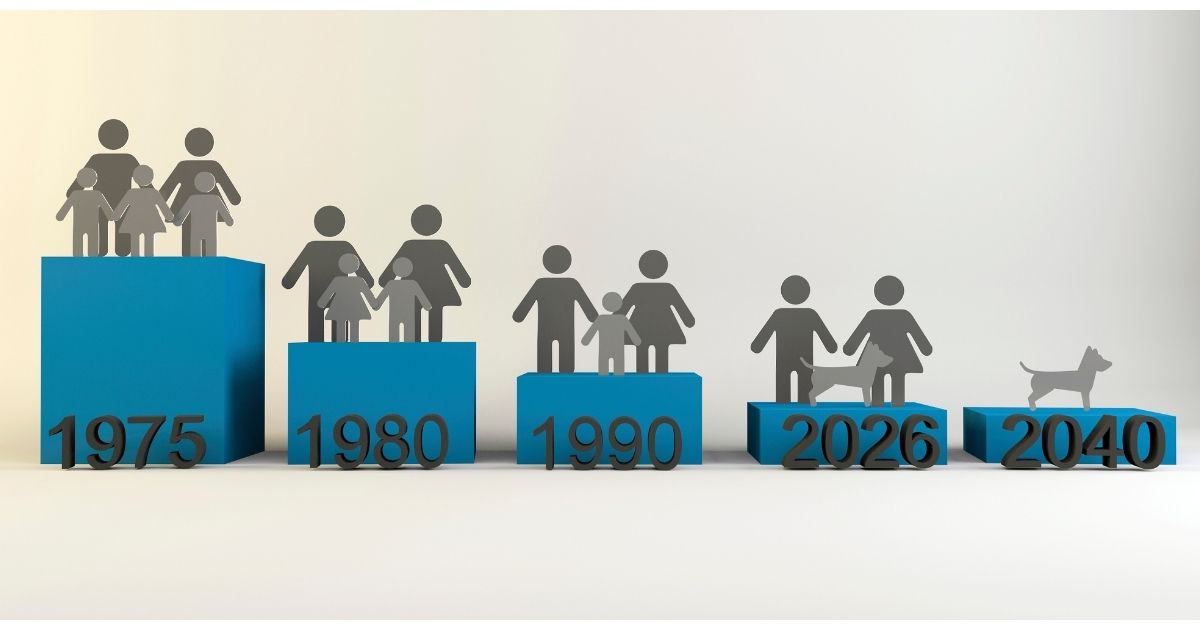
Yet according to recent data, that dream is becoming less of a reality. America’s fertility rate dropped to a record low for 2025 and continued falling into the first quarter of 2026. A downward line does not indicate a nation on the rise.
These families in our pews know that Scripture calls children “a heritage from the Lord,” (Psalm 127:3) and that these boys and girls are also the future stewards of our nation.
Strong marriages, a vibrant work ethic, and healthy children are essential components of a flourishing society and a strong country.
According to the Bureau of Labor Statistics, Hispanic Americans participate in the labor force at a higher rate than any other group in the country; Hispanic fathers are among the most likely of all men to be working.
Our tax code should better reflect the reality that some of the most important work Americans do is forming families and raising children.
Congress deserves credit for making real progress in this regard. Last year’s tax law increased the child tax credit to $2,200, made it permanent, and indexed it to inflation.
It also made permanent the business credit for paid leave and enhanced tax credits for child care. Those were pro-family wins, and we thank Congress for them.
But with births continuing to be near record lows and many young couples delaying marriage and children for financial reasons, we need to double down.
Three further steps would demonstrate that the pro-family agenda is not just a box to be ticked but a vital vision for a stronger America.
First, we should support family formation with a newborn tax credit for working families.
The costs of a child are significantly front-loaded: The medical bills, the crib, the diapers all arrive in the same few weeks, often totaling well over $17,000 in the first year.
We need solutions focused specifically on this period. It is important for a newborn tax credit like this to give working parents the option to receive it shortly after birth; otherwise, a child could be walking before their parents receive their “newborn” tax credit.
Second, we think Congress should recognize the broader season of the early years of a child’s life in the Child Tax Credit itself.
Today the credit is flat; it is the same for a sixteen-year-old as it is for a sixteen-month-old. But often those early years are when budgets are tightest, when one parent typically cuts back hours, when families are often most fragile.
A larger credit for younger children would put resources where both the need and the return are often greatest and let parents, not government programs, decide how best to use them.
Third, we need to put the child (and the parents) back into child care, indeed at the very center!
This means thinking about how all government-supported child care encourages and puts parents at the center. It involves removing marriage penalties in programs like the Childcare and Development Block Grant and the Child and Dependent Care Tax Credit and ensuring that families are not discouraged or penalized for choosing certain types of child care instead of others.
Every one of these three pro-family growth policies is connected to work, empowers parents, not government programs, and reminds us that while government cannot (and should not) form families, it can and should stop making family formation one of the hardest economic decisions a young couple will face.
Strong families, not government, are the original (and best) “department” of health, education, and workforce.
If we want to be a nation that has more workers, more taxpayers, and more parents (and grandparents!), we must first have more children, and our public policy should reflect this priority.
The future of America depends on it.
The views expressed in this opinion article are those of their author and are not necessarily either shared or endorsed by the owners of this website. If you are interested in contributing an Op-Ed to The Western Journal, you can learn about our submission guidelines and process here.
Advertise with The Western Journal and reach millions of highly engaged readers, while supporting our work. Advertise Today.