Critics have portrayed President Donald Trump’s renewed focus on Greenland as unconventional. But the strategic logic behind it is difficult to dismiss.
Greenland sits at the intersection of Arctic security, emerging shipping routes, missile defense, and competition with Russia and China. It also possesses significant potential deposits of rare earths, graphite, nickel, zinc, and other critical minerals.
Washington understands that these interests cannot be evaluated solely through Copenhagen — the capital of Denmark, of which Greenland is a territory. They require direct engagement with Greenland’s government and people.
That lesson should travel well beyond the Arctic.
As the United States wages an intensifying economic contest over energy, minerals, ports, and industrial supply chains, it must recognize that the political map is not always the resource map. Strategic assets are often concentrated in peripheral territories populated by linguistic or ethnic minorities who receive little benefit from the wealth beneath their feet.
China understood this terrain long before Washington. Beijing built infrastructure, financed governments, and secured commercial footholds while much of the American foreign policy establishment still viewed Africa primarily as a humanitarian concern. Russia has exploited insecurity through military relationships and political influence.
America will not outmaneuver either power by arriving after every port, mine, and political relationship has already been claimed. It must widen its field of vision beyond national capitals and begin identifying credible leaders at the regional, substate, and diaspora levels.
Ambazonia or Southern Cameroons — the name of the region in Cameroon’s English-speaking northwest and Southwest — deserves American attention.
Southern Cameroons was once administered by Britain under the League of Nations and United Nations trusteeship systems. No option of independence was offered to its people in the wake of a 1961 plebiscite. They chose to join the already independent Republic of Cameroon under a federal arrangement. That federation was abolished in 1972, however, as authority became increasingly centralized.
The present crisis began in 2016, when English-speaking lawyers and teachers protested the encroachment of Cameroon’s French-language civil law and educational systems. It developed into a brutal conflict in which Cameroon’s military and security forces committed massive atrocities against the communities of Ambazonia in the country.
Ambazonia is not a simple cause to romanticize, nor should Washington reflexively endorse recognition. Its advocates’ claims about some mineral deposits also require independent verification.
However, diplomatic complexity should not become an excuse for strategic blindness.
The territory borders Nigeria, faces the Gulf of Guinea, and contains important agricultural, energy, and hydropower assets.
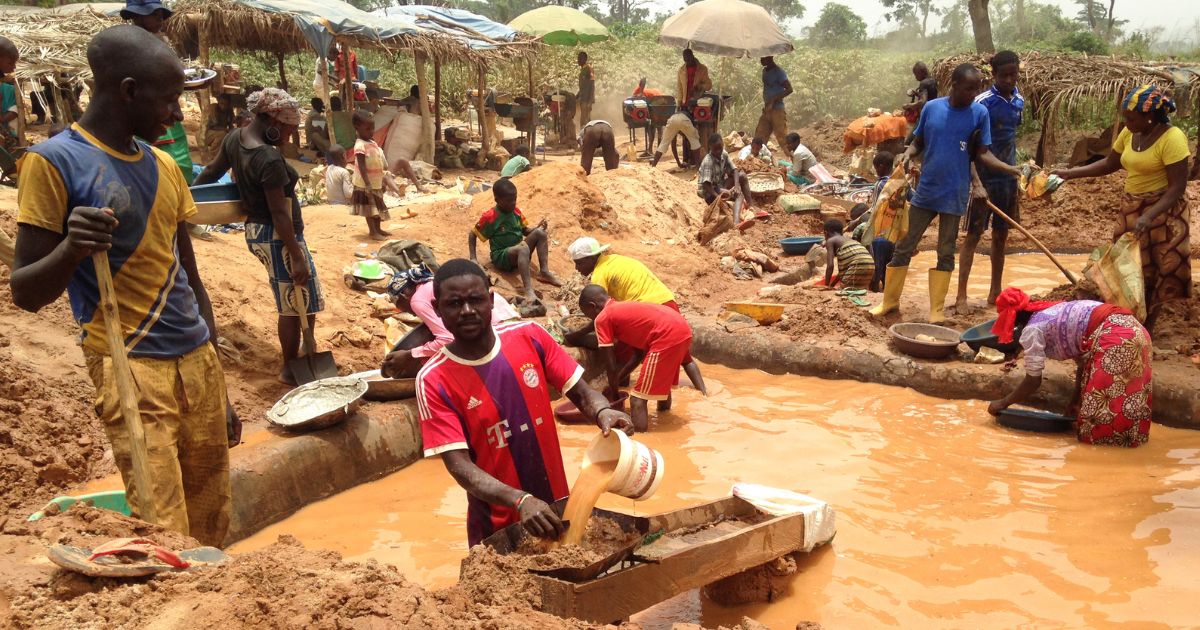
Advocates also point to its petroleum basin and possible deposits of bauxite, cobalt, gold, diamonds, and rare earth minerals. These claims should be tested through credible geological surveys and commercial due diligence, not ignored because they originate outside a presidential palace.
I recently interviewed Martin Mungwa, author of “Ambazonia 2050 and Beyond” and the secretary of communications for Ambazonia’s diaspora leadership in exile.
“I am not asking America to rescue Ambazonia,” he told me. “I am asking America to evaluate a potential Atlantic partner.”
That is precisely the distinction Washington needs.
Engagement with substate peoples need not begin with recognition. It can begin with knowledge: direct diplomatic channels, independent resource assessments, civil society exchanges, conflict mediation, and serious evaluation of emerging leaders and institutions.
America can maintain relations with central governments without treating them as the sole source of truth about millions living within their borders.
Dr. Mungwa argues that any future partnership must rest on institutions rather than personalities. “America should not rely on promises from one Ambazonian leader,” he said. “It should rely on institutions that make partnerships predictable.”
Washington should test those promises. It should examine whether prospective partners support constitutional government, independent courts, enforceable contracts, transparent investment rules, and safeguards against foreign control of ports, telecommunications, and energy infrastructure.
America’s model must also differ from exploitative resource extraction.
Investment should produce local ownership, workforce development, revenue sharing, and measurable benefits for the communities living above the resources.
As Mungwa put it, “Political sovereignty must become productive sovereignty.” That is an idea the United States should instinctively understand. The American promise has never been freedom in the abstract, but freedom coupled with the opportunity to build, produce, prosper, and have a stake in the wealth one helps create.
Greenland and Ambazonia possess profoundly different legal and political circumstances. Nevertheless, they illuminate the same strategic reality: resources, geography, and future partners cannot always be understood through the recognized capital city alone.
This is not an argument for Washington to redraw borders. It is an argument for diplomatic flexibility and economic statecraft capable of seeing beyond them.
“Do not take my word on Ambazonia,” Mungwa said in the message he would deliver to President Trump. “Study the history, study the geography, study the economics, and determine whether our future interests can meet.”
America should do exactly that — in Ambazonia and wherever strategically located populations remain invisible behind the governments that claim to speak for them.
The next great American partner may not yet have a seat at the United Nations. If Washington waits until it does, China and Russia may already be at the table.
The views expressed in this opinion article are those of their author and are not necessarily either shared or endorsed by the owners of this website. If you are interested in contributing an Op-Ed to The Western Journal, you can learn about our submission guidelines and process here.
Advertise with The Western Journal and reach millions of highly engaged readers, while supporting our work. Advertise Today.