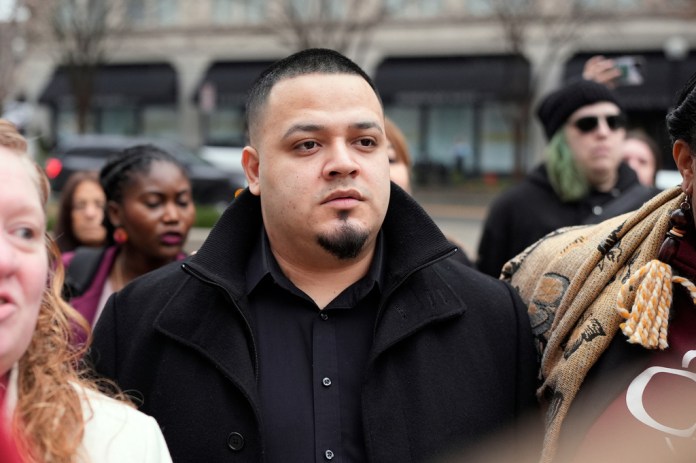
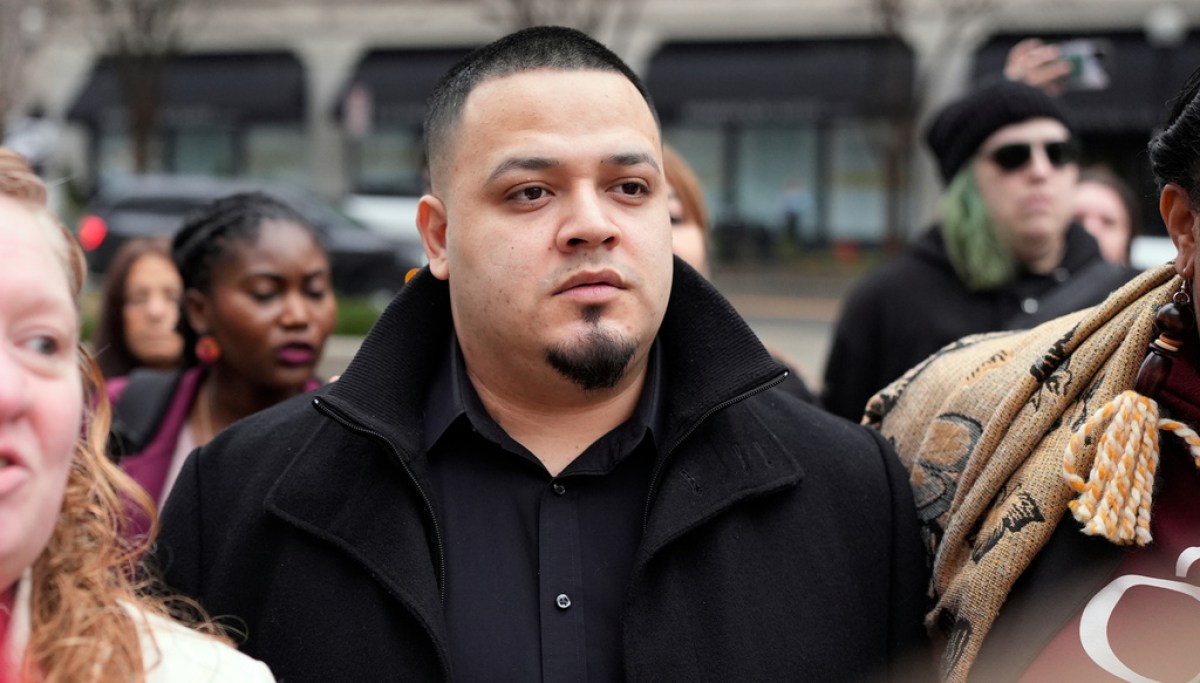
A federal judge on Friday dismissed the criminal indictment against Salvadoran national and illegal immigrant Kilmar Abrego Garcia, ruling that the Trump administration failed to overcome evidence, presented by his lawyers, suggesting the prosecution was driven by retaliation after he challenged his deportation in court.
In a sweeping 32-page opinion, U.S. District Judge Waverly Crenshaw, an appointee of former President Barack Obama, wrote that the case reflected the danger prosecutors “will pick people that he thinks he should get, rather than pick cases that need to be prosecuted,” quoting former Attorney General Robert Jackson.
Crenshaw concluded the administration’s decision to reopen a previously closed investigation into Abrego Garcia was tainted by a “vindictive motive” tied directly to his successful legal fight over his deportation to his home country of El Salvador last year.
A spokeswoman for the Justice Department told the Washington Examiner the ruling marks another instance of an “activist judge” placing “politics above public safety,” adding that the “judge’s order is wrong and dangerous, and we will appeal.”
Abrego Garcia, who entered the United States illegally, became a flashpoint in the administration’s deportation agenda after he was sent in March last year to a megaprison in El Salvador despite a prior immigration judge’s order in 2019 barring his removal there because of his stated fears of persecution.
After Abrego Garcia sued the Trump administration, the Supreme Court ultimately ordered the administration to facilitate his return to the United States in April last year. Upon his return, the Justice Department charged him in an indictment related to a prior dormant investigation tied to a 2022 Tennessee traffic stop that led authorities to believe he was engaging in a human smuggling operation.
The judge found the timeline highly suspicious, noting that Department of Homeland Security investigators had closed the investigation on April 1 last year after concluding they had “accomplished all goals for this case.”
Crenshaw also pointed to statements by then-Deputy Attorney General Todd Blanche, who publicly acknowledged the government began “investigating” Abrego Garcia after a U.S. District Judge Paula Xinis, also an Obama appointee, in Maryland questioned the deportation. Crenshaw called those remarks “unrebutted” evidence connecting the prosecution to Abrego Garcia’s Maryland-based lawsuit against his deportation.
“The Government changed its position from remove and not prosecute to prosecute and not remove only after Abrego’s successful lawsuit,” Crenshaw wrote.
The ruling now adds new complications to a parallel legal fight before Xinis, where the administration is seeking to dissolve her injunction blocking Abrego Garcia’s swift deportation if he is released from custody.
According to the government’s pending appeal before the 4th Circuit, Xinis previously found federal officials were likely to remove Abrego Garcia before his habeas case could be fully resolved and entered an injunction barring his deportation. The administration appealed after Xinis refused in April to dissolve the order.
At a recent hearing this month, Xinis sharply questioned the administration’s potential plans to deport Abrego Garcia to Liberia, raising concerns that Liberia had not formally agreed to accept him. She also pressed government lawyers on why they would not instead permit Abrego Garcia to self-deport to Costa Rica, an option his legal team had proposed.
JUDGE KEEPS BLOCK ON TRUMP ADMINISTRATION EFFORT TO DEPORT KILMAR ABREGO GARCIA TO LIBERIA
Xinis additionally questioned how the administration intended to handle deportation proceedings while the Tennessee criminal prosecution remained active. With the indictment now dismissed, the administration could argue there are fewer procedural barriers preventing another removal effort, though Xinis still retains authority over the injunction dispute unless the 4th Circuit intervenes.
President Donald Trump has highlighted DHS evidence suggesting Abrego Garcia is an MS-13 gang member, pointing to his tattoos that are common among such gang members. And during Abrego Garcia’s bond hearing before an immigration judge in 2019, a field interview sheet linking him to gang activity was found to be “trustworthy,” with the judge finding him eligible for deportation to any country other than El Salvador.